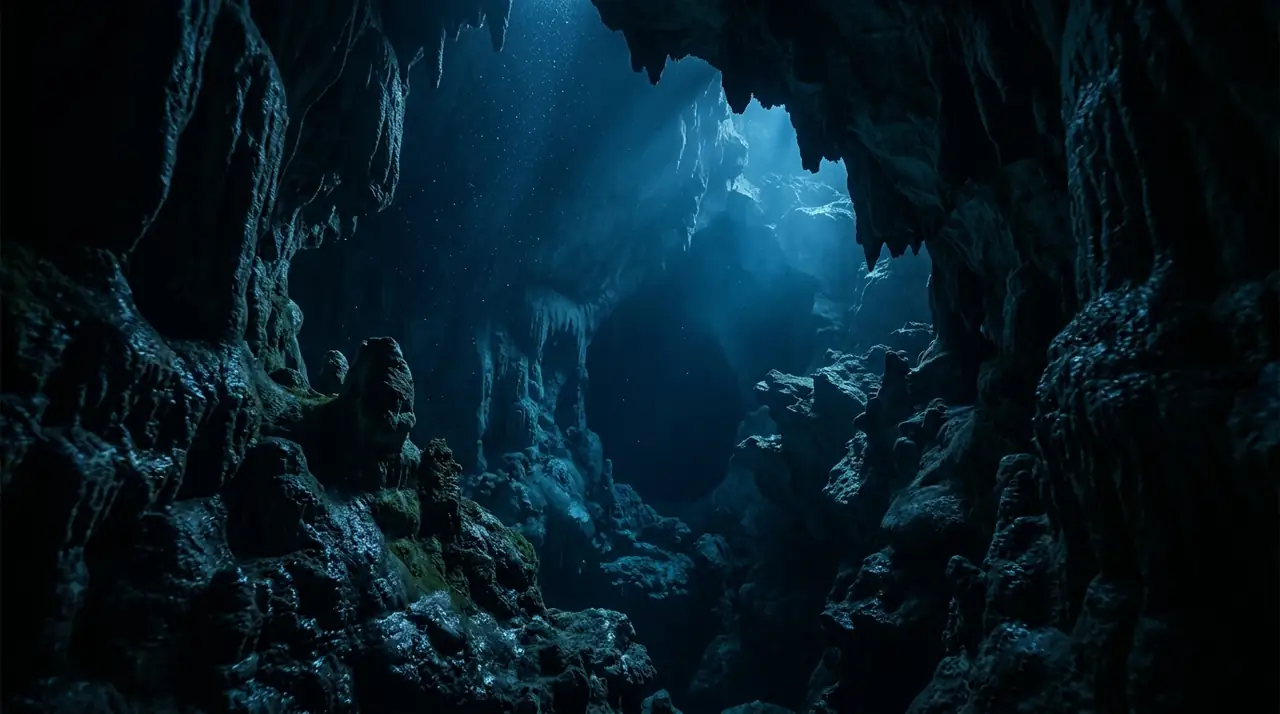
Middelfart Bridge Fjord
Overview
Middelfart Bridge Fjord occupies one of Denmark's most dramatic underwater locations, a narrow strait between the islands of Funen and Jutland where tidal currents compress through a natural bottleneck, creating conditions that attract an extraordinary concentration of marine life to this otherwise unassuming Danish waterway. The site is most famous for its harbour porpoises, the only cetacean native to Danish waters, which gather here in numbers that make Middelfart one of Europe's premier locations for encountering these elusive marine mammals. I entered the water from the rocky shore north of the old bridge on an incoming tide, the current already building enough to bend the kelp stalks horizontal. The plan was a drift dive, riding the flow southward through the narrowest section of the strait where the porpoises concentrate. The initial descent was through green, nutrient-rich water, visibility around six meters, with the rocky bottom emerging at eight meters covered in a carpet of plumose anemones and dead man's fingers soft coral. The current took hold properly at ten meters, accelerating as the channel narrowed. Drifting over the rocky substrate, I watched the bottom community flow past: European lobsters backed into crevices, their claws raised defensively; edible crabs hunkered down against the flow; dahlia anemones spread their tentacles into the current, filtering the rich water for food. The rock surfaces here are among the most densely colonized I have seen in Scandinavian waters, the constant current delivering a conveyor belt of nutrients that supports extraordinary growth. At fifteen meters, a flash of grey movement above me caught my attention. Two harbour porpoises shot through the water column, their small, compact bodies moving with a speed and agility that made my own current-assisted progress seem ponderous. They circled once at the edge of visibility, their characteristic blunt snouts and triangular dorsal fins unmistakable, before vanishing into the green. It lasted perhaps five seconds, but those few seconds justified the entire trip.
Early access
Plan a dive here
Open the DiveOne planner to sketch a recreational plan before you go. It is a planning assistant, not a dive computer.
Marine life
Dive profile
DEPTH PROFILE
DEPTH PROGRESSION & WAYPOINTS: Middelfart Bridge Fjord
Location
Frequently asked questions
Why are there so many porpoises at Middelfart?
The narrow strait at Middelfart creates a natural funnel for tidal currents, which concentrates fish and nutrients in a relatively small area. Harbour porpoises, Denmark's only native cetacean, gather here to feed on the abundant fish brought in by the currents. The area hosts one of the densest concentrations of harbour porpoises in European waters, with populations peaking during the summer months when fish are most abundant.
How do the currents affect diving at Middelfart?
Currents at Middelfart can be very strong, sometimes exceeding two knots during peak tidal flow. Diving must be carefully planned around tide tables, with slack water periods offering the calmest conditions for less experienced divers. Many divers specifically choose to dive during moderate current periods for drift diving, entering upstream and letting the current carry them through the strait. A surface marker buoy is essential, and diving with a local guide familiar with the current patterns is strongly recommended.
Can I reliably see porpoises while diving at Middelfart?
While harbour porpoises are present in the area year-round and in large numbers during summer, underwater encounters during dives are not guaranteed. Porpoises are fast-moving and can be shy of divers. However, surface sightings are virtually guaranteed during summer months. Underwater encounters are most likely during drift dives when the current matches porpoise feeding behavior. Snorkeling in shallow areas can also provide excellent encounters as porpoises sometimes feed very close to shore.
Reviews
Reviews
No reviews yet
Data Provenance
This profile is compiled from 3 operator submissions and 142 community logs. Key facts (depth, entry) are verified against official hydrographic charts.