Marovo Lagoon
Overview
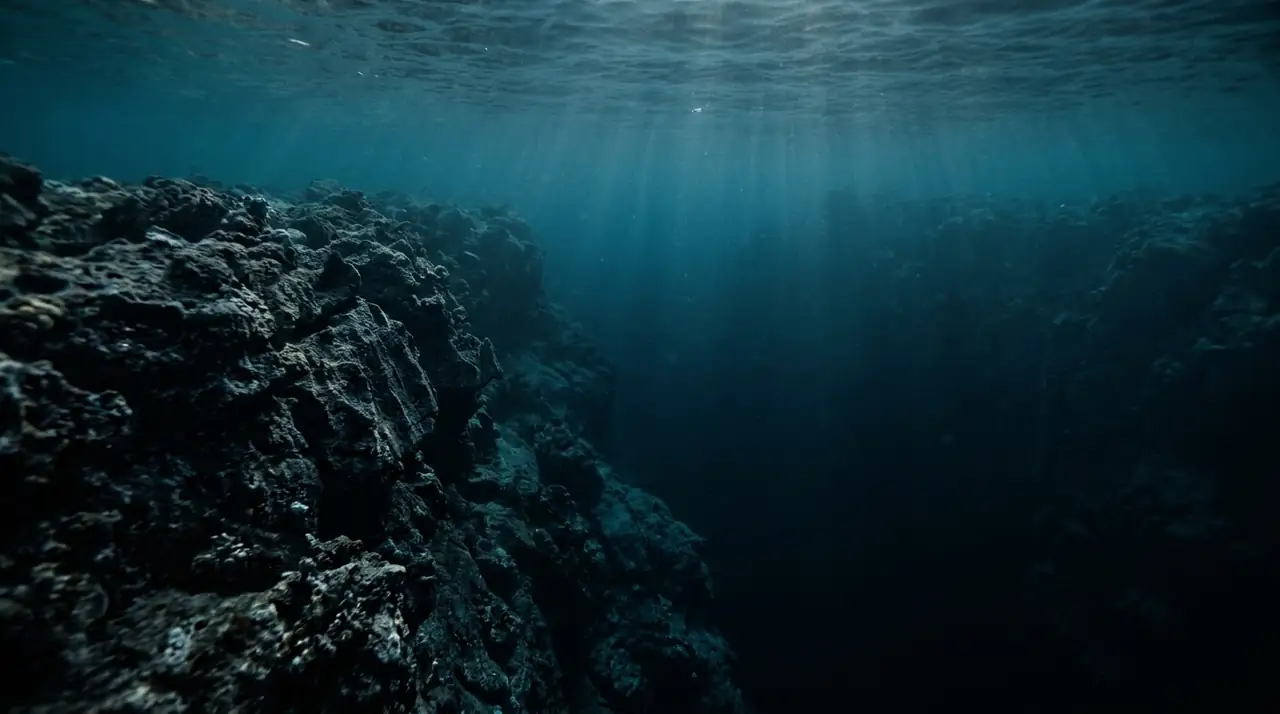
Marovo Lagoon unfolds across the Western Province of the Solomon Islands like a jade mosaic set in sapphire. It is the largest saltwater lagoon in the world, a double-barrier reef system stretching nearly 150 kilometres along the volcanic islands of New Georgia and Vangunu. The outer barrier faces the open Pacific, its walls dropping into abyssal depths, while the inner reef shelters a labyrinth of coral gardens, seagrass beds, and mangrove-fringed islands where traditional Melanesian communities have fished these waters for millennia. I dived the outer barrier near Uepi Island on a calm June morning. The wall starts at three metres and drops vertically beyond recreational limits. The coral here exists in a state of near-primordial health. Hard corals carpet the wall in overlapping layers, every species seemingly competing to outgrow its neighbour. Enormous table corals project from the wall like balconies, and beneath each one a different assemblage of fish sheltered from the mild current. A school of humphead parrotfish, perhaps twenty strong, worked the reef crest above me, their beaked jaws audibly crunching coral and leaving clouds of white sand in their wake. At twenty-five metres a grey reef shark appeared from the blue, circled once, and stationed itself at the wall's edge. Then another. Then three more. Within a minute I counted eight sharks holding position in the current, their bodies barely moving, eyes fixed on the reef. The ease of these encounters, without bait or feed stations, is what distinguishes Marovo. The sharks are simply here because the reef sustains them. The afternoon dive was inside the lagoon over a seagrass meadow where the guide promised something special. At eight metres, hovering over turtle grass, a shape materialised that I initially mistook for a manatee. It was a dugong, grey and rotund, methodically grazing the seagrass with its downturned snout. We watched for five minutes as it fed, completely oblivious to our presence, before it surfaced to breathe and returned to its meal. Dugongs are rare in the Solomons and Marovo is one of the last reliable places in Melanesia to encounter them. Between dives, the boat idled over a shallow patch reef where a WWII Grumman Wildcat fighter lay upside down in six metres of water, its propeller bent and engine block colonised by soft coral. The Solomons are layered like that, war and reef and tradition stacked on top of each other, and Marovo holds all three in quiet balance.
Early access
Plan a dive here
Open the DiveOne planner to sketch a recreational plan before you go. It is a planning assistant, not a dive computer.
Marine life
Dive profile
DEPTH PROFILE
DEPTH PROGRESSION & WAYPOINTS: Marovo Lagoon
Location
Near Seghe, in the Western Province region of Solomon Islands.
Frequently asked questions
How do I get to Marovo Lagoon and what accommodation is available?
Marovo Lagoon is reached by small aircraft from Honiara, the capital of the Solomon Islands, to Seghe airstrip. Solomon Airlines operates several flights per week and the journey takes about an hour. Accommodation ranges from basic village guesthouses to a handful of eco-lodges, the most established being Uepi Island Resort which also operates the main dive centre. There are no ATMs or reliable internet in Marovo, so bring cash in Solomon Islands dollars and prepare for genuine remoteness. Some liveaboard operations also include Marovo in their Western Province itineraries.
Is it safe to dive in Marovo Lagoon given the presence of saltwater crocodiles?
Saltwater crocodiles do inhabit the mangrove areas of Marovo Lagoon, but encounters while diving on the outer reef or deeper lagoon sites are extremely rare. Local dive guides know the areas where crocodiles are active and avoid those zones. The main dive sites are on the outer barrier reef or around offshore islands where crocodile presence is minimal. Village communities actively manage crocodile populations in areas used for swimming and diving. Thousands of dives are logged in Marovo annually without crocodile incidents, but following your guide's instructions about entry and exit points is essential.
What makes Marovo Lagoon different from other Solomon Islands dive areas?
Marovo is the world's largest double-barrier lagoon, meaning it has two concentric reef systems with a shallow lagoon between them. This creates an unusual range of dive environments from sheltered coral gardens inside the inner barrier to dramatic walls and drift dives along the outer barrier. The lagoon also contains several WWII wrecks from the fierce campaigns that swept through the Solomons in 1942 and 1943. Compared to the Florida Islands or Guadalcanal wrecks, Marovo offers a broader variety of diving and far fewer visiting divers.
Reviews
Reviews
No reviews yet
Data Provenance
This profile is compiled from 3 operator submissions and 142 community logs. Key facts (depth, entry) are verified against official hydrographic charts.