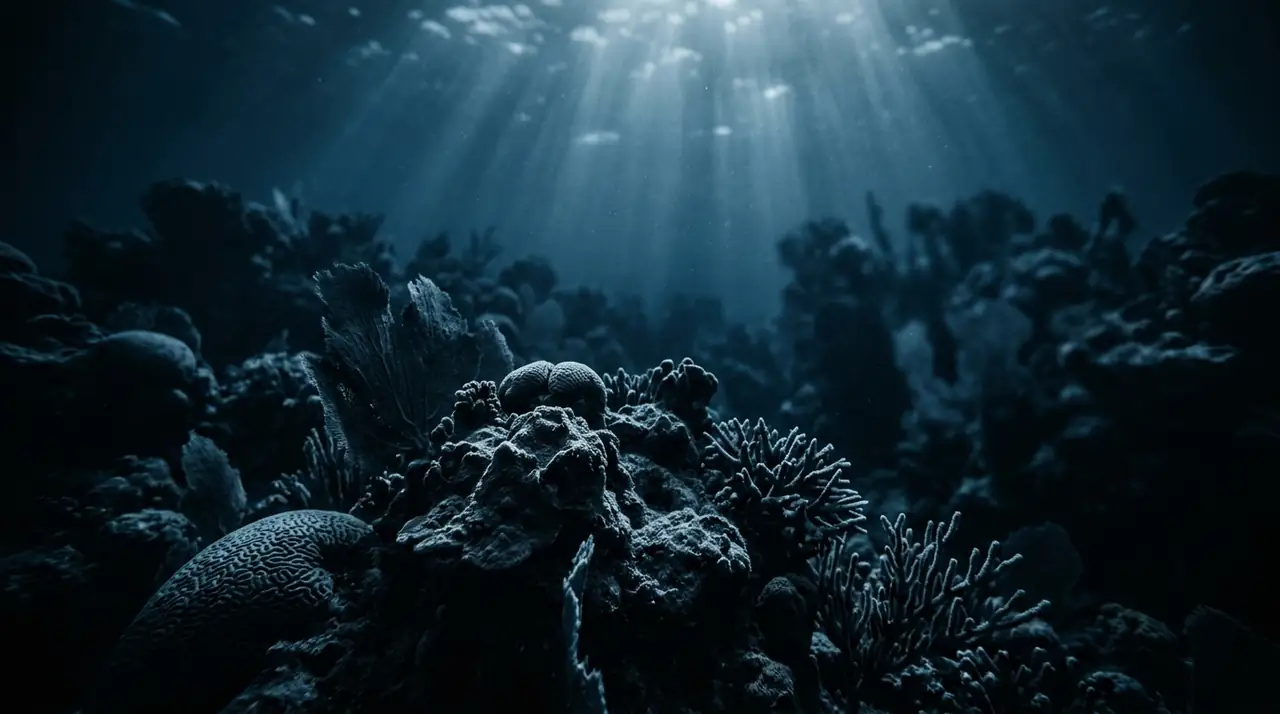
Los Cobanos Reef
Overview
Los Cobanos is a small fishing village on El Salvador's Pacific coast where volcanic rock meets the ocean in a series of rocky shelves and submerged formations. The village itself is modest, a collection of concrete houses and fishing shacks arranged along a dirt road that ends at the beach. But offshore, hidden beneath the Pacific's dark blue surface, lies Central America's most significant Pacific coral reef, a biological anomaly that challenges the assumption that coral reef development is confined to the Caribbean side of the Central American isthmus. I arrived in Los Cobanos after a bumpy drive from San Salvador on a January morning when the dry season had calmed the Pacific swell to manageable proportions. The dive operator was a two-person outfit run from a house near the beach, their equipment basic but serviceable, their knowledge of the local reef encyclopaedic. The boat was a fibreglass panga that we pushed from the beach into knee-deep water before the outboard coughed to life and carried us to the reef a kilometre offshore. The descent was into ten metres of water with visibility around eight metres, respectable for the eastern Pacific where upwelling and coastal processes make Caribbean-style clarity the exception rather than the rule. The bottom was immediately different from anything I had dived before. Volcanic rock, dark and angular, formed the substrate, its surfaces colonised by coral species that had adapted to a coastline more accustomed to rock and sand than to reef building. The result was a hybrid landscape, part volcanic seascape, part coral garden, that felt genuinely novel.
Early access
Plan a dive here
Open the DiveOne planner to sketch a recreational plan before you go. It is a planning assistant, not a dive computer.
Marine life
Dive profile
DEPTH PROFILE
DEPTH PROGRESSION & WAYPOINTS: Los Cobanos Reef
Location
Near Los Cobanos, in the Sonsonate Department region of El Salvador.
Frequently asked questions
Is there really a coral reef in El Salvador?
Yes, Los Cobanos hosts the most significant coral reef on Central America's Pacific coast. While not comparable in scale to Caribbean or Indo-Pacific reef systems, the reef at Los Cobanos supports over thirty species of hard coral growing on volcanic rock substrate. The reef extends approximately five kilometres along the coast and reaches depths of around eighteen metres. It has been declared a Natural Protected Area by the Salvadoran government, and conservation efforts have helped the reef recover from damage caused by dynamite fishing and sediment runoff. The reef's existence on the eastern Pacific coast makes it scientifically significant, as coral reef development is generally limited on this side of the Americas due to cooler water temperatures and upwelling conditions.
What are the diving conditions like at Los Cobanos?
Diving conditions at Los Cobanos are variable and often challenging compared to Caribbean standards. Visibility ranges from five to fifteen metres depending on season, tide, and recent weather. The dry season from November to April offers the best conditions with calmer seas and improved visibility. Water temperatures are warm year-round, between twenty-five and twenty-nine degrees. The site can experience moderate currents during tidal changes. The Pacific coast of El Salvador receives significant swell, and boat operations can be affected by rough conditions. Dive operators assess conditions each morning and may cancel or relocate dives when conditions are unsuitable. The reef is best dived on calm mornings with incoming tides.
How do I arrange diving at Los Cobanos?
A small number of dive operators serve the Los Cobanos area, based either in the village itself or in the nearby town of Acajutla. The diving industry here is still developing, and operators are small-scale compared to established dive destinations. Advance booking is recommended, particularly during peak season. The village of Los Cobanos is reached by road from San Salvador in approximately two and a half hours, or from Santa Ana in about ninety minutes. Accommodation in the village is limited to basic guesthouses and a few small hotels. Some operators offer day trips from San Salvador that include transport, equipment, and guided dives. English-speaking guides are available but should be requested in advance.
Reviews
Reviews
No reviews yet
Data Provenance
This profile is compiled from 3 operator submissions and 142 community logs. Key facts (depth, entry) are verified against official hydrographic charts.