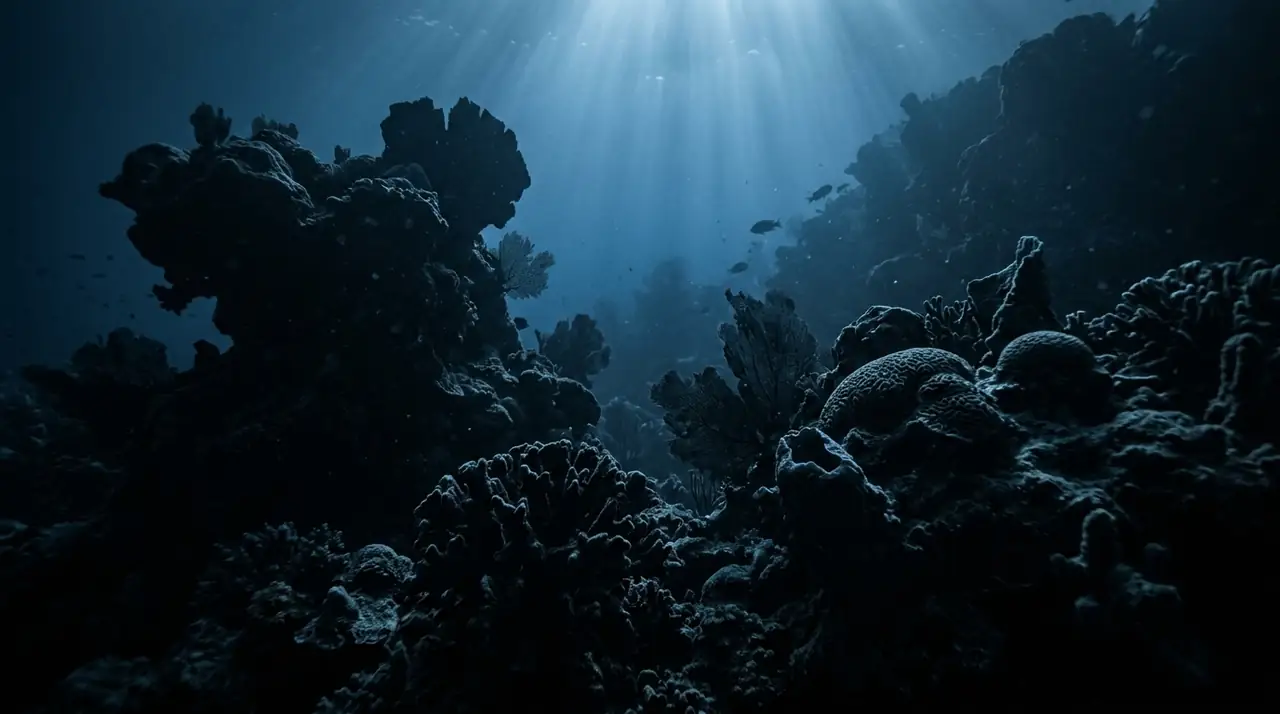
Kubbar Island Reef
Overview
Kubbar Island is a low, sandy cay roughly thirty kilometres off the southern coast of Kuwait, one of a handful of small islands scattered across Kuwait's territorial waters in the Persian Gulf. Designated as a nature reserve, Kubbar has been spared the coastal development and fishing pressure that affect the mainland, and its surrounding reef platforms host the richest marine biodiversity in Kuwaiti waters. Diving here defies every expectation shaped by the Gulf's reputation as a harsh, marginal environment for coral reefs. I made the ninety-minute boat ride from the mainland on a clear January morning, the flat horizon broken only by the occasional oil tanker heading for the shipping lanes. The island appeared as a thin sand line topped by sparse vegetation, unremarkable from a distance. But the moment I dropped below the surface, the story changed entirely. The shallow reef platform extending from the island's western shore was carpeted in hard corals that had no business looking this healthy in water that reaches thirty-four degrees in summer and drops to fifteen in winter. Massive Porites domes, branching Acropora colonies, and encrusting corals covered every available surface in a patchwork of browns, greens, and pale purples. The fish assemblage reflected the Gulf's unique biogeography. Yellowbar angelfish, one of the Arabian Gulf's signature species, moved through the coral in pairs, their canary-yellow bars striking against their blue-grey bodies. Crown butterflyfish picked at the coral with precise, deliberate movements. A honeycomb grouper watched me from beneath an overhang, its patterned skin blending with the mottled rock. These are not the flamboyant species of tropical reefs, but they possess a subtler beauty that rewards close attention. The highlight came on the second dive when I encountered a hawksbill turtle resting on a coral ledge at twelve metres. Kubbar is one of the few remaining hawksbill nesting sites in the northern Persian Gulf, and seeing one on the reef felt like witnessing something genuinely precious. The turtle regarded me with ancient, amber eyes, then pushed off the ledge and glided away with unhurried wingbeats of its flippers, trailing a small cloud of sand. Visibility is the variable that makes Gulf diving a gamble. On good days, it reaches fifteen metres and the reef reveals itself in full. On poor days, suspended sediment cuts it to five metres or less, reducing the dive to a close-quarters macro hunt. I was lucky with conditions, but even on the murkier second day, the macro life saved the dive: cuttlefish changing colour in the sand channels, nudibranchs on the coral rubble, and an Arabian carpet shark resting under a ledge, its ornate skin pattern perfectly matched to the substrate. Kubbar Island will never compete with the Red Sea or the Maldives for reef spectacle, but it offers something those destinations cannot: the thrill of discovering a functional coral ecosystem in a place where conventional wisdom says one should not exist. Every healthy coral head here feels like a small act of defiance against the odds, and every dive is a reminder that life finds a way in even the most extreme marine environments.
Early access
Plan a dive here
Open the DiveOne planner to sketch a recreational plan before you go. It is a planning assistant, not a dive computer.
Marine life
Dive profile
DEPTH PROFILE
DEPTH PROGRESSION & WAYPOINTS: Kubbar Island Reef
Location
Near Kuwait City, in the Al Ahmadi Governorate region of Kuwait.
Frequently asked questions
How far is Kubbar Island from Kuwait City?
Kubbar Island lies approximately 30 kilometres off the southern coast of Kuwait in the Persian Gulf. From the nearest mainland launch points south of Kuwait City, the boat ride takes about 90 minutes depending on conditions and vessel type. Most dive operators depart from Fahaheel or the marinas south of Kuwait City. Day trips are the standard format, though some operators run overnight camping trips on the island during cooler months.
Is it really possible to dive in Kuwait?
Yes, Kuwait has a small but active diving community. The Persian Gulf conditions are challenging compared to tropical destinations, with variable visibility, extreme temperature ranges from 15 degrees in winter to over 34 in summer, and occasional strong currents. However, the marine life has adapted to these conditions, and the reefs around Kubbar and other offshore islands support surprising biodiversity. The diving season runs from October to April when temperatures are comfortable and visibility improves.
What makes Kubbar different from other Kuwait dive sites?
While most Kuwait diving focuses on artificial structures and wrecks like the Oga Maru, Kubbar Island offers natural coral reef diving. The island is a designated nature reserve, which has helped protect its reefs from the fishing pressure that affects mainland coastal areas. The coral platforms around the island support the highest diversity of hard coral species in Kuwaiti waters, and the island's beaches are among the last hawksbill turtle nesting sites in the northern Gulf.
Reviews
Reviews
No reviews yet
Data Provenance
This profile is compiled from 3 operator submissions and 142 community logs. Key facts (depth, entry) are verified against official hydrographic charts.