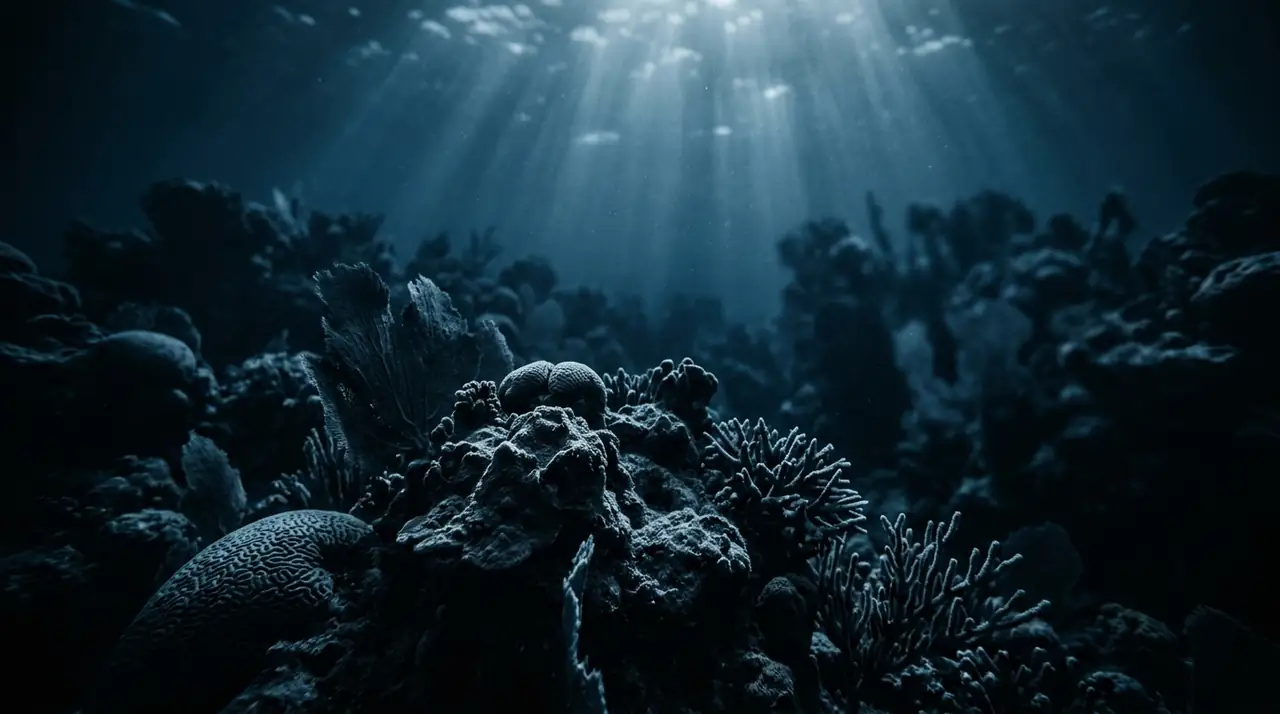
Koh Prins Reef
Overview
Koh Prins is a small, rocky island rising from the Gulf of Thailand approximately twenty-five kilometres south of Sihanoukville, Cambodia's coastal gateway. While Koh Rong and Koh Rong Sanloem dominate Cambodia's island diving scene with their accessible locations and resort infrastructure, Koh Prins rewards the extra ninety minutes of boat travel with superior marine life, healthier coral, and the near-certainty of having the reef entirely to yourself. This is Cambodia's macro diving at its best, a site where patient observation reveals treasures that hurried diving misses. I made the trip on a flat-calm February morning, the limestone island appearing first as a dark bump on the horizon before resolving into a steep-sided rock topped with scrubby vegetation. The dive site wraps around the island's western shore, where the rock drops into a boulder field that slopes from the surface to twenty metres before meeting a sandy plain. The boulders create a labyrinth of overhangs, crevices, and swim-throughs that function as a macro photographer's studio. The bamboo sharks were the first notable encounter. Within ten minutes of descent, I found three banded bamboo sharks resting under separate coral ledges at fifteen metres. These small, docile sharks tuck themselves into sheltered spots during the day, their beautifully banded juvenile colouring fading to a uniform brown as they mature. The largest was about a metre long, its body coiled neatly into the available space, gill slits pulsing with the slow rhythm of a resting animal. They tolerate careful approach, allowing close-up photography if you control your buoyancy and avoid sending silt clouds into their hiding spots. The seahorse colony was the trip's crowning discovery. On a gorgonian fan at twelve metres, the dive guide pointed out a pair of thorny seahorses, their tiny bodies barely three centimetres long, tails wrapped around the fan branches with a grip that seemed impossible for something so fragile. Their colours shifted between pale yellow and brown, matching the gorgonian so precisely that finding them without the guide would have been pure luck. A pipefish occupied the same fan, its needle-like body aligned perfectly with a branch, completing a tableau of camouflage excellence. The coral coverage on the sheltered western side was encouraging. Young table corals and branching colonies showed signs of healthy regrowth, their surfaces alive with damselfish, wrasses, and the occasional territorial triggerfish. Nudibranchs in half a dozen species decorated the rocks and coral rubble, their gaudy colours advertising the toxicity that protects them from predation. A large cuttlefish drifted through the boulder field, its skin cycling through hypnotic patterns of brown, white, and gold as it communicated some cephalopod message I could observe but not understand. The deeper sand flat at twenty metres held its own rewards. Blue-spotted stingrays dotted the bottom, their spotted bodies partially buried in the sediment. A school of juvenile barracuda hung motionless in the midwater, their silvery bodies aligned with military precision. Batfish glided in from the blue, their disc-shaped bodies and trailing fins giving them an otherworldly, almost alien appearance. Koh Prins is not flashy diving. The visibility is variable, the journey is long, and the reef lacks the dramatic architecture of more celebrated sites. But it exemplifies a truth that experienced divers understand: the best marine life is often found not where the reefs are most spectacular, but where the boat traffic is lowest. Every creature at Koh Prins behaves like an animal that has rarely been disturbed, and that undisturbed quality produces encounters of a depth and intimacy that busier sites cannot replicate.
Early access
Plan a dive here
Open the DiveOne planner to sketch a recreational plan before you go. It is a planning assistant, not a dive computer.
Marine life
Dive profile
DEPTH PROFILE
DEPTH PROGRESSION & WAYPOINTS: Koh Prins Reef
Location
Near Sihanoukville, in the Sihanoukville Province region of Cambodia.
Frequently asked questions
How far is Koh Prins from Sihanoukville?
Koh Prins lies approximately 25 kilometres south of the mainland coast near Sihanoukville. The boat ride takes about 90 minutes from the main pier, depending on conditions and vessel speed. This is significantly further than Koh Rong or Koh Rong Sanloem, which is why the site receives far fewer visitors. Most operators run Koh Prins as a dedicated full-day trip rather than combining it with closer sites.
How does the diving at Koh Prins compare to Koh Rong?
Koh Rong offers easier access and more dive sites spread across its larger reef system, making it better for beginners and training dives. Koh Prins is smaller and further from shore but offers better macro life, more frequent bamboo shark encounters, and healthier coral on its western side. The visibility at Koh Prins can be more variable due to its exposed position. Experienced divers looking for quality macro diving will generally prefer Koh Prins, while Koh Rong is the better choice for a relaxed, accessible dive experience.
Is Koh Prins affected by Cambodia's rainy season?
Yes, the southwest monsoon from June to October brings rough seas and reduced visibility that make Koh Prins inaccessible for most of the wet season. The best conditions occur from November to May, with peak visibility in February and March. Even during the dry season, conditions can be unpredictable, and operators may cancel the trip if seas are too rough for the longer crossing. The shoulder months of November and May offer good diving with fewer visitors.
Reviews
Reviews
No reviews yet
Data Provenance
This profile is compiled from 3 operator submissions and 142 community logs. Key facts (depth, entry) are verified against official hydrographic charts.