Koh Bon West Ridge
Overview
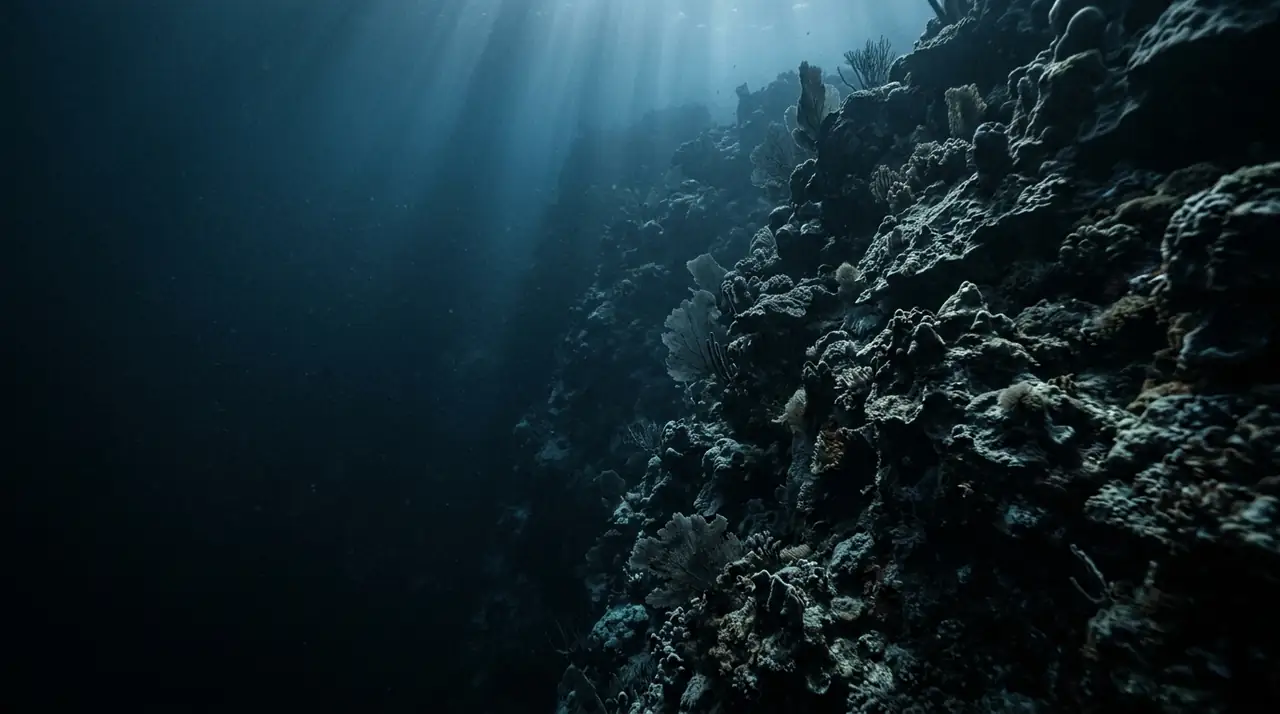
Koh Bon is already famous in the Similan National Park circuit for its manta ray encounters, but most divers experience only the sheltered southern bay. The West Ridge is the island's wilder face, a granite formation extending from the western headland into the open Andaman Sea, exposed to the full force of oceanic currents and the deep water that begins just a few hundred metres offshore. This is big-animal diving on the Similan's exposed frontier. The ridge is composed of massive granite boulders stacked and tumbled by geological forces, creating a three-dimensional structure of overhangs, swim-throughs, and vertical faces from five metres to beyond forty. The current hits the ridge hard from the west, sweeping nutrients along the rock face and creating upwellings that concentrate plankton against the granite. This nutrient concentration is the key to everything that lives here. Manta rays use cleaning stations on the ridge year-round, but the encounters here differ from the gentler bay. Mantas arrive into the current, approaching the cleaning boulders at speed before settling into a hover above the rock while cleaner wrasses work their gills and skin. The current makes positioning challenging; divers must find shelter behind boulders and wait rather than swimming to intercept. I held position behind a granite outcrop at twenty metres, current ripping past my fins, and watched three mantas work the cleaning station in rotation. A fourth appeared from the blue, a large female with at least a four-metre wingspan, and the others shifted position to accommodate her. Below, leopard sharks rested on the sandy patches between boulders, their spotted bodies camouflaged against the substrate. The West Ridge's exposure to open ocean means that anything can appear from the blue. Whale sharks pass during plankton season. Schools of yellowfin tuna blur through at speed. Giant trevally hunt in packs along the ridge edge. The unpredictability is part of the appeal: each dive on the West Ridge carries the anticipation of an encounter that the sheltered bay simply cannot deliver.
Early access
Plan a dive here
Open the DiveOne planner to sketch a recreational plan before you go. It is a planning assistant, not a dive computer.
Marine life
Dive profile
DEPTH PROFILE
DEPTH PROGRESSION & WAYPOINTS: Koh Bon West Ridge
Location
Frequently asked questions
How does Koh Bon West Ridge differ from the standard Koh Bon dive?
The standard Koh Bon dive site is the south-facing bay where most day boats and liveaboards anchor. This sheltered bay has moderate conditions and reliable manta encounters at its cleaning station. The West Ridge is the exposed western extension, a granite ridge jutting into the open Andaman Sea. It receives significantly stronger currents, has more challenging conditions, and is dived less frequently. However, the exposed position attracts larger pelagic species including whale sharks and tuna that rarely visit the sheltered bay. Only liveaboards and experienced boat operators typically access the West Ridge.
When are whale sharks most likely at Koh Bon West Ridge?
Whale shark encounters at Koh Bon West Ridge are most frequent from February through April, coinciding with the peak plankton season in the Andaman Sea. The exposed western position of the ridge places it in the path of nutrient-rich currents rising from deep water, creating plankton concentrations that attract filter feeders. Whale shark sightings are not guaranteed and remain a highlight rather than an expectation, but the West Ridge has a higher encounter rate than the standard Koh Bon bay during peak months. Most encounters involve juvenile whale sharks of 4 to 6 metres.
What experience level is needed for the West Ridge?
The West Ridge requires Advanced Open Water certification as a minimum and significant experience with current diving. Conditions are regularly strong, with the ridge's exposed position receiving the full force of Andaman Sea currents. Down-currents along the ridge face are possible, requiring knowledge of how to respond. The site reaches 40 metres on the deeper sections. Most liveaboard operators assess diver experience before offering the West Ridge as an option, often requiring a minimum of 50 logged dives. Excellent buoyancy control and the ability to deploy a surface marker buoy are essential.
Reviews
Reviews
No reviews yet
Data Provenance
This profile is compiled from 3 operator submissions and 142 community logs. Key facts (depth, entry) are verified against official hydrographic charts.