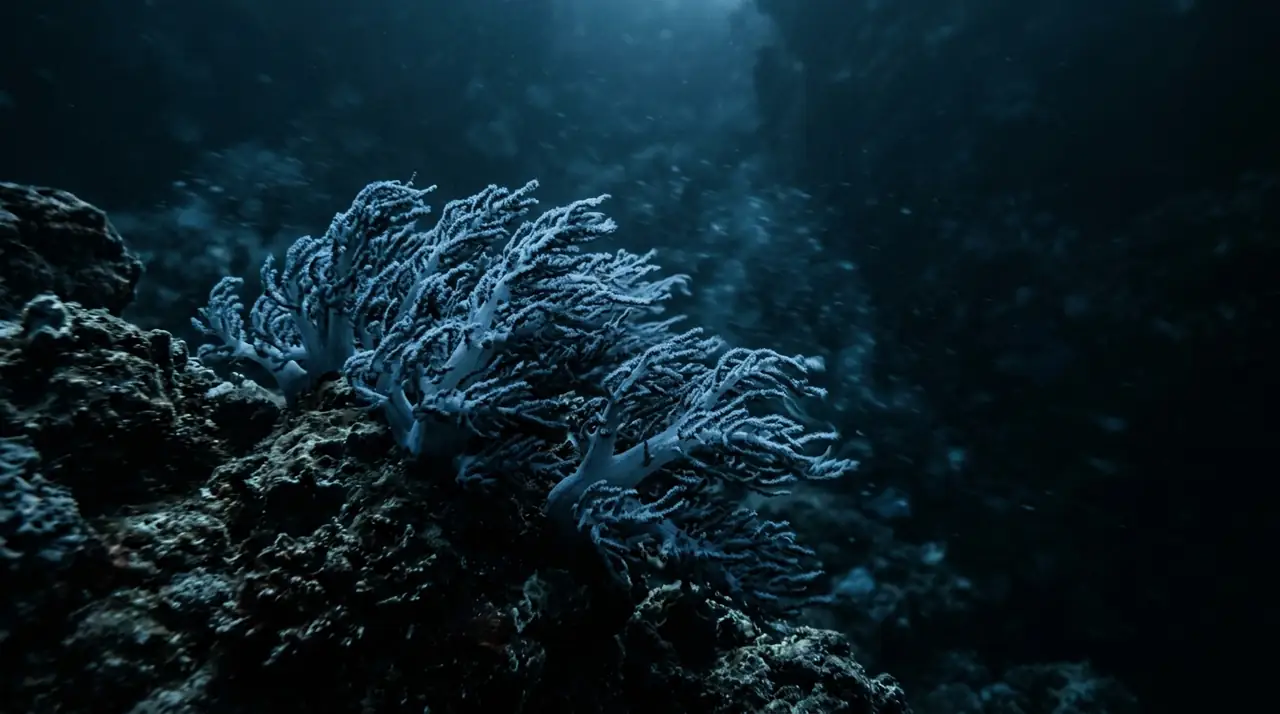
Klein Bonaire Reef
Overview
Klein Bonaire sits in the Caribbean Sea like a low green disc, an uninhabited island of about six square kilometres lying roughly eight hundred metres off the western coast of Bonaire. The island has no buildings, no roads, no electricity, and no permanent human presence. What it has is reef. A continuous fringing reef encircles the island, its coral coverage extending from the waterline to depths beyond recreational limits, creating what marine scientists consistently identify as one of the healthiest reef systems remaining in the Caribbean basin. I crossed from Kralendijk on a calm March morning, the boat cutting through water so clear that the bottom was visible throughout the ten-minute crossing. Klein Bonaire's shoreline appeared as a strip of white sand backed by low scrub, its modesty above water giving no hint of the extravagance below. We moored at a site on the island's southwestern side where the wall was reputed to be at its most dramatic. The reef began in knee-deep water. Standing at the waterline, I could see coral formations extending outward in an unbroken carpet of colour and texture. The shallow terrace, from zero to eight metres, was dominated by elkhorn coral that had survived where equivalent colonies elsewhere in the Caribbean had been devastated by disease. The elkhorn's antler-shaped branches created a three-dimensional habitat that hosted clouds of blue chromis and juvenile wrasses, their tiny bodies darting through the coral architecture with the frenetic energy of youth. The drop-off began at ten metres, the reef terrace ending abruptly at a wall that descended vertically into blue infinity. The wall face was a gallery of coral diversity. Sheet corals extended from the rock face like shelves, their flat surfaces providing platforms for resting fish and feeding nudibranchs. Wire corals spiralled outward from the wall in tight coils, their whip-like forms swaying in the gentle current. Tube sponges in purple, red, and yellow dotted the wall at every depth, their openings serving as chimneys for the water filtration that is their life's work.
Early access
Plan a dive here
Open the DiveOne planner to sketch a recreational plan before you go. It is a planning assistant, not a dive computer.
Marine life
Dive profile
DEPTH PROFILE
DEPTH PROGRESSION & WAYPOINTS: Klein Bonaire Reef
Location
Near Kralendijk, in the Caribbean Netherlands region of Bonaire.
Frequently asked questions
How do I get to Klein Bonaire for diving?
Klein Bonaire is a short boat ride from Kralendijk, Bonaire's main town, taking approximately ten to fifteen minutes depending on the departure point. Most dive operators on Bonaire include Klein Bonaire sites in their regular boat dive schedules, typically offering two-tank morning trips that visit one site on the main island and one on Klein Bonaire. Water taxis also run to No Name Beach on Klein Bonaire's eastern shore, allowing snorkellers to explore independently. The island is uninhabited and has no facilities, so divers should bring water and sun protection. Landing on the beach is permitted during daylight hours, but overnight camping is not allowed.
What makes Klein Bonaire's reef different from the main island?
Klein Bonaire's reef benefits from the complete absence of coastal development. With no buildings, roads, runoff, or artificial lighting on the island, the reef receives none of the stressors that affect even well-managed coastlines. The result is visibly healthier coral coverage, greater species diversity, and more natural fish behaviour compared to sites along Bonaire's developed western shore. The reef structure is continuous and uninterrupted, with no gaps caused by boat channels, piers, or other infrastructure. Coral bleaching events have affected Klein Bonaire, but recovery has been faster here than on the main island, likely due to the absence of compounding local stressors. The reef represents a near-pristine Caribbean benchmark.
Is Klein Bonaire suitable for shore diving like the main island?
Unlike Bonaire's famous shore diving along the main island's western coast, Klein Bonaire is accessed exclusively by boat as there is no bridge or ferry infrastructure. However, once at the island, the reef structure is similar to the main island's sites: a shallow terrace leads to a drop-off that begins between eight and twelve metres before descending as a wall or steep slope to thirty metres and beyond. The shallow terrace makes excellent snorkelling territory, and many boats drop snorkellers at No Name Beach while divers explore the deeper reef. The boat-based access means that currents and conditions are assessed by the captain, adding a layer of safety management that shore diving does not provide.
Reviews
Reviews
No reviews yet
Data Provenance
This profile is compiled from 3 operator submissions and 142 community logs. Key facts (depth, entry) are verified against official hydrographic charts.