Jungmun Saekdal Beach
Overview
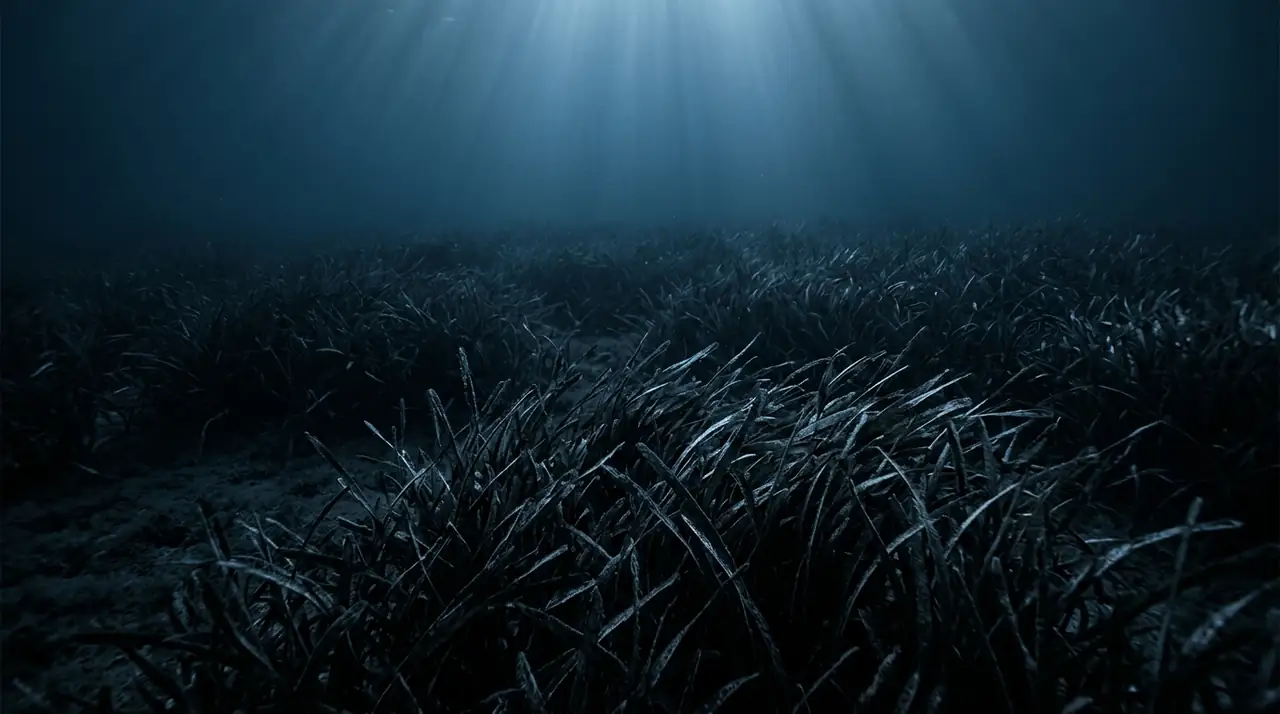
Jungmun Saekdal Beach sits on the southern coast of Jeju Island, South Korea's volcanic jewel in the Korea Strait. The beach itself is a crescent of dark volcanic sand backed by the resort hotels of the Jungmun tourist complex, but its underwater extension is what draws divers to this stretch of coast. Here, the basalt that formed when Jeju's volcanoes poured lava into the sea creates a submerged landscape of columns, ridges, and crevices that hosts a marine community balanced between the subtropical warmth of the Kuroshio Current and the cooler temperance of Korean coastal waters. I dived Saekdal on a calm August morning when the Kuroshio's influence was at its annual peak, the water temperature a comfortable twenty-four degrees and visibility stretching to fifteen metres. Entry was from the rocky platform at the eastern end of the beach, where volcanic basalt met the sea in a series of flat shelves that made the walk-in straightforward despite the rough texture underfoot. The immediate underwater terrain was a field of basalt rubble at four metres depth, the volcanic rock darkened to near-black by algae and encrusting organisms. This rubble zone was deceptively rich. I found three species of nudibranch within the first ten minutes, their tiny bodies adding splashes of improbable colour to the dark substrate. A Chromodoris with vivid yellow and purple markings posed on a sponge as though aware of its own beauty. A large octopus occupied a hole in the rubble, its arm tips visible at the entrance as it rearranged the shells and stones of its den.
Early access
Plan a dive here
Open the DiveOne planner to sketch a recreational plan before you go. It is a planning assistant, not a dive computer.
Marine life
Dive profile
DEPTH PROFILE
DEPTH PROGRESSION & WAYPOINTS: Jungmun Saekdal Beach
Location
Frequently asked questions
What makes diving at Jungmun Saekdal different from other Jeju dive sites?
Jungmun Saekdal offers a distinct underwater landscape compared to the more popular Munseom and Seogwipo submarine volcano sites. The basalt formations here are lower-profile and more scattered, creating a series of discrete reef patches separated by sandy areas rather than a continuous wall or pinnacle. This topography concentrates marine life around the rock formations and makes each patch a self-contained ecosystem worth exploring individually. The shore entry eliminates the need for boat arrangements, and the site receives far fewer divers than Munseom, resulting in more relaxed marine life behaviour. The soft coral coverage during summer months is the best on Jeju's southern coast.
What equipment do I need for diving at Jungmun Saekdal?
Water temperatures at Jungmun Saekdal range from sixteen degrees in winter to twenty-six degrees in summer. A five-millimetre wetsuit is adequate from June to October, while a seven-millimetre suit or dry suit is recommended outside these months. The shore entry over volcanic rock requires sturdy booties with hard soles, as the basalt surface is rough and can be slippery with algae. A torch is essential for exploring the deeper crevices and revealing the true colours of the soft corals. A compass is helpful as the scattered reef patches can make navigation challenging, particularly when visibility drops below ten metres. Surface marker buoys are required as occasional boat traffic passes through the area.
How do I arrange diving at Jungmun Saekdal Beach?
Several dive centres in Seogwipo offer guided dives at Jungmun Saekdal, typically as part of their southern coast shore dive programme. Most operate in Korean, but a few have English-speaking guides available with advance booking. Independent shore diving is permitted but requires registration with the local fisheries cooperative, as the area overlaps with traditional haenyeo diving women territories. The dive centres handle this registration automatically. Access to the beach is via the Jungmun tourist complex area, with parking available nearby. The best diving is during morning hours when the offshore winds have not yet built afternoon chop on the surface.
Reviews
Reviews
No reviews yet
Data Provenance
This profile is compiled from 3 operator submissions and 142 community logs. Key facts (depth, entry) are verified against official hydrographic charts.