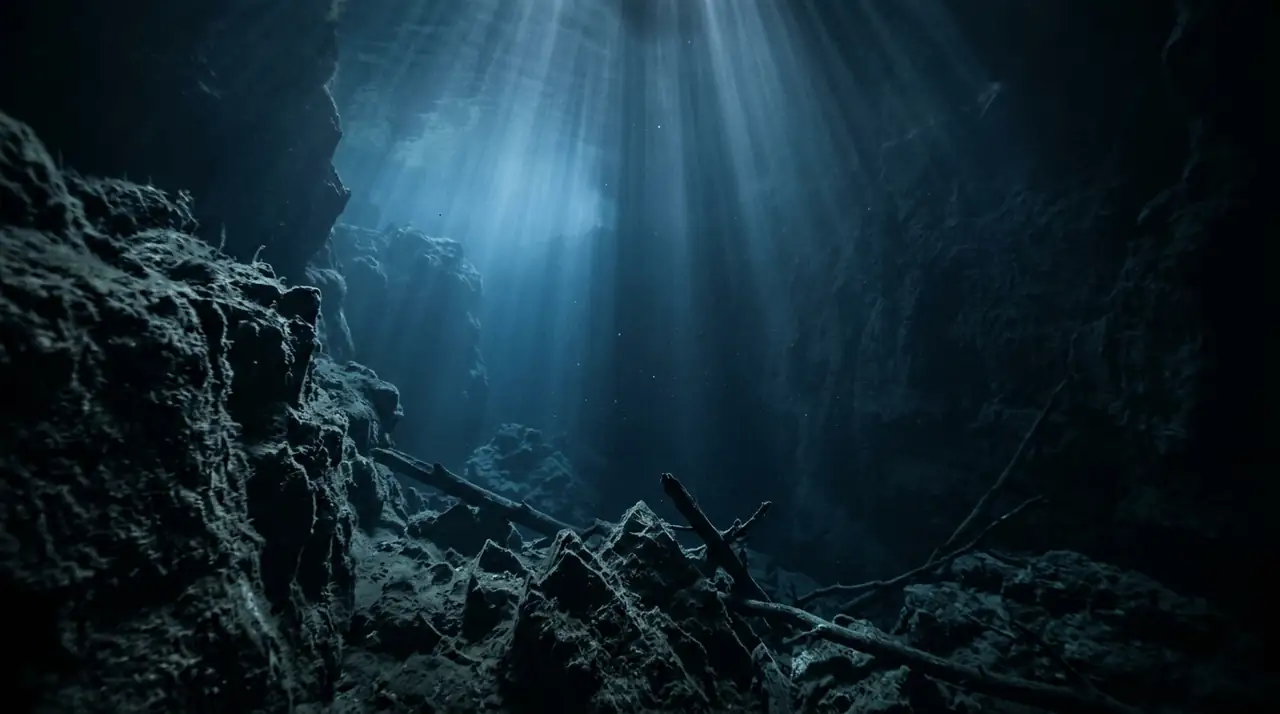
Jellyfish Lake
Overview
Jellyfish Lake is a landlocked marine lake hidden among Palau's Rock Islands Southern Lagoon, a UNESCO World Heritage site of extraordinary ecological significance. The lake formed roughly 12,000 years ago when rising sea levels flooded a limestone basin, trapping marine organisms in an enclosed environment. Over millennia of isolation, the golden jellyfish population evolved in the absence of predators, losing their stinging ability and developing a unique daily migration pattern that follows the arc of the sun across the sky. The result is one of the most surreal natural experiences available anywhere on Earth. Reaching the lake requires a boat ride through the Rock Islands from Koror, followed by a short but steep hike over a rocky jungle trail that climbs to a ridge and descends to the lake's edge. The first glimpse of the water through the trees is unremarkable, a green-tinged pool surrounded by limestone cliffs and overhanging vegetation. Then you enter the water and swim toward the centre of the lake, and the world transforms. I swam for perhaps five minutes through empty water before the first jellyfish appeared, a few golden orbs pulsing gently in the emerald water. Then a few more, then dozens, then hundreds, and suddenly I was enveloped in a living cloud of millions of golden jellyfish. They filled the water in every direction, above, below, and on all sides, each one a translucent golden bell trailing short tentacles, pulsing with a slow, rhythmic contraction that propelled it through the water. They bumped gently against my skin, my mask, my arms, completely harmless and utterly mesmerizing. The jellyfish migrate across the lake each day, following the sun from the western shore in the morning to the eastern shore in the afternoon. This migration is driven by their symbiotic relationship with photosynthetic algae called zooxanthellae that live within their tissues and require sunlight to produce energy. Floating among them as they pulse deliberately toward the light creates an experience that transcends normal categories of nature observation. It is meditative, alien, and beautiful in a way that photographs cannot fully capture.
Early access
Plan a dive here
Open the DiveOne planner to sketch a recreational plan before you go. It is a planning assistant, not a dive computer.
Marine life
Dive profile
DEPTH PROFILE
DEPTH PROGRESSION & WAYPOINTS: Jellyfish Lake
Location
Frequently asked questions
Is scuba diving allowed in Jellyfish Lake?
No, scuba diving is not permitted in Jellyfish Lake. The activity is restricted to snorkelling only. The prohibition exists for two important reasons: first, the lake has a toxic hydrogen sulphide layer below approximately 15 metres that is dangerous and potentially lethal to anyone who enters it. Second, the bubble exhaust from scuba equipment could harm the delicate jellyfish. Snorkelling provides an equally immersive experience, as the jellyfish concentrate in the upper water column following the sunlight. The experience of floating face-down among millions of jellyfish needs no additional depth to be extraordinary.
Do the jellyfish in Jellyfish Lake sting?
The golden jellyfish in Jellyfish Lake have evolved over thousands of years of isolation and have largely lost their stinging ability. Their nematocysts are too small and weak to penetrate human skin, so contact with them is painless. Most visitors feel nothing at all, though people with extremely sensitive skin may notice a very mild tingling on the lips or around the eyes. The jellyfish are completely harmless, and gentle contact as they bump into you while swimming is unavoidable and part of the experience.
How many jellyfish are in the lake and can the population decline?
The population of golden jellyfish in the lake fluctuates significantly but typically numbers in the millions during healthy periods. The population crashed dramatically during the 1998 and 2016 El Nino events, when elevated water temperatures disrupted the symbiotic algae the jellyfish depend on. In 2016, the population dropped so low that the lake was closed to visitors. It reopened in 2019 after the jellyfish recovered. The population is monitored regularly, and Palau has demonstrated its willingness to close the lake if numbers decline, prioritising conservation over tourism revenue.
Reviews
Reviews
No reviews yet
Data Provenance
This profile is compiled from 3 operator submissions and 142 community logs. Key facts (depth, entry) are verified against official hydrographic charts.