Hyeres Islands Porquerolles
Overview
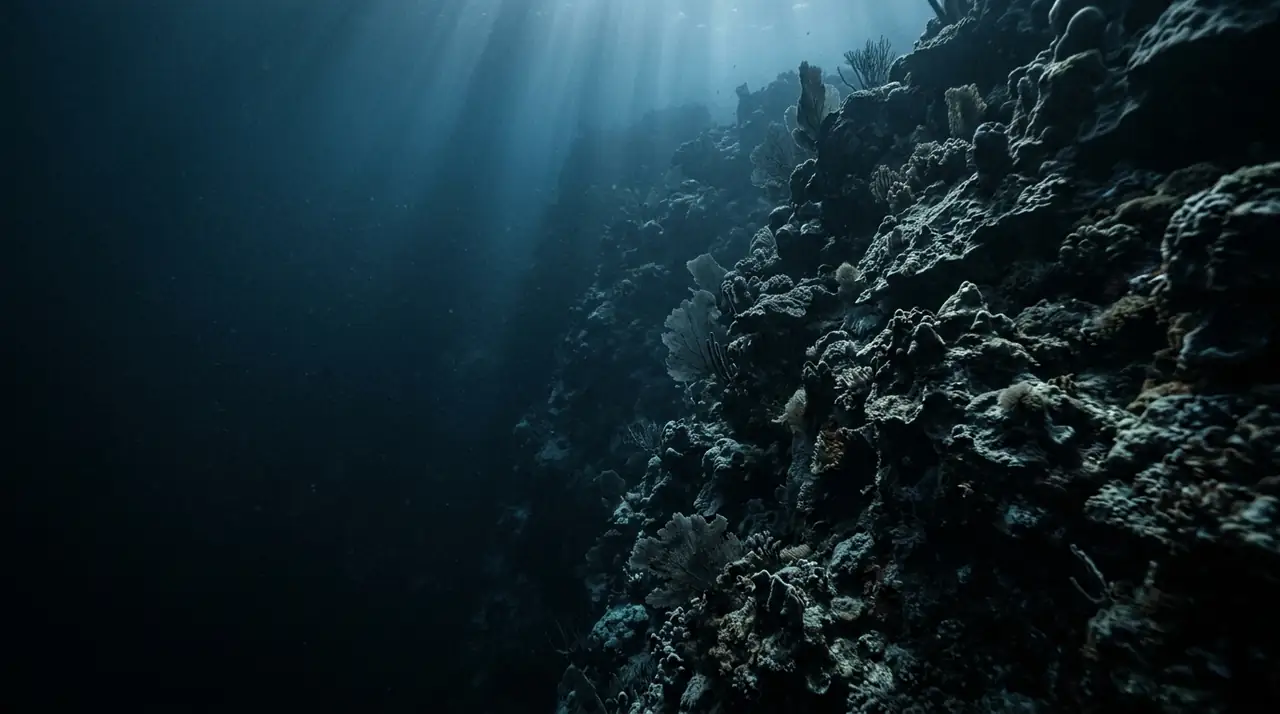
Porquerolles is the largest of the Iles d'Hyeres, the trio of islands the French call the Golden Islands that hang off the Var coast like fragments of perfected Mediterranean landscape. Since 2012, the waters around the island have been incorporated into the Port-Cros National Park, extending Europe's oldest marine protected area to encompass some of the finest diving on the French Riviera. The island itself is a place of pine forests, vineyards, and sandy beaches reached by a short ferry crossing from the Giens Peninsula. But the real treasure lies below the waterline. I dived multiple sites around Porquerolles across a week in June, and the consistency of marine life was remarkable. The decades of protection have created what the Mediterranean should look like everywhere but rarely does. Le Sec du Langoustier, a rocky pinnacle off the island's western point, was my favourite dive. The top of the reef sits at 8 metres, dropping to 35 metres on the seaward side, and groupers patrol every level. I counted fourteen dusky groupers on this single dive, several large enough to be clearly aged at twenty years or more. They approach with the relaxed confidence of animals that have never been hunted, and underwater photographers can spend an entire dive at this one site without exhausting the subjects. The Posidonia meadows surrounding Porquerolles are among the most extensive and healthy in the Mediterranean, recognised as a UNESCO biosphere reserve. Diving through these underwater prairies, you witness the nursery function in action: clouds of juvenile fish darting between the blades, cuttlefish hiding in the canopy, and octopuses using the meadow edges as hunting territory. For wreck divers, the Donator between Porquerolles and Port-Cros is a highlight. This 78-metre cargo ship, mined in 1945, sits upright at 40 metres, its superstructure colonised by eight decades of Mediterranean growth. The bridge area hosts resident groupers that have become almost tame, and barracuda schools circle the masts above. The depth makes it an advanced dive, but the condition and atmosphere of the wreck make the decompression obligation worthwhile.
Early access
Plan a dive here
Open the DiveOne planner to sketch a recreational plan before you go. It is a planning assistant, not a dive computer.
Marine life
Dive profile
DEPTH PROFILE
DEPTH PROGRESSION & WAYPOINTS: Hyeres Islands Porquerolles
Location
Near Hyeres, in the Var, Provence-Alpes-Cote d'Azur region of France.
Frequently asked questions
What is the diving regulation in the Port-Cros and Porquerolles national park?
The Port-Cros National Park, which extends to include the waters around Porquerolles since 2012, is Europe's oldest marine protected area. Diving is permitted through authorised dive operators who hold park permits and respect daily quotas at each site. Individual divers must use registered centres based in Hyeres, Giens Peninsula, or on Porquerolles itself. Mooring buoys are mandatory to prevent anchor damage, gloves are prohibited to discourage handling organisms, and certain zones are entirely off-limits to divers. The regulations have produced remarkably healthy reef ecosystems.
What is the Donator wreck and how do you dive it?
The Donator is a 78-metre cargo ship that struck a mine and sank in 1945 between Porquerolles and Port-Cros. The wreck sits upright on a sandy bottom at 40 to 51 metres, with the upper structure beginning at around 30 metres. Due to depth, the Donator is reserved for experienced divers with Deep Diver or equivalent certification. The wreck is extensively colonised by marine life after eight decades underwater, with large groupers resident in the bridge area and barracuda schools above the masts. It is considered one of the finest wreck dives in the French Mediterranean.
How do you get to Porquerolles for diving?
Porquerolles is reached by a 20-minute ferry from La Tour Fondue on the Giens Peninsula, south of Hyeres. Ferries run frequently in summer with reduced winter schedules. Several dive centres operate from Porquerolles village, and additional operators run day-trip boats from the mainland ports of Hyeres, La Londe, and Toulon. Cars are not permitted on the island, which maintains its character as a peaceful national park. Most dive sites around Porquerolles are reached within 10 to 20 minutes by boat from the harbour.
Reviews
Reviews
No reviews yet
Data Provenance
This profile is compiled from 3 operator submissions and 142 community logs. Key facts (depth, entry) are verified against official hydrographic charts.