Hu'u Bay
Overview
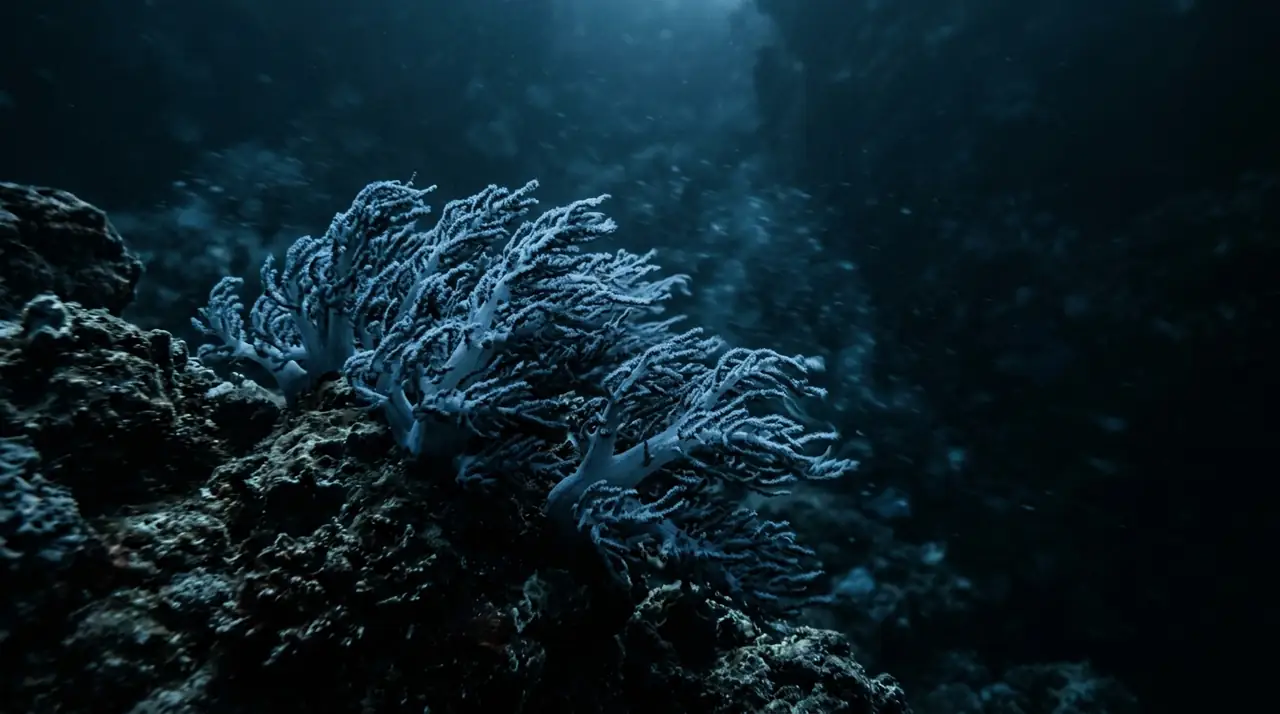
Hu'u Bay occupies a deep indentation on Sumbawa's wild south coast, where the island's volcanic spine drops steeply into the Indian Ocean. Known to surfers for the world-class waves of Lakey Peak, the bay's underwater environment remains almost entirely unexplored by recreational divers. What lies beneath the surface is a marine ecosystem driven by deep oceanic upwelling, producing conditions that attract aggregations of mobula rays, reef mantas, and pelagic species in numbers that even seasoned Indonesian dive guides describe as exceptional. The bay is flanked by volcanic headlands that plunge into the sea, their underwater extensions forming steep coral slopes that drop from the surface to well beyond recreational limits. These slopes face the open Indian Ocean, and the nutrient-rich upwellings that power the bay's productivity paint the water in shifting shades of green and blue. Visibility is variable, ranging from ten metres during peak upwelling to twenty-five on clearer days, but what the water lacks in crystal clarity it compensates with biological abundance. I descended along the eastern headland where sea fans the size of dining tables grew in staggered rows, their polyps extended in the current, filtering the plankton-rich water. Whitetip reef sharks rested in the shadowed undercutsbelow, and schools of giant trevally patrolled the reef edge with predatory focus. The coral coverage on these exposed slopes was surprisingly robust, dominated by massive Porites colonies and encrusting species adapted to wave energy. The mobula rays are the headline attraction. During upwelling season, aggregations of hundreds of Mobula kuhlii gather in the bay, forming spiralling chains near the surface that can be seen from the clifftop above. Descending into these formations is disorienting and magnificent: rays passing in every direction, wingtips nearly touching, filter-feeding with mechanical efficiency on the plankton soup. Hu'u Bay is not set up for diving tourism. The infrastructure is surf-focused, boats must be arranged through local connections, and conditions demand experience with currents and thermoclines. This is diving for those who find excitement in the uncharted, who prefer raw ocean encounters over manicured reef tourism. The bay rewards that spirit handsomely.
Early access
Plan a dive here
Open the DiveOne planner to sketch a recreational plan before you go. It is a planning assistant, not a dive computer.
Marine life
Dive profile
DEPTH PROFILE
DEPTH PROGRESSION & WAYPOINTS: Hu'u Bay
Location
Frequently asked questions
How do I get to Hu'u Bay for diving?
Hu'u Bay is located on the southern coast of Sumbawa, reached by flying to Sultan Muhammad Salahuddin Airport in Bima, then driving approximately two hours southwest to the Hu'u area. The bay is best known among surfers for Lakey Peak, and the small tourism infrastructure caters primarily to the surf community. There are no established dive operators based in Hu'u, so diving requires arranging boat charter through local fishermen or contacting dive operations in Bima or on Komodo liveaboards that occasionally include Sumbawa's south coast.
What conditions should I expect at Hu'u Bay?
Hu'u Bay faces the open Indian Ocean and conditions can be challenging. Swells from the south generate surface chop, and thermoclines from deep upwelling can drop temperatures sharply below 15 metres. Currents along the headlands range from moderate to strong. Visibility varies with upwelling cycles: 10 metres during nutrient pulses rising to 25 metres during calm periods. These dynamic conditions are precisely what attract the pelagic life, and experienced divers find the trade-off worthwhile. The dry season from April to November offers the most consistent diving weather.
Why are mobula rays found in such numbers at Hu'u Bay?
The bay's position on Sumbawa's south coast exposes it to deep Indian Ocean upwellings that bring cold, nutrient-rich water to the surface. These upwellings trigger plankton blooms that attract massive aggregations of mobula rays, sometimes numbering in the hundreds. The rays arrive in chains and spirals, filter-feeding on the plankton near the surface and along the reef slopes. Peak aggregations typically occur between June and September when upwelling is strongest. The phenomenon is well documented by researchers but remains largely unknown to recreational divers.
Reviews
Reviews
No reviews yet
Data Provenance
This profile is compiled from 3 operator submissions and 142 community logs. Key facts (depth, entry) are verified against official hydrographic charts.