HTMS Kut Wreck
Overview
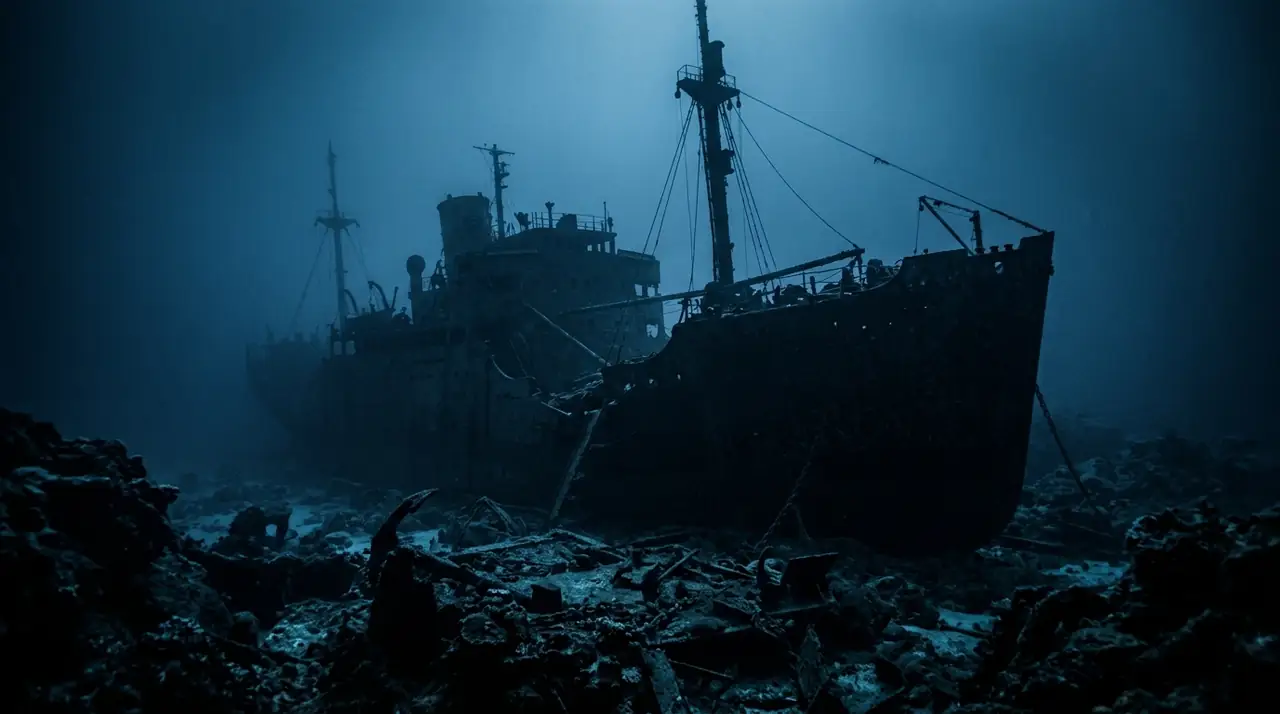
HTMS Kut rests on the sandy seabed of the Gulf of Thailand near Pattaya, a decommissioned Royal Thai Navy corvette that has been given a second life as one of the region's most productive artificial reef sites. The 60-metre vessel sits perfectly upright at 30 metres depth, its military profile still clearly recognisable despite the soft corals, sponges, and hydroids that now cover every surface in a testament to the speed and thoroughness of marine colonisation. The Thai Navy prepared the vessel for its role as an artificial reef with characteristic efficiency. Hazardous materials were removed, doors taken off hinges to create safe swim-throughs, and additional exit points cut into bulkheads. The result is a wreck that offers satisfying penetration diving without the entrapment risks that make many wrecks dangerous. The navy's preparation effectively created an underwater building with multiple entrances and exits on every deck. Descending to the wreck, the first encounter is typically with the barracuda school that has claimed the superstructure as its territory. Several hundred yellowtail barracuda form a shifting cloud above the bridge, their bodies aligned in the mild current, silver flanks catching whatever light filters through the Gulf's green water. Batfish congregate at the stern in characteristic groups, their flat bodies hanging vertically in the water column like dinner plates stood on edge. The bridge offers the wreck's most atmospheric penetration. Entering through the windows, the interior retains enough structural detail to evoke the vessel's operational life. The helm position, instrument mounts, and communication equipment mounts are visible beneath the coating of marine growth. Lionfish hang from the ceiling in elaborate fan displays, their venomous spines creating no-touch zones that divers navigate carefully around. The engine room, accessible through deck hatches, is the wreck's deepest penetration point. Here, in the reduced light, large groupers have established territories among the machinery, and moray eels thread through pipe runs and valve assemblies. The confined space and reduced visibility demand precise buoyancy and awareness, rewarding those skills with an intimate encounter with a working ship's mechanical heart, now colonised by marine life that has adapted every surface to biological purpose. Externally, the hull serves as a substrate for a growing reef community. Scorpionfish rest on horizontal surfaces in perfect camouflage, and seahorses cling to the hydroids that drape the railings. Blue-spotted stingrays lie on the sand alongside the hull, and the occasional guitar shark rests in the vessel's shadow. The HTMS Kut demonstrates that artificial reefs, when properly planned and executed, can create marine habitats of genuine ecological value. Within years of sinking, the barren steel hull has become a complex three-dimensional habitat supporting hundreds of species. For Pattaya-based divers, it offers a world-class wreck experience within 30 minutes of shore, no liveaboard required.
Early access
Plan a dive here
Open the DiveOne planner to sketch a recreational plan before you go. It is a planning assistant, not a dive computer.
Marine life
Dive profile
DEPTH PROFILE
DEPTH PROGRESSION & WAYPOINTS: HTMS Kut Wreck
Location
Frequently asked questions
What was the HTMS Kut before it became a dive site?
HTMS Kut was a Royal Thai Navy corvette that served for several decades before being decommissioned and intentionally sunk to create an artificial reef. Before sinking, the navy cleaned the vessel of hazardous materials and prepared safe penetration routes by removing doors and cutting additional exit points. The ship was sunk upright in a controlled operation, landing perfectly on the sandy seabed, which is why it remains in such excellent condition for diving.
What is the visibility like at the HTMS Kut?
Visibility in the Gulf of Thailand near Pattaya is generally lower than Andaman Sea sites, typically ranging from 5 to 15 metres depending on season and tidal conditions. November through February offers the best visibility when northeast monsoon winds reduce plankton and sediment. The limited visibility actually enhances the wreck diving atmosphere, as the ship materialises from the green water with dramatic effect. Dive lights are recommended for penetration regardless of external visibility.
How far is the HTMS Kut from Pattaya?
The wreck lies approximately 30 minutes by dive boat from Pattaya's main piers. Several established dive operators in Pattaya and nearby Jomtien run daily trips to the wreck, often combining it with a second dive on nearby natural reef sites or the other artificial reef wrecks in the area. The proximity to Pattaya makes this one of the most accessible wreck dives in Thailand, requiring no long-range boat travel or liveaboard arrangements.
Reviews
Reviews
No reviews yet
Data Provenance
This profile is compiled from 3 operator submissions and 142 community logs. Key facts (depth, entry) are verified against official hydrographic charts.