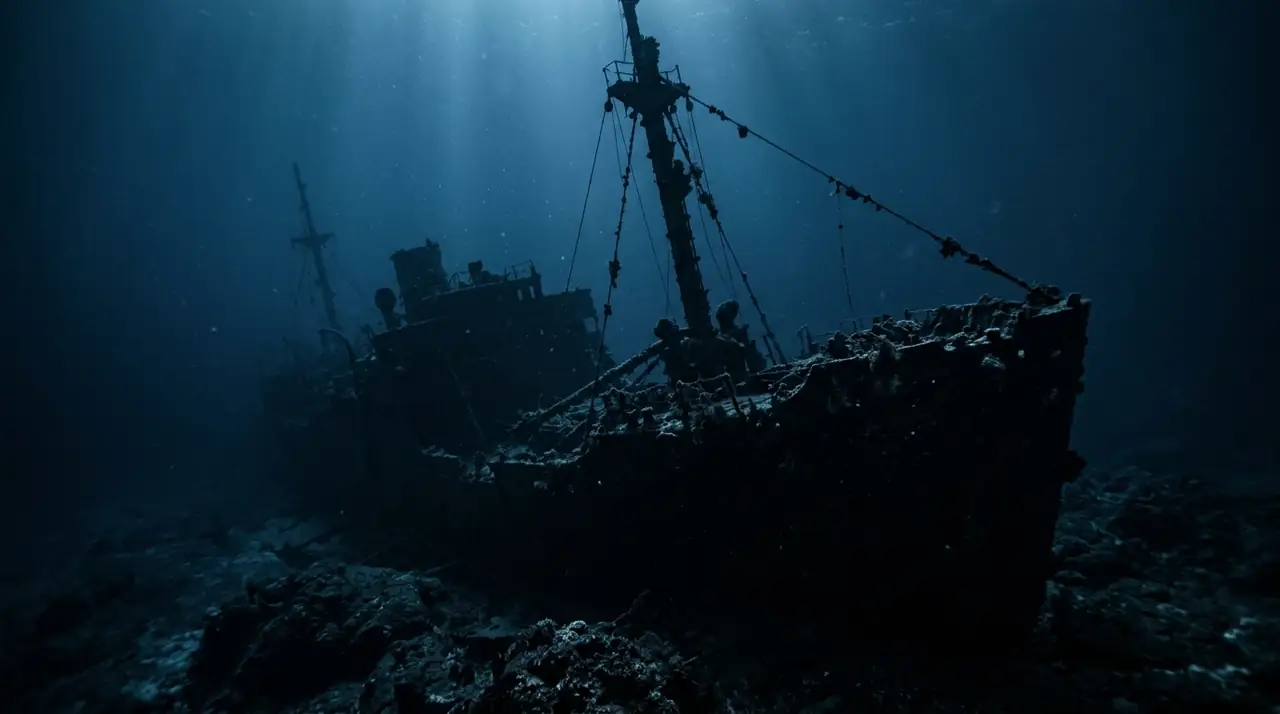
HMCS Saskatchewan Wreck
Overview
The HMCS Saskatchewan rests off Snake Island, a short boat ride from Nanaimo on Vancouver Island's east coast. This 111-metre Mackenzie-class destroyer escort served the Royal Canadian Navy from 1963 until 1994, then was deliberately sunk in 1997 by the Artificial Reef Society of British Columbia. Nearly three decades later, the transformation from warship to thriving artificial reef is complete, and the Saskatchewan ranks among Canada's finest wreck dives. The wreck sits upright on its keel at 37 metres, with the superstructure rising to 18 metres and the mast reaching 12 metres. Before sinking, the vessel was meticulously prepared: hull plates were cut to create swim-throughs, hatches removed or pinned open, and hazardous materials cleaned. You can swim through the engine room, navigate corridors, and emerge through pre-cut openings with daylight always visible. What makes the Saskatchewan special is the density of life colonising the hull. Plumose anemones blanket the upper structure in flowing white masses. Lingcod claim territorial perches on gun mounts and railings. Giant Pacific octopus are frequent residents — I have encountered them in the superstructure on multiple visits, their eight arms spread across the metal walls as they watch passing divers with evident intelligence. Rockfish cluster in the shadows, decorator crabs inch along the hull, and nudibranchs bring unexpected brightness to the grey steel. Dive operators in Nanaimo run regular charters, typically combining it with the nearby HMCS Cape Breton for a two-wreck day. Visibility is best from September through March at 10 to 20 metres. A drysuit is non-negotiable in these Pacific Northwest waters, where temperatures range from 7 to 13 degrees. For wreck enthusiasts visiting British Columbia, the Saskatchewan delivers a superbly engineered experience on a vessel with genuine naval heritage.
Early access
Plan a dive here
Open the DiveOne planner to sketch a recreational plan before you go. It is a planning assistant, not a dive computer.
Marine life
Dive profile
DEPTH PROFILE
DEPTH PROGRESSION & WAYPOINTS: HMCS Saskatchewan Wreck
Location
Frequently asked questions
Can I penetrate the HMCS Saskatchewan wreck?
Yes, the HMCS Saskatchewan was specifically prepared for recreational diver penetration before sinking in 1997. Large openings were cut into the hull and superstructure, hatches were removed or secured open, and hazardous materials were cleaned out. Multiple swim-throughs allow divers to pass through compartments with natural light visible at both ends. However, wreck penetration certification is recommended, and divers should carry a backup light and be comfortable in enclosed spaces.
How deep is the HMCS Saskatchewan?
The wreck rests on its keel on a sandy bottom at approximately 37 metres. The main superstructure rises to about 18 to 20 metres, and the top of the mast reaches approximately 12 metres. Most divers spend their bottom time exploring the superstructure between 18 and 30 metres before ascending to the mast area for their safety stop. The relatively deep seabed makes bottom time management important, especially on air.
What is the best time of year to dive the HMCS Saskatchewan?
The best visibility occurs from September through March, when plankton levels drop and visibility can reach 15 to 20 metres. Summer months often bring plankton blooms that reduce visibility to 5 to 8 metres, though the marine life is more active. Water temperatures are coldest in winter at around 7 degrees and warmest in late summer at around 13 degrees. A drysuit is essential year-round.
Reviews
Reviews
No reviews yet
Data Provenance
This profile is compiled from 3 operator submissions and 142 community logs. Key facts (depth, entry) are verified against official hydrographic charts.