HMAS Perth Wreck
Overview
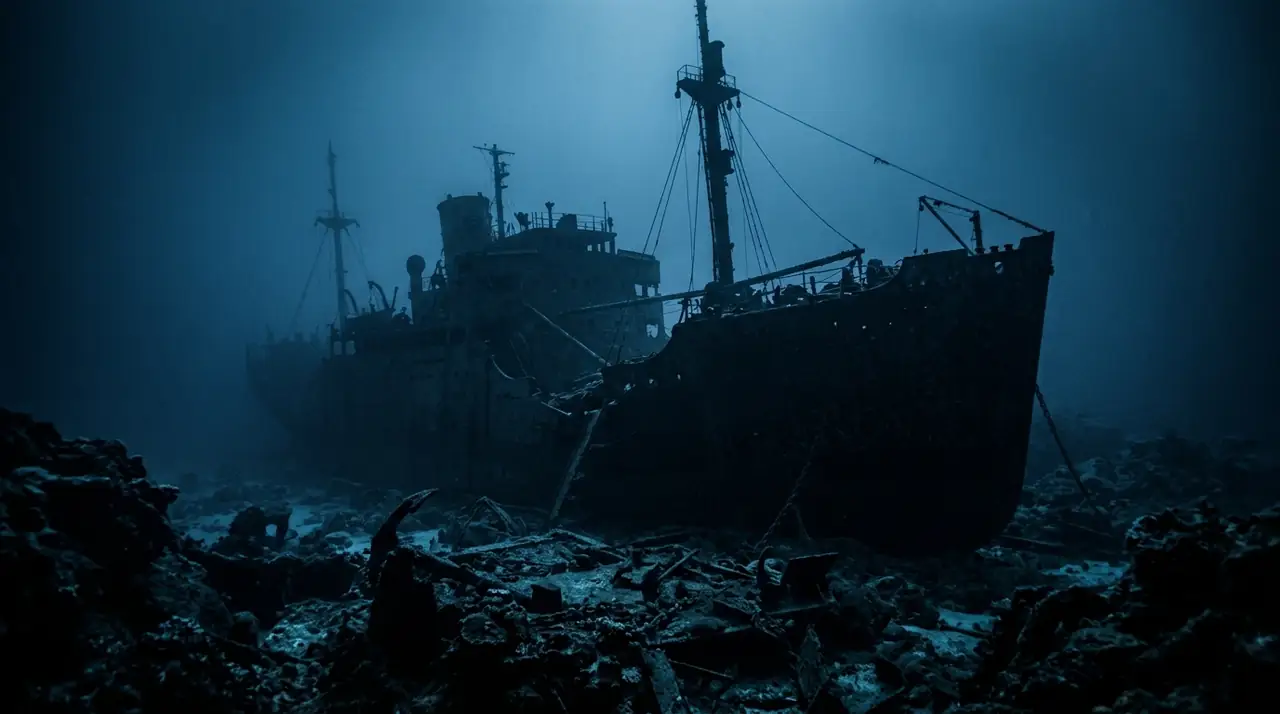
The HMAS Perth sits on the sandy bottom of King George Sound off Albany in Western Australia, a 133-metre destroyer escort that has undergone one of the most remarkable natural transformations of any dive wreck in Australian waters. Scuttled in 2001 after three decades of naval service, the ship rests upright at 36 metres with its superstructure rising to about 18 metres, creating a massive vertical structure in an otherwise featureless sandy expanse. Over two decades of immersion have turned cold grey steel into a vibrant living reef, and the result is a wreck dive that satisfies both history enthusiasts and marine life lovers in equal measure. The descent through the clear water of King George Sound reveals the wreck gradually, bow first, the raked lines of the destroyer escort emerging from the blue-green gloom with a dignity that belies her utilitarian military origins. The hull is now coated in a thick carpet of sponges in reds, oranges, yellows, and purples that rival any tropical reef for sheer colour. Soft corals have colonised the railings and mast structures, and the gun mounts, stripped of their weapons before scuttling, serve as pedestals for enormous basket sponges. Marine life on the Perth reflects the unique biodiversity of southern Western Australia. Western blue devils, an endemic species found nowhere else, dart between sponge clusters with their electric blue colouring. Harlequin fish, boldly striped in black and white, shelter in the superstructure. Blue gropers, large and absurdly friendly, follow divers with the insistence of underwater labradors. Wobbegong sharks drape themselves over deck fittings, their tasseled camouflage blending perfectly with the encrusting growth. Port Jackson sharks rest in the deeper compartments during winter, their bulldog faces unmistakable in torchlight. Penetration opportunities are a highlight. The bridge offers a fascinating swim-through with instrument panels still partially intact, natural light flooding through the windows and scuttling holes. Corridors below decks lead to compartments where bioluminescent comb jellies sometimes drift through the beams of your torch. The operations room, cleared of classified equipment long before sinking, has become a gallery of marine growth. Every surface tells two stories simultaneously: the engineered precision of a warship and the chaotic creativity of the ocean reclaiming it. The HMAS Perth is a cooler-water dive that demands appropriate exposure protection, but the thermal trade-off comes with a reward that tropical wrecks rarely match: the sheer density and colour of the temperate marine growth. Albany itself is a beautiful coastal town with excellent dive operators who know the wreck intimately and can tailor the dive to your experience level.
Early access
Plan a dive here
Open the DiveOne planner to sketch a recreational plan before you go. It is a planning assistant, not a dive computer.
Marine life
Dive profile
DEPTH PROFILE
DEPTH PROGRESSION & WAYPOINTS: HMAS Perth Wreck
Location
Frequently asked questions
What is the history of the HMAS Perth wreck in Albany?
This HMAS Perth, designated DE 38, was a River-class destroyer escort commissioned in 1965 and served in the Royal Australian Navy for over three decades. After decommissioning she was stripped of hazardous materials and deliberately scuttled in King George Sound off Albany in November 2001 to create a dive-accessible artificial reef. The wreck is heritage-listed by the Western Australian Museum and is not to be confused with the World War II cruiser HMAS Perth, which was sunk in the Sunda Strait in 1942.
Can I penetrate the HMAS Perth wreck?
Yes, several areas of the wreck are open for penetration. The bridge, operations room, and some forward compartments have been prepared with holes cut in the hull to provide emergency exits and ambient light. These areas are accessible to Advanced Open Water divers with wreck diving experience. Deeper internal sections including the engine room require technical wreck diving skills, proper lights, and ideally a local guide. The wreck is well-mapped and guide ropes are maintained in key penetration routes.
What water temperatures should I expect when diving the HMAS Perth in Albany?
King George Sound is a temperate diving environment with water temperatures ranging from about 15 degrees Celsius in winter to 21 degrees in late summer. A 7mm wetsuit or a semi-dry suit is recommended for most divers, with dry suit users finding the most comfort during the cooler months. The wreck sits at 36 metres where the water is typically a few degrees cooler than the surface. Despite the temperature, visibility in the sound is often excellent, reaching 25 metres on good days.
Reviews
Reviews
No reviews yet
Data Provenance
This profile is compiled from 3 operator submissions and 142 community logs. Key facts (depth, entry) are verified against official hydrographic charts.