Hallaniyat Islands
Overview
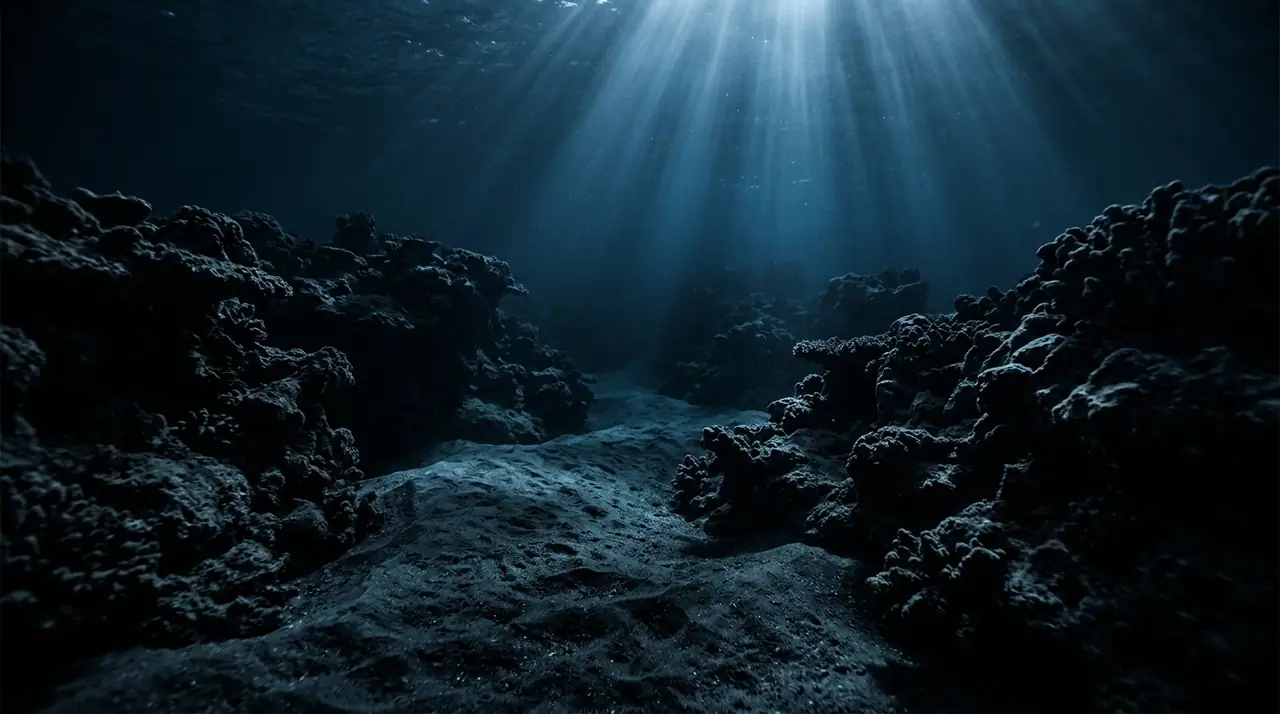
The Hallaniyat Islands are among the most remote and least-dived archipelagos accessible from the Arabian Peninsula, a chain of five islands approximately 40 kilometres off Oman's Dhofar coast. Reaching them requires an overnight crossing from Salalah on a liveaboard, and the number of divers who explore their reefs in any year can be counted in the low dozens. This extreme remoteness has preserved a marine environment of exceptional health. The Arabian Sea here is defined by the Somali Current and seasonal upwelling that creates one of the most productive marine zones in the Indian Ocean. Cold, nutrient-rich water rises from the deep during and after the monsoon season, fuelling plankton blooms that attract everything from whale sharks to humpback whales. I dived from a liveaboard anchored in a sheltered bay on the eastern side of Al Hallaniyah. The underwater topography was volcanic, with boulders and walls dropping to sandy plateaus at 25 to 30 metres. The sheer density of fish life struck me first. Schools of fusiliers and snappers moved in numbers I associate with pristine Pacific sites. Giant trevally hunted in packs along the reef edge, and Napoleon wrasses cruised with imperious calm. The coral coverage on protected sides of the islands is excellent, with extensive soft coral gardens in pink, orange, and white covering the walls. Hard coral formations are diverse and healthy, showing none of the bleaching visible on more trafficked Arabian reefs. Hawksbill and green turtles are resident, and lobsters of considerable size occupy crevices. The megafauna potential elevates the Hallaniyat Islands from excellent to extraordinary. Whale sharks transit these waters, attracted by upwelling-driven productivity. The resident Arabian Sea humpback whale population, numbering fewer than 100 genetically distinct individuals, uses these waters as habitat. Encountering one of the rarest whale populations on earth while diving pristine reefs exists in very few places worldwide. The Hallaniyat Islands are not a dive holiday in any conventional sense. They are an expedition, requiring commitment and flexibility. What they offer in return is diving on reefs that function as nature intended, without the fingerprints of human exploitation.
Early access
Plan a dive here
Open the DiveOne planner to sketch a recreational plan before you go. It is a planning assistant, not a dive computer.
Marine life
Dive profile
DEPTH PROFILE
DEPTH PROGRESSION & WAYPOINTS: Hallaniyat Islands
Location
Frequently asked questions
How do I get to the Hallaniyat Islands for diving?
The Hallaniyat Islands are accessible only by boat from Salalah or Hasik on the Dhofar coast of southern Oman. The crossing takes approximately 8 to 12 hours depending on departure point and sea conditions. Dedicated liveaboard expeditions are the only practical way to dive the islands, as there is no tourist infrastructure on the islands themselves. A small fishing community exists on Al Hallaniyah, the largest island, but there are no dive facilities. Liveaboard trips are organised by a very small number of Oman-based operators, typically as multi-day expeditions combining the islands with other Dhofar coast sites.
What are the Arabian Sea humpback whales?
The Arabian Sea humpback whales are a genetically distinct and non-migratory population of humpback whales that remain in the waters off Oman year-round rather than making the long migrations typical of their species. This population is estimated at fewer than 100 individuals and is considered critically endangered. The waters around the Hallaniyat Islands are part of their habitat, and sightings are possible particularly between October and March. In-water encounters are not guaranteed and are subject to strict regulations to protect this vulnerable population.
Is the Hallaniyat Islands diving affected by the monsoon?
The southwest monsoon, known locally as the khareef, affects the Dhofar coast from June through September, bringing fog, drizzle, and rough seas that make the crossing to the Hallaniyat Islands impossible. The diving season runs from October through May, with the best conditions typically in November through March when seas have calmed but the upwelling-driven nutrient enrichment continues to attract marine life. October can be transitional with residual swell, and April to May sees warming waters but declining nutrient levels. All trips are weather-dependent, and operators may cancel or redirect based on conditions.
Reviews
Reviews
No reviews yet
Data Provenance
This profile is compiled from 3 operator submissions and 142 community logs. Key facts (depth, entry) are verified against official hydrographic charts.