Glover's Reef Atoll
Overview
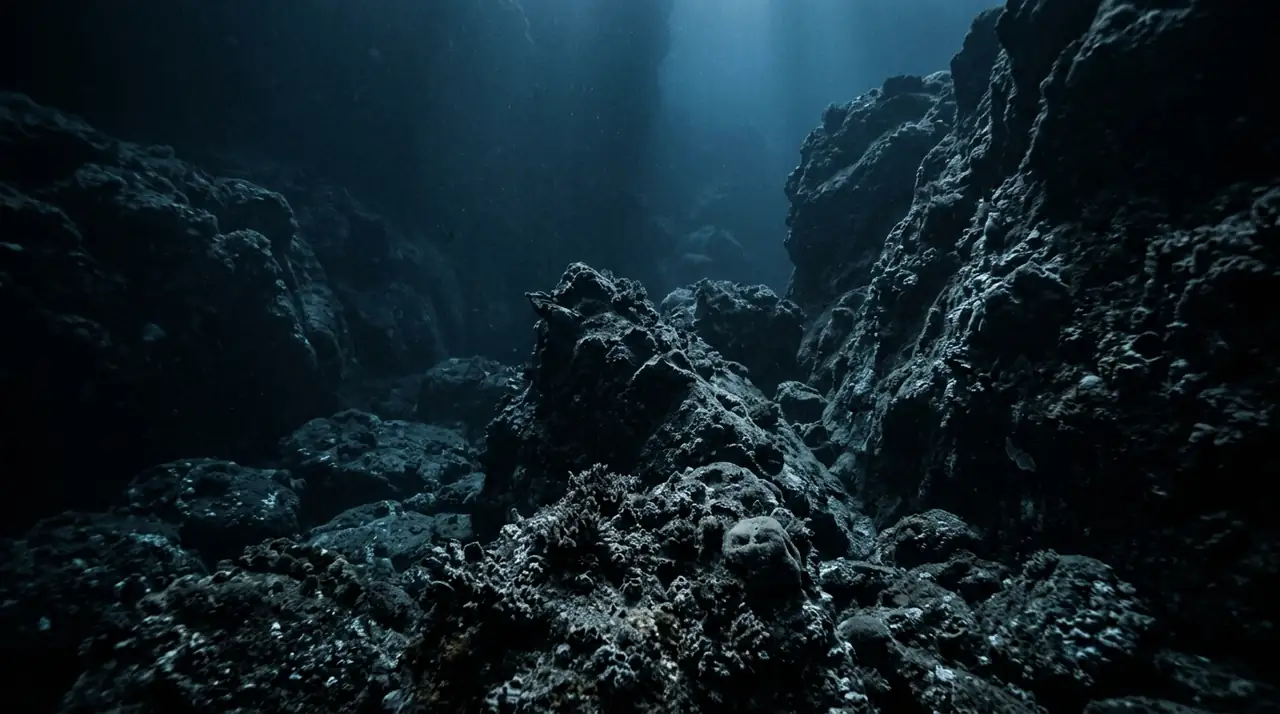
Glover's Reef Atoll rises from deep Caribbean water forty-five kilometres off the coast of Belize, the southernmost and most isolated of the country's three oceanic atolls. A broken ring of reef encloses a turquoise lagoon roughly thirty-five kilometres long, dotted with patch reefs and tiny sand cayes. Designated a marine reserve in 1993 and part of the UNESCO World Heritage Belize Barrier Reef Reserve System, Glover's has been protected long enough for the results to be visible on every dive. The wall diving on Glover's outer reef is extraordinary. From the reef crest at around eight to ten metres, the bottom drops vertically into water exceeding eight hundred metres deep. The wall is encrusted with massive barrel sponges, sea fans, and healthy stands of elkhorn and staghorn coral that have largely disappeared from more heavily impacted Caribbean reefs. I drifted along the southeastern wall on an outgoing tide, and the abundance of life was immediately apparent. Schools of horse-eye jacks swirled in the blue just off the wall edge. Caribbean reef sharks cruised below at the edge of visibility. Eagle rays glided past in pairs, their spotted wings rippling in slow motion. On the wall itself, queen angelfish, rock beauties, and spotted drums occupied cleaning stations and crevices. The lagoon offers a completely different experience. Hundreds of patch reefs rise from the sandy floor, each a miniature ecosystem hosting juvenile fish, octopuses, and ray species. The shallow water warms quickly, and visibility varies, but the density of life on these small coral heads is remarkable. Glover's remoteness is both its challenge and its salvation. The two-hour boat crossing from Dangriga limits visitor numbers, and the handful of island lodges accommodate only small groups. On many dives, you will see no other boats. This isolation has preserved Glover's in a condition that represents what healthy Caribbean reef should look like, a living benchmark against which the decline elsewhere can be measured.
Early access
Plan a dive here
Open the DiveOne planner to sketch a recreational plan before you go. It is a planning assistant, not a dive computer.
Marine life
Dive profile
DEPTH PROFILE
DEPTH PROGRESSION & WAYPOINTS: Glover's Reef Atoll
Location
Near Dangriga, in the Stann Creek District region of Belize.
Frequently asked questions
How do I get to Glover's Reef Atoll?
Glover's Reef lies approximately 45 kilometres off the coast of Belize, making it the most remote of the country's three atolls. Access is typically by boat from Dangriga or Sittee River, with the crossing taking about two hours depending on sea conditions. Several island-based resorts and research stations operate on small cayes within the atoll lagoon, offering multi-day dive packages. There is no day-trip access due to the distance. Most visitors book week-long stays at one of the island lodges, which provide boat diving on the outer reef wall and lagoon patch reefs. Some liveaboard operations include Glover's Reef in their itineraries.
What makes Glover's Reef different from diving at Turneffe or Lighthouse Reef?
Glover's Reef is the most remote and least visited of Belize's three atolls, resulting in noticeably healthier reef and more abundant marine life. While Lighthouse Reef attracts visitors to the Great Blue Hole and Turneffe benefits from proximity to Belize City, Glover's sees a fraction of the dive traffic. The atoll is also a designated marine reserve with strictly enforced zones, including no-take areas where fishing is prohibited. The wall diving here is considered among the best in the Caribbean, with coral coverage and fish biomass significantly higher than on heavily dived reefs.
What is the marine reserve status of Glover's Reef?
Glover's Reef Atoll is part of the Belize Barrier Reef Reserve System, a UNESCO World Heritage Site. It was designated as a marine reserve in 1993 and managed by the Wildlife Conservation Society. The reserve is divided into zones including a general use zone allowing regulated fishing, a conservation zone with catch-and-release fishing only, and a wilderness zone where all extractive activities are prohibited. Research has documented significantly higher fish biomass in the protected zones compared to fished areas, demonstrating the effectiveness of the reserve management.
Reviews
Reviews
No reviews yet
Data Provenance
This profile is compiled from 3 operator submissions and 142 community logs. Key facts (depth, entry) are verified against official hydrographic charts.