Gizo Hellcat Wreck
Overview
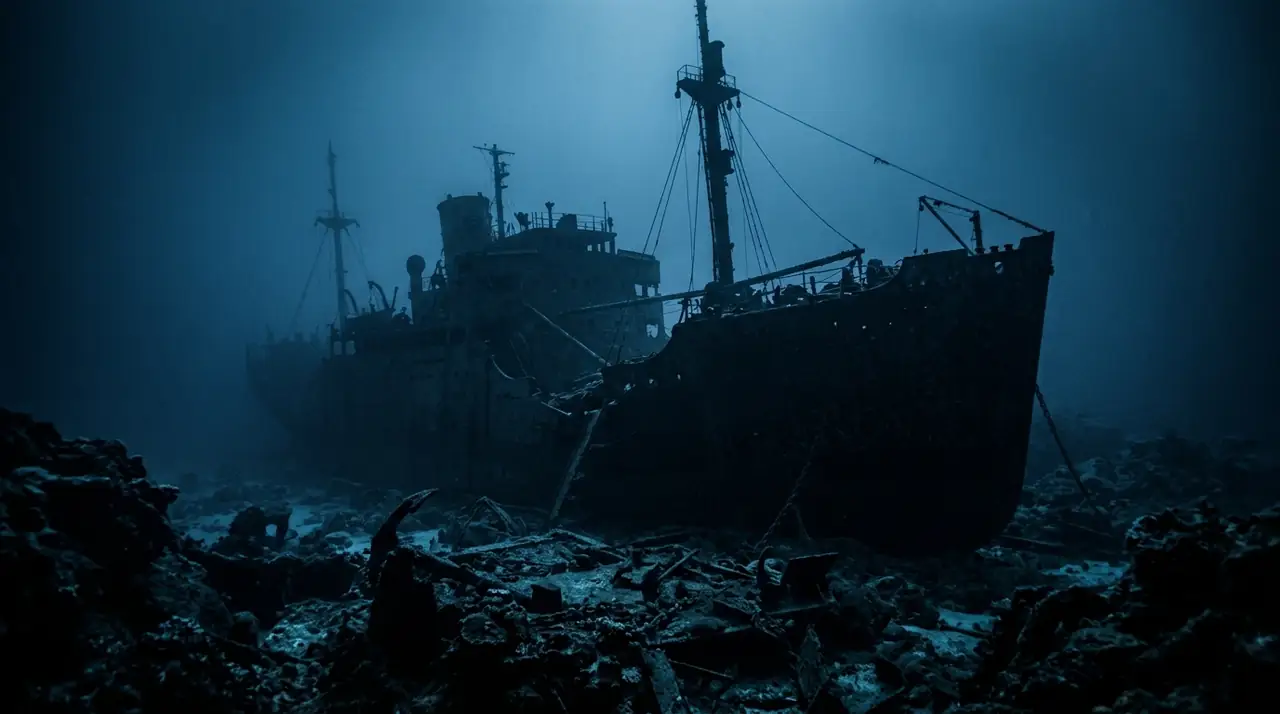
The Hellcat sits on a coral reef near Gizo Island as though it had just completed a gentle landing, its wheels down, its wings level, and its propeller pointing toward the surface as if the engine might restart at any moment. The aircraft is a Grumman F6F Hellcat, the fighter that turned the tide of the Pacific air war in America's favour, and this particular example came to rest on this reef more than eighty years ago during the ferocious aerial campaigns over the Solomon Islands. In the decades since, the reef has claimed it, wrapping coral tendrils around its aluminium bones and populating its cockpit with fish that have no concept of the machine's violent purpose. I dived the Hellcat on an August morning when the Solomon Islands were at their seasonal best, the trade winds keeping the humidity manageable and the seas around Gizo flat and clear. The boat ride from town took fifteen minutes, crossing water that shifted from harbour-green to offshore-blue as we cleared the reef passages. The wreck's location was marked by nothing on the surface; only the skipper's knowledge of reef marks indicated where we should anchor. The descent was into fifteen metres of clear water, visibility perhaps twenty metres, and the Hellcat appeared as a dark shape on the bright coral substrate that resolved into recognisable form as I approached. The first thing I noticed was the propeller: three broad aluminium blades, now furred with algae and coral but still holding their shape, pointed upward at a slight angle. The engine cowling behind the propeller was intact, its circular form providing an unmistakable reference to the aircraft's identity even before the rest of the machine came into view.
Early access
Plan a dive here
Open the DiveOne planner to sketch a recreational plan before you go. It is a planning assistant, not a dive computer.
Marine life
Dive profile
DEPTH PROFILE
DEPTH PROGRESSION & WAYPOINTS: Gizo Hellcat Wreck
Location
Near Gizo, in the Western Province region of Solomon Islands.
Frequently asked questions
What is the history of the Gizo Hellcat?
The Grumman F6F Hellcat was the United States Navy's primary carrier-based fighter aircraft during the latter half of World War II. The specific aircraft resting on the reef near Gizo is believed to have been lost during the intense aerial campaigns over the Solomon Islands in 1943 or 1944, when American forces fought to wrest control of the islands from Japanese occupation. The circumstances of the particular crash are not definitively documented, as hundreds of aircraft were lost in the Solomon Islands campaign. The pilot's fate is unknown. The aircraft came to rest on a shallow reef in an upright position, which has allowed exceptional preservation of its structure compared to aircraft that impacted the water at high speed.
What condition is the Hellcat wreck in?
The Hellcat is in remarkably good condition for an aircraft that has been submerged for over eighty years. The fuselage is largely intact, with the engine cowling, propeller, wings, and tail section all recognisable. The cockpit is open and can be observed from above, though penetration is not possible due to the small size. Coral growth covers much of the aircraft's surface, particularly the wings and horizontal stabiliser, and the wreck has become integrated into the surrounding reef ecosystem. The aluminium alloy of the aircraft's skin has corroded in places, creating openings that marine life uses as habitat. The propeller remains attached to the engine and is one of the most photographed elements of the wreck. The landing gear is extended, suggesting a controlled ditching rather than an uncontrolled crash.
How do I arrange diving at the Gizo Hellcat?
Several dive operators in Gizo town offer regular boat trips to the Hellcat wreck, which is located approximately fifteen minutes by boat from the town jetty. Gizo is the capital of Western Province and is accessible by domestic flights from Honiara, the national capital, with several flights per week. Accommodation in Gizo ranges from basic guesthouses to a few mid-range lodges. The dive operators also offer multi-site packages that include other WWII wrecks in the area, reef dives, and manta ray encounters at nearby cleaning stations. The diving season runs from April to November, with June to September offering the best conditions. Equipment rental is available but bringing personal gear is recommended due to the remote location.
Reviews
Reviews
No reviews yet
Data Provenance
This profile is compiled from 3 operator submissions and 142 community logs. Key facts (depth, entry) are verified against official hydrographic charts.