Gardur Geothermal Dive
Overview
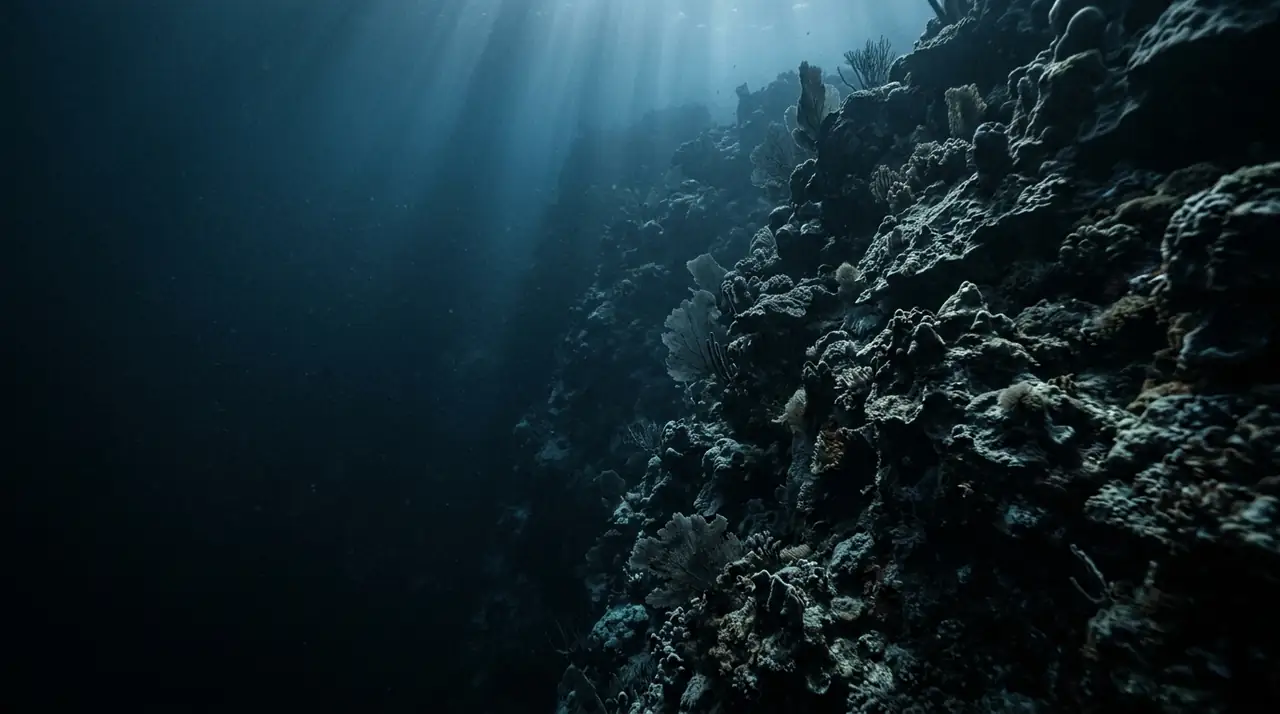
The Reykjanes Peninsula is where Iceland's volcanic spine meets the North Atlantic, and the coastline around Gardur bears the raw geology of that collision. Lava fields run straight into the sea, their tortured surfaces forming underwater arches, tunnels, and chimneys that look more like another planet than the bottom of a European ocean. Hidden among these formations, geothermal vents leak warm water into the frigid Atlantic, creating thermal gradients that shimmer like heat haze and support pockets of life that would not otherwise survive at this latitude. I entered from the old harbour on a July morning with the midnight sun still high enough to cast long shadows across the lava shore. The water hit like a cold slap despite my drysuit, and I descended through a cloud of suspended particulate into a kelp forest that materialised at about four metres. The kelp here is dense and amber, each frond thick as a belt, and the forest canopy filtered the Arctic light into a golden-green twilight. Lumpfish clung to the kelp stalks, their round bodies dotted with bony tubercles, looking like ornaments hung on a strange Christmas tree. Below the kelp line the lava formations began. The rock is basalt, dark and porous, sculpted by both volcanic eruption and ocean erosion into shapes that defy easy description. I swam through a natural archway wide enough for two divers abreast and emerged into a small amphitheatre where the rock walls were covered in dahlia anemones, their red and white tentacles expanded in the mild current. Breadcrumb sponges encrusted every horizontal surface in bright orange patches. The geothermal vent was subtle. I felt it before I saw it, a gradual warming on my exposed face as I approached a fissure in the lava floor. The water above the vent shimmered with convection, and the rock immediately surrounding it was stained yellow with mineral deposits. Small fish congregated in the warm plume, and the algae growth near the vent was noticeably denser than the surrounding rock. It was like finding a campfire in a frozen wilderness. The highlight came in the deeper section at fifteen metres. My guide pointed into a shadowed crevice and there, staring back with an expression of profound grumpiness, was an Atlantic wolffish. Its face is unforgettable, heavy jaw with protruding canine teeth, broad head, and small eyes that somehow convey both menace and resignation. It did not retreat. We watched each other for a full minute before I backed away and left it to its lava tube.
Early access
Plan a dive here
Open the DiveOne planner to sketch a recreational plan before you go. It is a planning assistant, not a dive computer.
Marine life
Dive profile
DEPTH PROFILE
DEPTH PROGRESSION & WAYPOINTS: Gardur Geothermal Dive
Location
Near Keflavik, in the Reykjanes Peninsula region of Iceland.
Frequently asked questions
Do I need a drysuit to dive at Gardur and what exposure protection is required?
A drysuit is absolutely essential for diving at Gardur. The North Atlantic water temperature ranges from 4 degrees Celsius in winter to about 12 degrees in summer, and even near the geothermal vents the warming effect is localised and does not raise the ambient temperature significantly. You will need a drysuit with adequate thermal undergarments, a hood, dry gloves or thick wet gloves, and boots. Most Icelandic dive operators provide full drysuit rental including undergarments. If you have not dived in a drysuit before, you should complete a drysuit specialty course before attempting this dive.
Where exactly is Gardur and how do I get there from Reykjavik?
Gardur is located on the northwestern tip of the Reykjanes Peninsula, about 50 kilometres from Reykjavik and only 15 minutes' drive from Keflavik International Airport. The drive from Reykjavik takes approximately 45 minutes. Several dive operators based in Reykjavik and Keflavik offer guided dives at Gardur, though it is less commercially popular than Silfra. The entry point is accessible from the old harbour area, and the site has parking and basic facilities. Self-guided diving is possible for experienced divers with drysuit qualifications.
How does diving at Gardur compare to Silfra?
Silfra and Gardur could not be more different despite both being in Iceland. Silfra is a freshwater fissure with crystal-clear visibility exceeding 100 metres but minimal marine life. Gardur is a North Atlantic ocean dive with visibility between five and fifteen metres but far richer marine life including wolffish, lumpfish, kelp forests, and geothermal vents. Silfra is about the geological spectacle while Gardur is about biological encounters in a volcanic seascape. Many visiting divers do both to experience the full range of Icelandic diving. Gardur is generally considered the more challenging dive due to ocean conditions and lower visibility.
Reviews
Reviews
No reviews yet
Data Provenance
This profile is compiled from 3 operator submissions and 142 community logs. Key facts (depth, entry) are verified against official hydrographic charts.