Garajau Marine Reserve
Overview
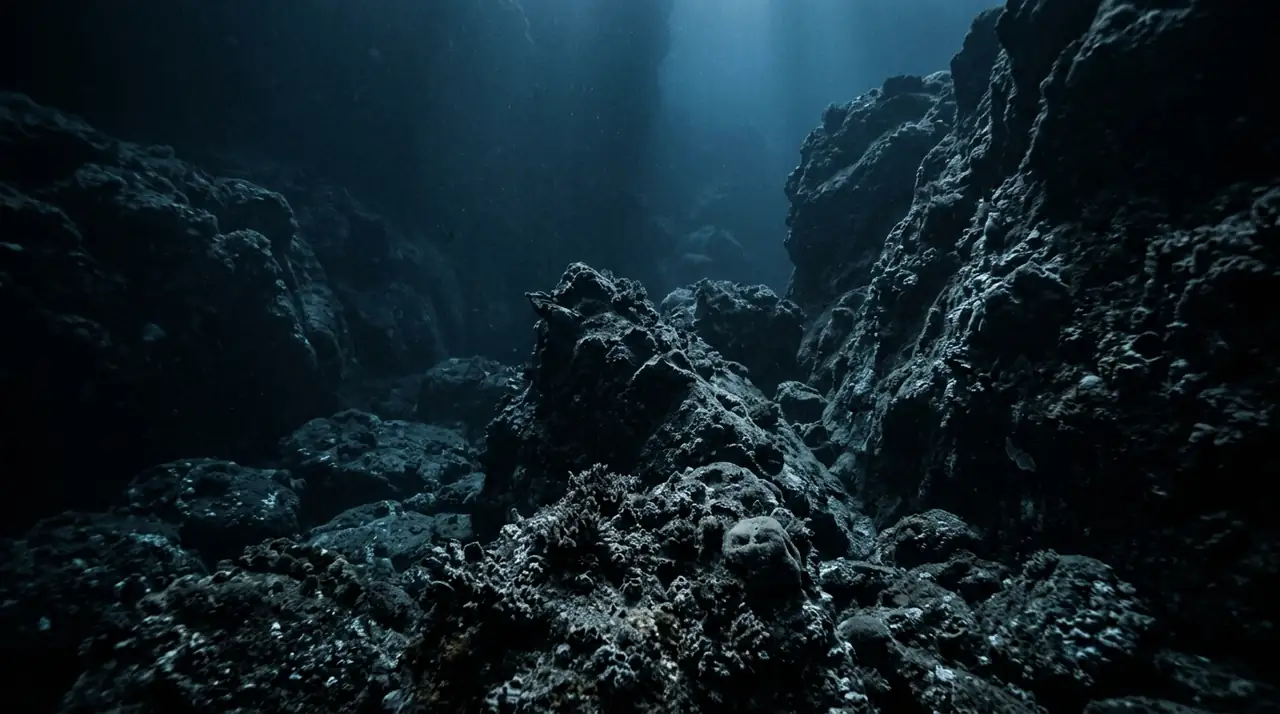
Garajau Marine Reserve is Madeira's underwater crown jewel and arguably the best demonstration of marine protection success in the eastern Atlantic. Established in 1986 along Madeira's south coast just east of Funchal, this small reserve has allowed marine life to recover to a state that gives visitors a genuine glimpse of what Atlantic reefs looked like before centuries of fishing pressure. The centrepiece of that recovery is the dusky grouper. I descended through clear Atlantic water over dark basalt boulders, ridges, and sandy channels. Visibility stretched well beyond 30 metres. The volcanic rock created a dramatic landscape of overhangs, arches, and crevices draped with brown and green algae, with patches of black coral in deeper sections. The first dusky grouper appeared at around 15 metres and did not flee. Instead, it turned and swam directly toward me, stopping barely two metres away. Its enormous dark eyes regarded me with calm curiosity. Over the dive I encountered at least eight groupers of substantial size, several exceeding an estimated 30 kilograms. Their tameness was extraordinary and directly attributable to four decades of protection. Beyond the groupers, the reserve hosts impressive pelagic schools. Dense formations of Atlantic barracuda circled above the reef. Amberjack cruised in from the blue. Trumpetfish hung vertically among sea fans, their elongated bodies almost invisible. The volcanic topography provides constant interest. Swim-throughs carved by ancient lava flows connected sections. Massive boulders created caverns where moray eels coiled in darkness. Sandy channels between rock formations hosted octopus in their characteristic boulder-pile dens. Deeper sections near 30 metres featured small forests of black coral swaying in the Atlantic swell. The possibility of encountering a Mediterranean monk seal adds genuine rarity to any Garajau dive. While sightings are uncommon, the reserve lies within range of the small population inhabiting caves along Madeira's coast. Garajau proves convincingly that protection works, the contrast between abundant life inside and depleted reefs outside its boundaries stark and moving.
Early access
Plan a dive here
Open the DiveOne planner to sketch a recreational plan before you go. It is a planning assistant, not a dive computer.
Marine life
Dive profile
DEPTH PROFILE
DEPTH PROGRESSION & WAYPOINTS: Garajau Marine Reserve
Location
Frequently asked questions
How big are the groupers at Garajau?
The dusky groupers at Garajau are among the largest in Europe, with individuals regularly exceeding 30 kilograms and some estimated at over 50 kilograms. Decades of strict marine protection have allowed these normally shy fish to reach impressive sizes and lose their fear of divers. They approach closely, sometimes within arm's reach, and will follow divers throughout a dive. The density of large groupers at Garajau is considered one of the highest in the Atlantic, making it a benchmark for what marine protection can achieve.
What are the rules for diving in the Garajau Marine Reserve?
Diving in Garajau requires authorization from the reserve management and must be conducted through licensed dive operators. The number of divers is limited daily to reduce impact. Touching marine life is strictly prohibited, and gloves may not be worn to discourage contact. Spearfishing and collecting are banned. Anchoring is prohibited, with dive boats using permanent mooring buoys. These restrictions have been in place since the reserve was established in 1986 and are credited with the remarkable recovery of marine life, particularly the grouper population.
When might I see monk seals at Garajau?
Mediterranean monk seal sightings at Garajau are rare but documented, as a small population inhabits caves along Madeira's coast. Sightings are more likely during the summer months from June to September when the seals are more active. The Desertas Islands southeast of Madeira host the main monk seal colony, and individuals occasionally range to the Garajau reserve. Any encounter should be treated with extreme care, maintaining maximum distance and avoiding any behaviour that might disturb this critically endangered species.
Reviews
Reviews
No reviews yet
Data Provenance
This profile is compiled from 3 operator submissions and 142 community logs. Key facts (depth, entry) are verified against official hydrographic charts.