Formigas Islets
Overview
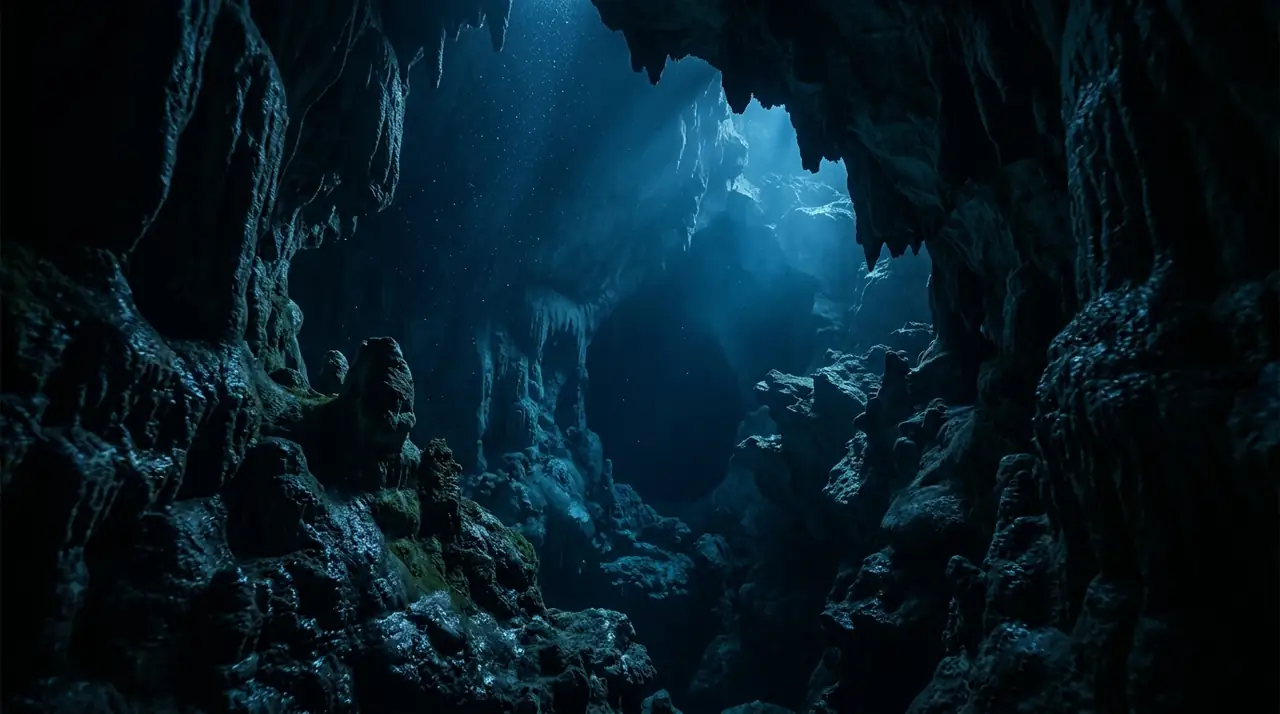
The Formigas Islets are a chain of small rocky outcrops and submerged pinnacles rising from the Atlantic floor approximately forty kilometres east of Sao Miguel, the largest island in the Azores. The islets themselves barely break the surface, low and wave-battered, but beneath the waterline they anchor a submarine reef system that supports one of the most impressive concentrations of pelagic life in the North Atlantic. The two-hour boat crossing from Vila Franca do Campo builds anticipation. The Azorean coastline drops away, and the open Atlantic stretches in every direction. Common dolphins frequently ride the bow wave, and the occasional loggerhead turtle drifts past. As the Formigas appear on the horizon, the water colour shifts from coastal blue to deep oceanic indigo. The diving centres on submerged pinnacles surrounding the islets, rocky seamount structures rising from depth to within eight metres of the surface. These pinnacles act as biological magnets, concentrating nutrients and life in the otherwise featureless mid-ocean. Schools of yellowmouth barracuda circle the peaks in silver spirals. Massive dusky groupers hold station in rocky crevices with the confidence of animals in a long-established reserve. The mobula rays are the signature experience. From July through September, schools of hundreds of Mobula tarapacana gather around the seamount, believed to be one of the largest such aggregations in the North Atlantic. The rays cruise in loose formations, their diamond-shaped bodies rippling through the water column in waves that seem choreographed. Encountering a school of two hundred rays at fifteen metres, with nothing but blue water below and the pinnacle rising beside you, is one of diving's truly transcendent experiences. Blue sharks and occasionally shortfin mako sharks cruise the surrounding waters, drawn by the same productivity. These encounters are opportunistic, but their frequency speaks to the health of this marine ecosystem. The Formigas marine reserve, protected since 1988, represents the Azores at their most wild. The conditions demand respect: currents can be strong, weather can change, and the nearest harbour is two hours away. But for advanced divers, Formigas delivers big animal encounters rivalling far more famous destinations.
Early access
Plan a dive here
Open the DiveOne planner to sketch a recreational plan before you go. It is a planning assistant, not a dive computer.
Marine life
Dive profile
DEPTH PROFILE
DEPTH PROGRESSION & WAYPOINTS: Formigas Islets
Location
Near Vila Franca do Campo, in the Azores region of Portugal.
Frequently asked questions
How do I get to the Formigas Islets?
The Formigas Islets lie approximately 40 kilometres east-northeast of Sao Miguel, the main island of the Azores. Access is by boat from Vila Franca do Campo or Ponta Delgada, with the crossing taking approximately two hours depending on sea conditions. Due to the distance and Atlantic exposure, trips are weather-dependent and typically only operate from June through October when conditions are most favorable. Several dive operators on Sao Miguel offer day trips, and availability must be booked in advance as trips run only with sufficient participants and suitable weather windows. The crossing can be rough, and sea sickness medication is recommended.
What makes the Formigas marine reserve special?
The Formigas Islets and surrounding Dollabarat Reef were designated a nature reserve in 1988, making them one of the oldest marine protected areas in the Azores. The reserve encompasses the islets, surrounding waters, and several submerged pinnacles rising from the Atlantic seafloor. The nutrient-rich waters at this mid-Atlantic location support exceptional pelagic life, including what is believed to be one of the largest seasonal aggregations of mobula rays in the North Atlantic. The isolation and protected status mean that fish biomass on the submerged reef is significantly higher than on most Azorean dive sites.
What diving experience is required for Formigas?
Formigas is recommended for advanced divers with experience in open-water and current diving. Conditions can be challenging, with strong currents, surge near the pinnacles, and limited shelter if weather deteriorates during the dive. Most operators require Advanced Open Water certification as a minimum, and preference is given to divers with logged experience in current and blue water environments. The depth of the main pinnacles ranges from around 8 metres at the shallowest points to well beyond recreational limits. Safety stops in blue water with current are a regular feature of these dives.
Reviews
Reviews
No reviews yet
Data Provenance
This profile is compiled from 3 operator submissions and 142 community logs. Key facts (depth, entry) are verified against official hydrographic charts.