Fathers Reefs
Overview
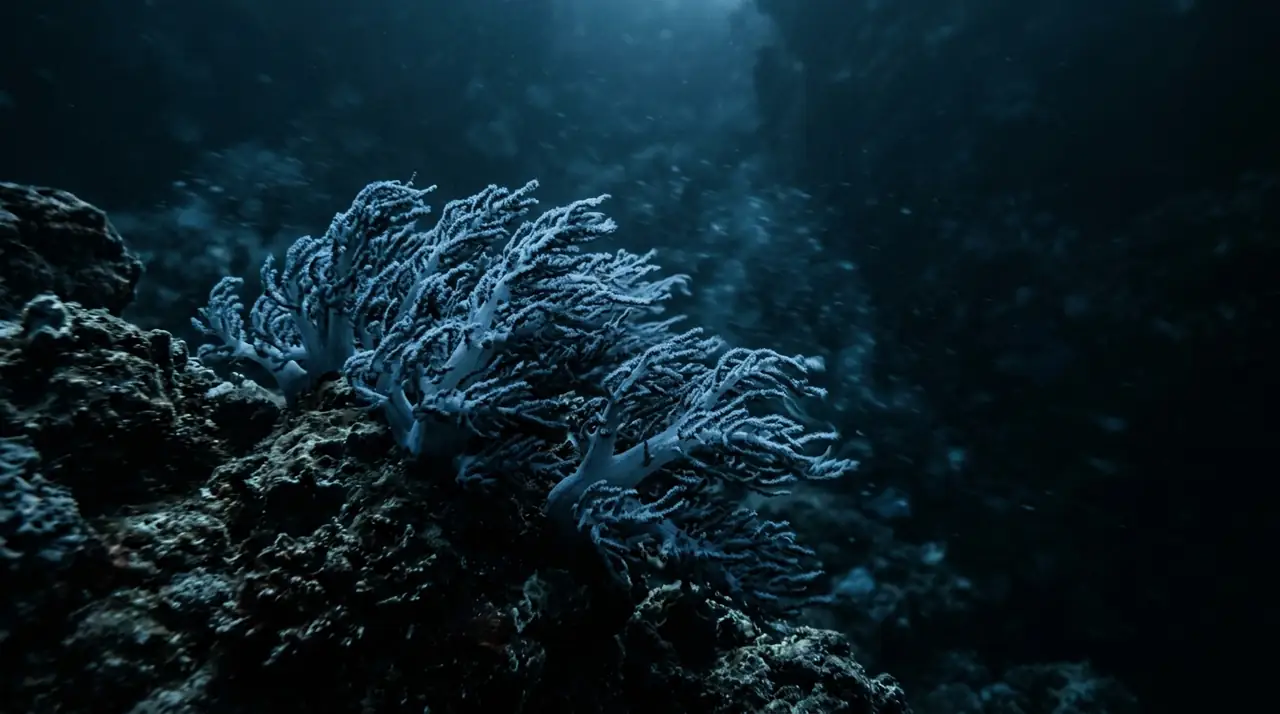
Fathers Reefs are a collection of volcanic seamounts rising from the deep blue waters at the centre of Kimbe Bay in Papua New Guinea's West New Britain Province. These isolated underwater mountains, formed by ancient volcanic activity on the Bismarck Sea floor, ascend from depths exceeding 500 metres to within five metres of the surface. Their remoteness from land-based influences has preserved coral and fish communities of exceptional health and diversity. The seamounts' upper slopes are covered in dense hard coral gardens that marine scientists rank among the most pristine in the entire Coral Triangle. Massive table corals extend outward in overlapping tiers, some reaching three metres in diameter. Staghorn thickets grow in profusion on the sheltered sides, while robust plate corals and encrusting species dominate the current-exposed faces. The coral coverage is so complete and healthy that new growth visibly competes for every available surface. Fish diversity is equally remarkable. Scientific surveys have recorded over 400 species on these seamounts, a concentration of biodiversity that reflects Kimbe Bay's position at the epicentre of marine species richness. Schools of barracuda and dogtooth tuna patrol the deeper flanks, while the summit teems with anthias, damselfish, and wrasses of every description. Pygmy seahorses cling to gorgonian fans, and mandarin fish emerge from rubble patches at dusk. Hammerhead sharks are occasionally sighted in the blue water below 30 metres. The volcanic topography creates dramatic underwater architecture with vertical walls, chimney-like formations, and caverns draped in sea fans and sponges. Each seamount offers distinct character, and multiple dives across the complex reveal different habitats and species assemblages. The visibility in Kimbe Bay's oceanic water frequently exceeds 30 metres, illuminating the reefs with tropical sunlight that reveals their full chromatic splendour. Fathers Reefs represent Papua New Guinea diving at its finest, combining world-class biodiversity with the raw beauty of untouched underwater volcanic landscapes.
Early access
Plan a dive here
Open the DiveOne planner to sketch a recreational plan before you go. It is a planning assistant, not a dive computer.
Marine life
Dive profile
DEPTH PROFILE
DEPTH PROGRESSION & WAYPOINTS: Fathers Reefs
Location
Near Kimbe, in the West New Britain region of Papua New Guinea.
Frequently asked questions
How do I reach Fathers Reefs in Kimbe Bay?
Fathers Reefs are located in the open water of Kimbe Bay, approximately 30 kilometres from the town of Kimbe in West New Britain Province. Access is by dive boat from Kimbe or from one of the bay's dive resorts, with the boat ride taking about 45 minutes to one hour. Flights from Port Moresby to Hoskins Airport near Kimbe operate daily and take approximately one hour. Several dive resorts and liveaboard operators serve Kimbe Bay. Due to the distance from shore, dives at Fathers Reefs are typically conducted as full-day excursions with multiple dives and a surface interval on the boat.
What makes Fathers Reefs scientifically significant?
Fathers Reefs have been the subject of extensive marine biodiversity research, most notably through surveys conducted by The Nature Conservancy and various university research teams. These studies have documented over 400 fish species and 300 coral species on the seamounts, making them one of the most species-rich reef systems in the world. The reefs' isolation in deep water has protected them from land-based threats like sedimentation and agricultural runoff. They serve as a natural laboratory for studying coral reef ecology and resilience, and their data has contributed to Kimbe Bay's designation as a priority area for marine conservation in Papua New Guinea.
Reviews
Reviews
No reviews yet
Data Provenance
This profile is compiled from 3 operator submissions and 142 community logs. Key facts (depth, entry) are verified against official hydrographic charts.