Elphinstone South Plateau
Overview
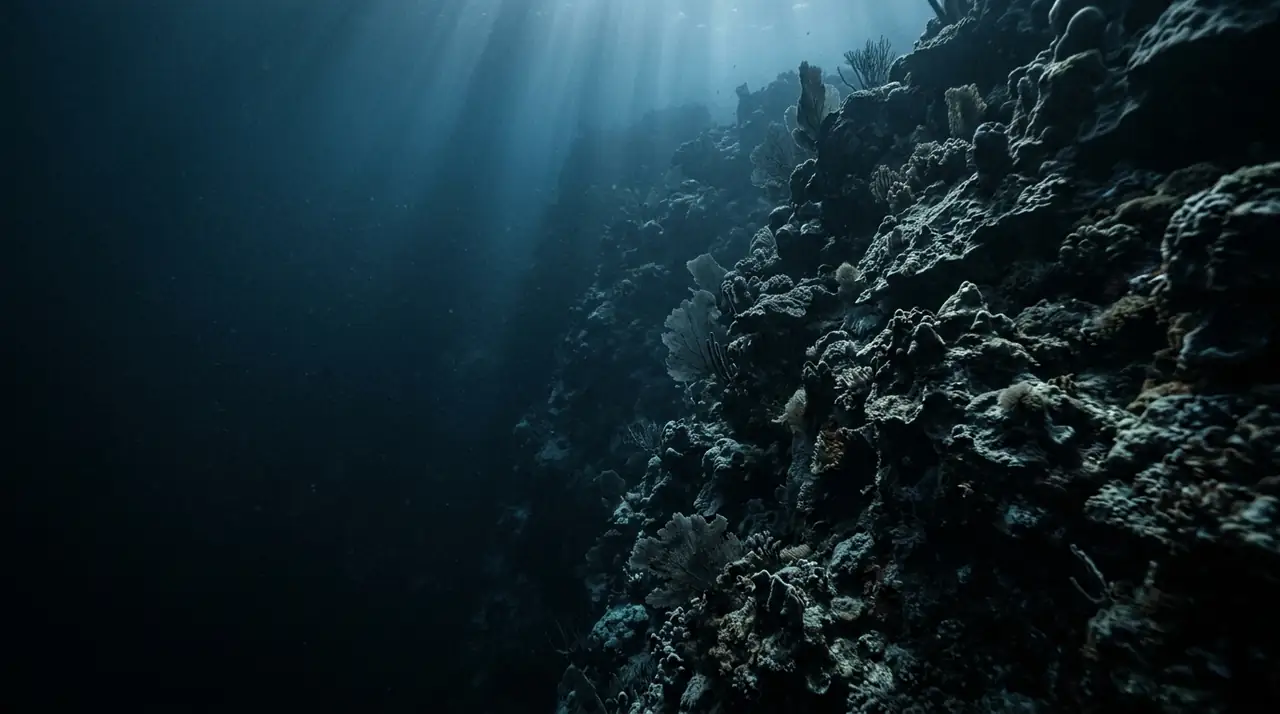
The South Plateau of Elphinstone Reef is where the Red Sea shows its teeth. This offshore reef, standing alone in deep water roughly ten kilometers from the Marsa Alam coast, is famous among serious divers worldwide for one animal: the oceanic whitetip shark. And while the reef's walls and northern approach have their own considerable appeal, it is the southern plateau that produces the encounters that divers travel from across the world to experience. Elphinstone is a narrow reef running roughly north-south, its walls dropping sheer on both sides. The southern end terminates in a sloping plateau that extends underwater from about 20 meters, covered in hard and soft corals, before the bottom falls away into the abyss. This transition zone between reef and open ocean is where the magic happens. You fin out over the plateau, the familiar comfort of the reef receding behind you, and scan the blue water ahead. The visibility is often 30 meters or more, and in that clarity, shapes materialize. Oceanic whitetips are unlike any other shark species I have encountered underwater. They move slowly, deliberately, their long pectoral fins extended like glider wings. They approach divers with a directness that is simultaneously thrilling and sobering, their eyes making unmistakable contact as they circle. The characteristic white-tipped dorsal and pectoral fins are instantly recognizable, and their rounded, bull-like snouts give them an expression of blunt curiosity. During peak season from September through December, sighting rates approach seventy percent, and encounters with two or three individuals on a single dive are not unusual. The plateau itself deserves attention beyond the shark encounters. The coral coverage is exceptional, with massive gorgonian fans at depth and dense soft coral growth in shades of magenta, orange, and violet along the walls leading to the plateau. These soft corals, backlit by the sun, produce some of the most iconic underwater photographs in the Red Sea. Napoleon wrasse patrol the reef edge, and schools of barracuda form in the current that sweeps across the plateau. Hammerhead sharks are the plateau's other major draw, cruising below the thermocline that typically sits at around 30 meters. Their sightings are less predictable than the oceanic whitetips but occur frequently enough to make every deep excursion along the plateau's edge an exercise in hopeful vigilance. Eagle rays swoop past, tuna streak through in pursuit of baitfish, and dolphins occasionally pass in the blue. This is a site that demands respect. Strong currents can sweep divers off the plateau into deep water, and the combination of depth, current, and large predatory animals means advanced certification, experience, and a competent dive guide are non-negotiable. The boat ride from shore takes thirty to forty-five minutes and can be rough. But for divers who accept the conditions, the South Plateau delivers what is arguably the Red Sea's single most electrifying animal encounter.
Early access
Plan a dive here
Open the DiveOne planner to sketch a recreational plan before you go. It is a planning assistant, not a dive computer.
Marine life
Dive profile
DEPTH PROFILE
DEPTH PROGRESSION & WAYPOINTS: Elphinstone South Plateau
Location
Frequently asked questions
How is Elphinstone South Plateau different from the main Elphinstone Reef dive?
Elphinstone Reef is a long, narrow offshore reef typically dived as a wall dive along its eastern or western faces. The South Plateau is a specific dive site at the reef's southern tip where the wall gives way to a sloping coral plateau that drops from 20 to 35 meters before plunging into deep water. This topography creates an aggregation point for pelagic species, particularly oceanic whitetip sharks, which are encountered far more frequently at the southern plateau than along the main reef walls.
How reliable are oceanic whitetip shark sightings?
During the peak season from September to December, oceanic whitetip sighting rates at the South Plateau are estimated at 50 to 70 percent per dive. The sharks are most frequently encountered in the blue water beyond the plateau's edge at depths between 15 and 30 meters. They are bold, curious animals that often approach divers closely, making the encounters intense and memorable. Outside peak season, sighting rates drop significantly but are never zero.
What safety precautions are needed for oceanic whitetip encounters?
Oceanic whitetip sharks are classified as potentially dangerous, and the encounters at Elphinstone require respect and awareness. Dive guides brief divers on behavior protocols: maintain eye contact, stay vertical in the water column, do not turn your back on approaching sharks, and keep hands close to your body. Groups stay compact and ascend together. The sharks are generally curious rather than aggressive, but their bold approach behavior means complacency is not appropriate. Solo diving at this site is strongly discouraged.
Reviews
Reviews
No reviews yet
Data Provenance
This profile is compiled from 3 operator submissions and 142 community logs. Key facts (depth, entry) are verified against official hydrographic charts.