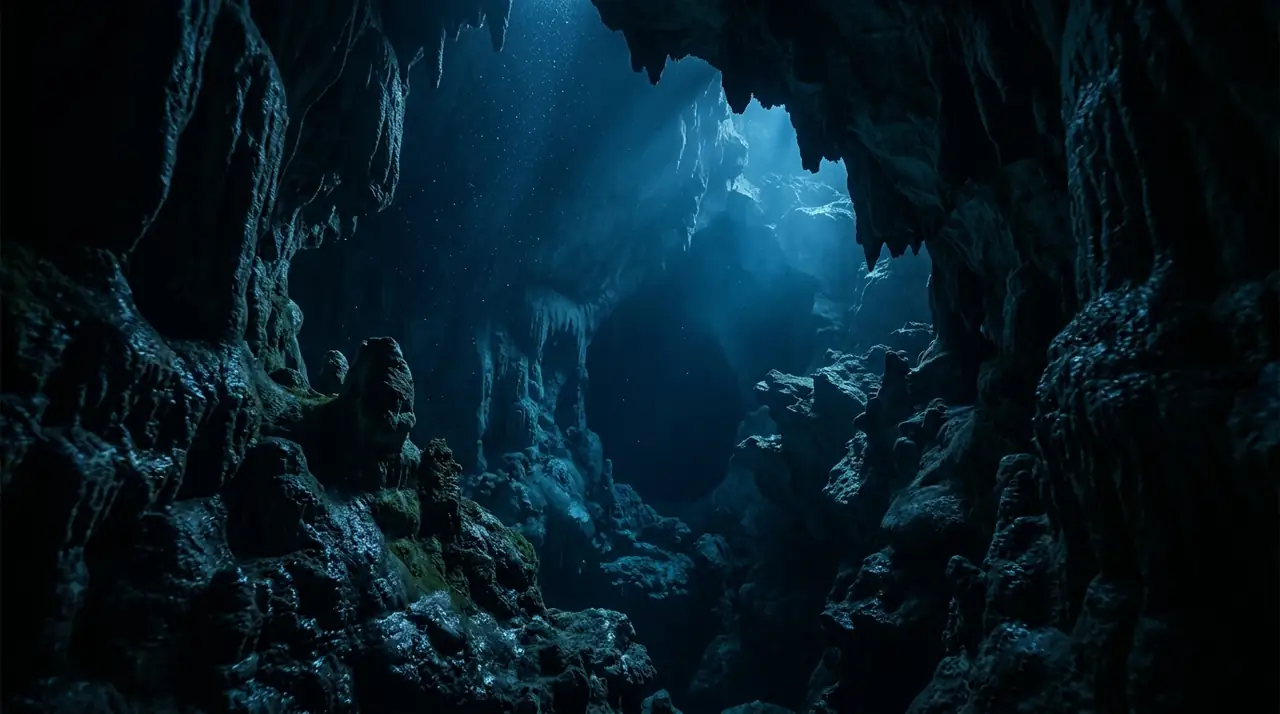
Elephant Cave (Spilia Elefantas)
Overview
Elephant Cave is one of the most extraordinary dive sites in the Mediterranean, where underwater exploration and paleontology intersect in a setting of raw natural beauty. Located on the Akrotiri Peninsula near Chania in western Crete, this sea cave is accessible only by diving through a submerged entrance and surfacing in a vast air chamber adorned with stalactites — and containing real fossilised elephant bones from the Pleistocene era. The dive begins with a boat ride from Chania along the rugged coastline. At the site, there is no visible entrance from the surface — just cliff face meeting sea. I descended to about 10 metres where the cave mouth opened, a wide arch framed by sponges and the occasional octopus watching from a crevice. Swimming through the short submerged tunnel of roughly 10 metres, my torch beam swept across walls encrusted with marine life before the passage angled upward and my head broke the surface. The air chamber is breathtaking. Stalactites hang from the ceiling like a natural cathedral, formed over millennia when the cave was above sea level during lower Ice Age sea stands. And then there are the bones. Embedded in the cave walls and floor are the fossilised remains of Deinotherium, discovered in 1999 by local speleologist Yiannis Papadakis. These bones are tens of thousands of years old, remnants of a time when Crete was connected to the mainland. The dive out through the tunnel is equally magical, with natural light streaming through the entrance and silhouetting divers against electric blue. The surrounding reef offers pleasant diving with painted combers, damselfish, and sea bream patrolling the rocky coastline. Elephant Cave is strictly protected, and diving is permitted only with authorised guides. The experience of swimming into darkness, surfacing in a hidden chamber, and standing before genuine prehistoric fossils creates a sense of wonder that transcends ordinary diving.
Early access
Plan a dive here
Open the DiveOne planner to sketch a recreational plan before you go. It is a planning assistant, not a dive computer.
Marine life
Dive profile
DEPTH PROFILE
DEPTH PROGRESSION & WAYPOINTS: Elephant Cave (Spilia Elefantas)
Location
Frequently asked questions
What are the fossilised bones inside Elephant Cave?
The cave contains fossilised remains of Deinotherium, an extinct relative of the elephant that lived during the Pleistocene era. The bones were discovered in 1999 by diver and speleologist Yiannis Papadakis. The fossils are embedded in the cave walls and floor of the air chamber above the waterline, and they are protected as a significant paleontological site. Touching or removing any material from the cave is strictly prohibited.
What certification do I need to dive Elephant Cave?
Open Water certification is sufficient as the submerged entrance tunnel is short, approximately 10 metres long, and the maximum depth is around 18 metres. However, comfort with overhead environments is essential as you swim through the submerged passage before surfacing in the air chamber. A local guide is mandatory, and dive centres in Chania run regular trips to the cave during summer.
How do I access Elephant Cave?
The cave is located on the western coast of the Akrotiri Peninsula near Chania and is accessible only from the sea. Dive boats depart from Chania or Marathi harbour and the journey takes about 30 minutes. There is no land access to the cave entrance. Diving is weather-dependent as the entrance faces open water and can be affected by northerly winds. Most operators schedule visits during calm weather windows.
Reviews
Reviews
No reviews yet
Data Provenance
This profile is compiled from 3 operator submissions and 142 community logs. Key facts (depth, entry) are verified against official hydrographic charts.