Daedalus Reef
Overview
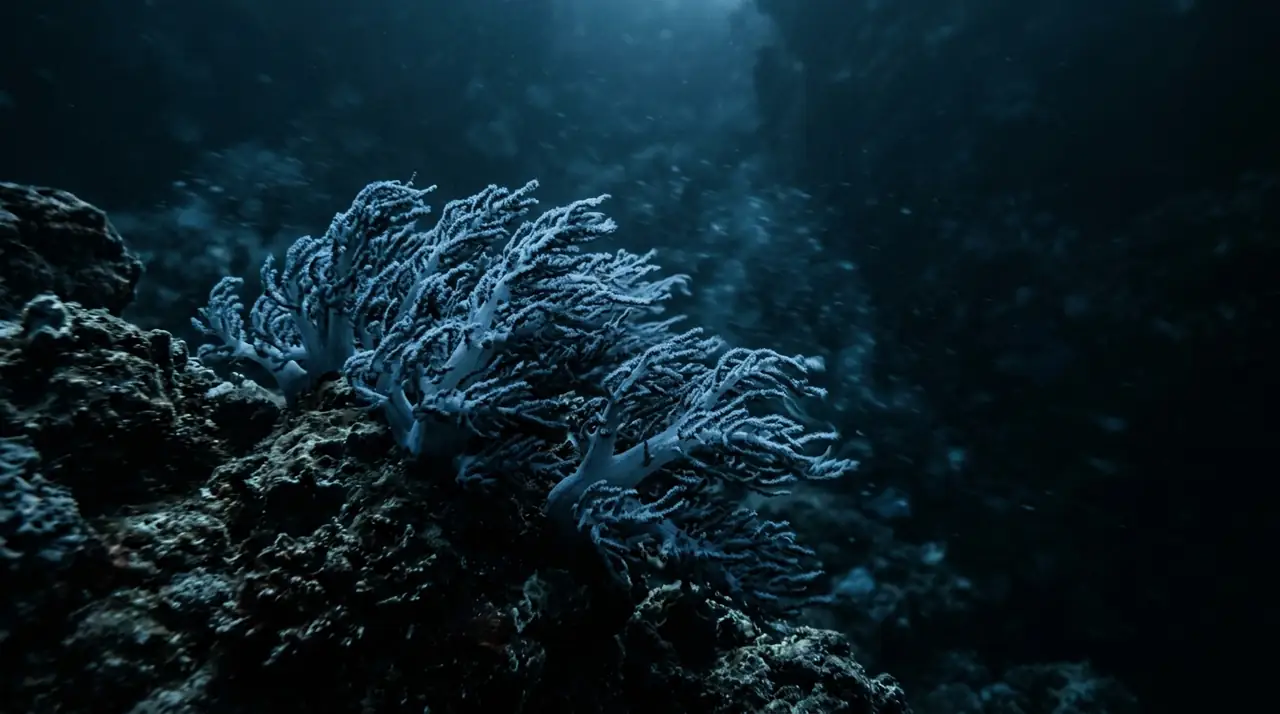
Daedalus Reef rises from the deep Red Sea like a fortress of coral, an isolated oceanic pinnacle marked by a century-old lighthouse that serves as both a navigation aid and a symbol of everything that makes deep-south Egyptian diving exceptional. Located eighty kilometers from the nearest land, Daedalus is surrounded by water that drops to hundreds of meters on all sides, creating the conditions that attract the pelagic megafauna for which this reef is justly famous. We arrived at dawn after an overnight crossing from Marsa Alam, the lighthouse emerging from the morning haze as the first light turned the water from black to deep indigo. The plan was to hit the northern plateau immediately, chasing the hammerheads before the sun drove them deep. I rolled in and descended quickly to thirty meters, the visibility an astonishing forty meters of blue perfection, the reef wall a vertical canvas of soft corals and gorgonian fans disappearing downward into bottomless blue. The hammerheads appeared at thirty-five meters, a school of perhaps twenty scalloped hammerheads moving in loose formation along the reef edge. Their distinctive T-shaped heads swung from side to side as they navigated by their ampullae of Lorenzini, reading the electromagnetic map of the reef. They passed within ten meters, close enough to see the individual markings on their grey flanks, before banking away into the blue in perfect synchrony. Later dives revealed the full breadth of Daedalus's appeal. The southern wall is where oceanic whitetip sharks are most commonly encountered, these bold, open-ocean predators approaching divers with a curiosity that borders on confrontation. Grey reef sharks patrol every corner of the reef, Napoleon wrasse the size of small cars drift along the walls, and enormous schools of barracuda form silver tornadoes in the blue water off the reef edge.
Early access
Plan a dive here
Open the DiveOne planner to sketch a recreational plan before you go. It is a planning assistant, not a dive computer.
Marine life
Dive profile
DEPTH PROFILE
DEPTH PROGRESSION & WAYPOINTS: Daedalus Reef
Location
Frequently asked questions
How do I reach Daedalus Reef?
Daedalus Reef is an isolated oceanic reef located approximately 80 kilometers offshore from Marsa Alam. It is exclusively accessed via liveaboard boats operating southern Red Sea itineraries, typically as part of multi-day trips that also include Elphinstone Reef and the Fury Shoal system. Liveaboard departures for Daedalus routes leave from Marsa Alam, Hurghada, or Port Ghalib. The crossing to Daedalus typically takes 6 to 8 hours overnight.
When is the best time to see hammerhead sharks at Daedalus?
Hammerhead shark encounters at Daedalus are most reliable from June to October, with peak season in July and August. The sharks are typically seen on the northern plateau during early morning dives, often in schools of 10 to 50 individuals cruising at depths of 25 to 40 meters. Early morning dives starting at first light give the best chances, as the sharks tend to move deeper as the sun rises. Water temperature during this period ranges from 26 to 30 degrees Celsius.
What skill level is required for diving Daedalus Reef?
Daedalus is an advanced dive site due to its exposed oceanic location, strong currents, deep walls, and the depths required for pelagic encounters. A minimum of 50 logged dives and Advanced Open Water certification is typically required by liveaboard operators, though many recommend 100 or more dives. Experience with current diving and blue-water descents is important. The northern plateau hammerhead dives often require descents to 30 to 40 meters, and currents can change direction rapidly.
Reviews
Reviews
No reviews yet
Data Provenance
This profile is compiled from 3 operator submissions and 142 community logs. Key facts (depth, entry) are verified against official hydrographic charts.