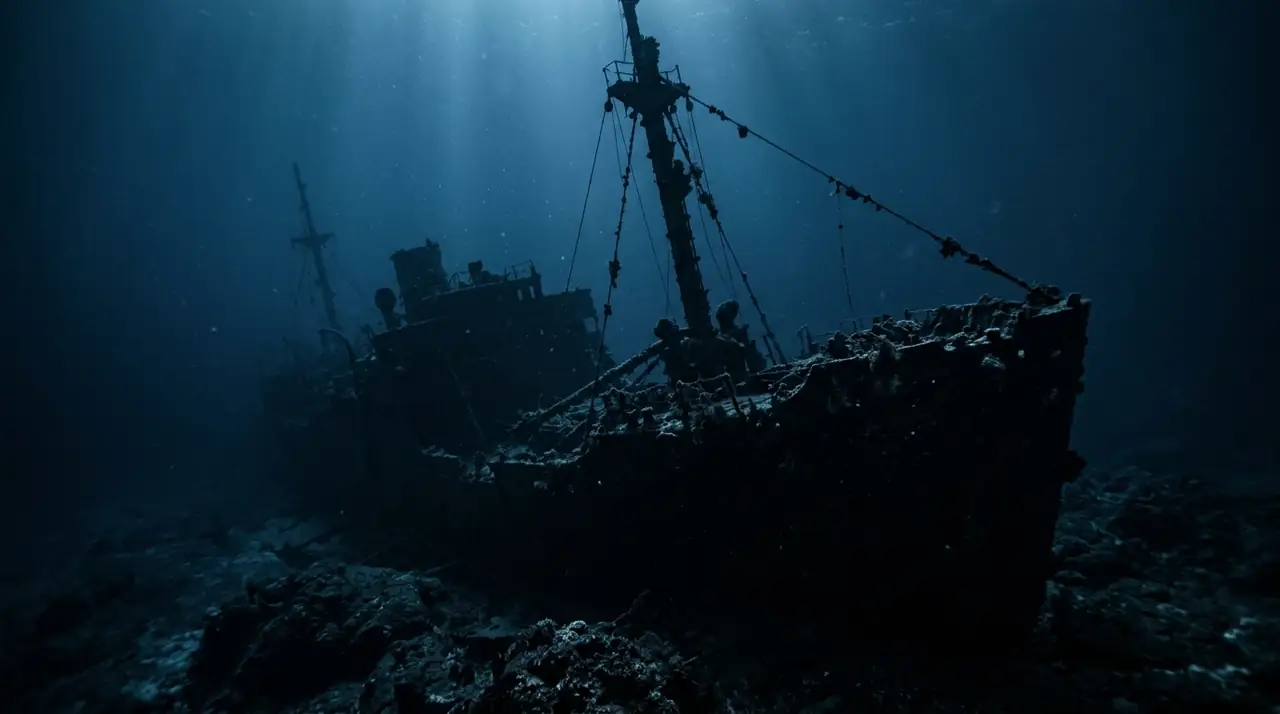
Corveta Ipiranga Wreck
Overview
Fernando de Noronha is Brazil's underwater crown jewel, a volcanic archipelago three hundred fifty kilometres off the northeast coast that combines UNESCO World Heritage status, strict visitor limits, and some of the clearest water in the Atlantic. Among its celebrated dive sites, the Corveta Ipiranga wreck adds a dimension of deep diving and military history to an island already rich in natural reef environments. The Corveta V17 Ipiranga was a Brazilian Navy corvette that served for decades before being cleaned, prepared, and deliberately sunk as an artificial reef and dive attraction. The vessel sits upright on a sandy seabed at sixty-two metres, her superstructure rising to around forty-two metres. In Fernando de Noronha's extraordinary visibility, the wreck is often visible from twenty metres above, a dark silhouette resting on white sand, growing larger as you descend through water so clear it feels like flying rather than diving. The descent is the experience. Fernando de Noronha's water clarity, routinely exceeding forty metres, means the blue surrounding you remains luminous far deeper than at most dive sites. At thirty metres you can see both the surface and the wreck below, suspended between two worlds. The wreck itself is colonised by encrusting coral, sponges, and anemones, and schools of barracuda circle the superstructure. Moray eels occupy the gun mounts, and nurse sharks rest in the shadows of the hull. The deeper sections of the wreck demand respect and appropriate certification. The main deck at fifty metres allows limited bottom time on air, and many operators offer trimix options for extended exploration. The wreck is largely intact and penetration is possible through open hatches and corridors, though only for experienced wreck divers with proper training. Between deep wreck dives, Fernando de Noronha's shallower sites provide contrast and recovery. Spinner dolphins in pods of dozens to hundreds frequent the bay, and encounters during surface intervals and boat transits are virtually guaranteed. Green sea turtles, protected and thriving, are so numerous that multiple sightings per dive are the norm rather than the exception. The archipelago's strict management, limiting daily visitors and requiring environmental fees, preserves the marine environment in conditions approaching the pristine. The trade-off is cost and planning: flights from Recife or Natal, the daily preservation tax, and limited dive operator capacity mean Fernando de Noronha is not a spontaneous destination. But the Corveta Ipiranga wreck, framed by Atlantic blue in visibility that seems impossible, rewards every layer of planning required to reach it.
Early access
Plan a dive here
Open the DiveOne planner to sketch a recreational plan before you go. It is a planning assistant, not a dive computer.
Marine life
Dive profile
DEPTH PROFILE
DEPTH PROGRESSION & WAYPOINTS: Corveta Ipiranga Wreck
Location
Near Vila dos Remédios, in the Fernando de Noronha region of Brazil.
Frequently asked questions
How deep is the Corveta Ipiranga wreck?
The Corveta Ipiranga sits upright on a sandy bottom with the keel at approximately 62 metres and the main deck structures between 45 and 55 metres. The top of the superstructure reaches approximately 42 metres. This makes the wreck a deep dive requiring advanced certification and ideally deep specialty or technical diving training. Some operators offer trimix dives for extended bottom time. The exceptional visibility at Fernando de Noronha, regularly exceeding 40 metres, means the wreck is visible from well above, and divers can appreciate the structure during descent even before reaching it.
How does this wreck differ from Buraco da Raquel?
Buraco da Raquel is a shallow volcanic formation and natural tidal pool environment at 18 metres maximum depth, showcasing Fernando de Noronha's geological character with octopuses and reef fish in volcanic rock formations. The Corveta Ipiranga is a purpose-sunk military vessel at 62 metres, offering a completely different diving experience focused on wreck penetration, deep diving, and artificial reef ecology. The two sites represent the range of diving Fernando de Noronha offers, from shallow natural formations to deep wreck diving, and visiting divers typically include both on their dive plans.
What are the regulations for diving at Fernando de Noronha?
Fernando de Noronha is a UNESCO World Heritage Site and Brazilian National Marine Park with strict diving regulations. Daily visitor numbers to the archipelago are limited, and an environmental preservation tax is charged per day of stay. Diving must be conducted through licensed operators, and daily diver numbers at each site are restricted. Only two dive operators are currently licensed to operate within the marine park. Spearfishing and collecting are prohibited, and all diving is guided. Advance booking is strongly recommended as dive slots fill quickly during peak season.
Reviews
Reviews
No reviews yet
Data Provenance
This profile is compiled from 3 operator submissions and 142 community logs. Key facts (depth, entry) are verified against official hydrographic charts.