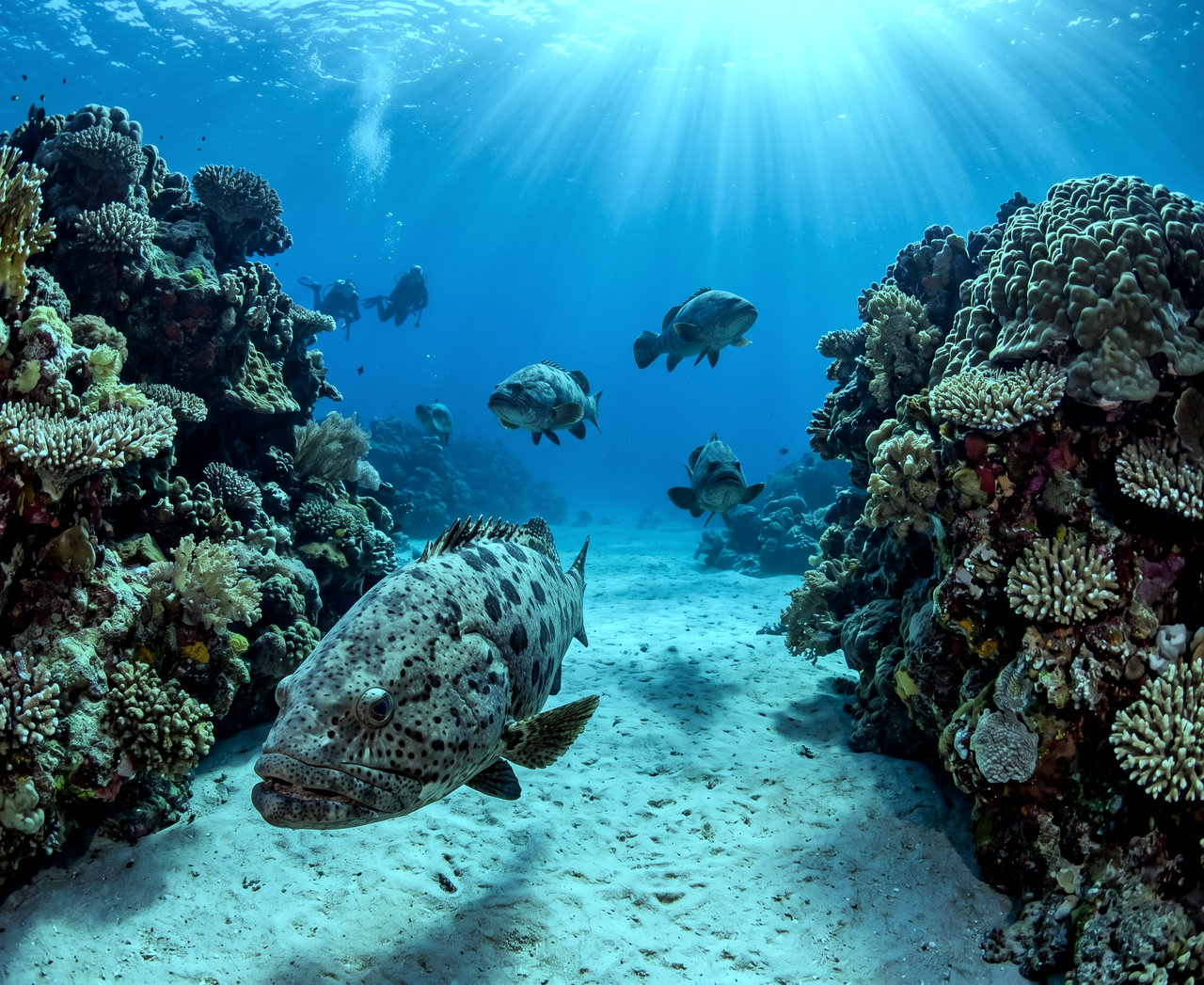
Cod Hole
Overview
Cod Hole is one of those dive sites whose reputation precedes it by decades, and it somehow still manages to exceed expectations when you finally get there. Located on Ribbon Reef Number 10 in the far northern Great Barrier Reef, this shallow coral garden has been famous since the 1970s for its population of giant potato cod, massive groupers that approach divers with a boldness and apparent friendliness that has made this site one of the most celebrated underwater encounters in the world. Getting here requires a liveaboard trip from Cairns, typically three days minimum, but every diver who makes the journey understands within the first five minutes of the dive why it was worth the effort. You descend to a sandy bottom surrounded by healthy hard coral bommies at around 18 to 25 metres, and almost immediately the potato cod appear. These are enormous fish, some well over a metre long and weighing close to 100 kilograms, their mottled brown and cream bodies built like barrels. They swim directly toward you with an unhurried confidence that suggests they have been doing this for a very long time, which they have. The Cod Hole population has been interacting with divers for over forty years, and their comfort level is extraordinary. A potato cod will hover at arm's length, making eye contact, gently bumping your camera housing with its broad head, apparently as interested in you as you are in it. The coral surrounding the cod's territory is pristine northern Great Barrier Reef at its best. Staghorn coral thickets, brain corals the size of small cars, and table corals large enough to shelter beneath create a complex three-dimensional habitat. Giant Maori wrasses cruise through with their distinctive humped foreheads and vivid green and blue colouring. Whitetip reef sharks rest on the sand between bommies. Red bass hang in the water column in small groups, their scarlet bodies vivid against the blue. Anemonefish of several species tend their host anemones with fierce territorial energy. What makes Cod Hole special is not just the marine life but the nature of the interaction. These are wild animals choosing to engage with humans, and the encounter feels mutual in a way that is rare in the natural world. There is no cage, no bait in the water, no barrier between you and a fish that weighs more than you do. You are simply sharing space on the reef, and the cod seem perfectly content with the arrangement. It is a profoundly moving experience that stays with divers long after the liveaboard has returned to port, and it has inspired many a career in marine biology and ocean conservation. Cod Hole is a reminder of what the ocean offers when we choose to be respectful visitors rather than extractive consumers.
Early access
Plan a dive here
Open the DiveOne planner to sketch a recreational plan before you go. It is a planning assistant, not a dive computer.
Marine life
Dive profile
DEPTH PROFILE
DEPTH PROGRESSION & WAYPOINTS: Cod Hole
Location
Frequently asked questions
How do I get to Cod Hole on the Great Barrier Reef?
Cod Hole is located on Ribbon Reef Number 10 in the far northern section of the Great Barrier Reef, roughly 250 kilometres north of Cairns. It is only accessible by liveaboard vessels, with most trips departing from Cairns or Port Douglas and lasting three to seven days. The Ribbon Reefs are too far offshore for day boats. Several reputable liveaboard operators run regular itineraries that include Cod Hole as a highlight, typically combined with other northern reef sites and sometimes Osprey Reef in the Coral Sea.
Are the potato cod at Cod Hole dangerous?
Potato cod are not dangerous to divers. Despite their intimidating size, with some individuals weighing close to 100 kilograms, they are gentle and curious animals that have been interacting positively with divers for decades. They approach divers voluntarily and seem to enjoy the interaction. Feeding the cod was once common practice but is now regulated, and most operators have moved to no-feed encounters. The cod remain friendly regardless of feeding, suggesting their approach behaviour is driven by genuine curiosity rather than food conditioning.
What is the best time of year to dive Cod Hole?
The dry season from June through November offers the most consistent conditions, with calmer seas, better visibility, and lower rainfall. This period also coincides with minke whale season from June to July, when dwarf minke whales sometimes appear at the Ribbon Reefs and offer snorkelling interactions. The wet season from December to May brings warmer water but reduced visibility and rougher seas that can make the crossing to the outer reefs uncomfortable. The cod are present year-round.
Reviews
Reviews
No reviews yet
Data Provenance
This profile is compiled from 3 operator submissions and 142 community logs. Key facts (depth, entry) are verified against official hydrographic charts.