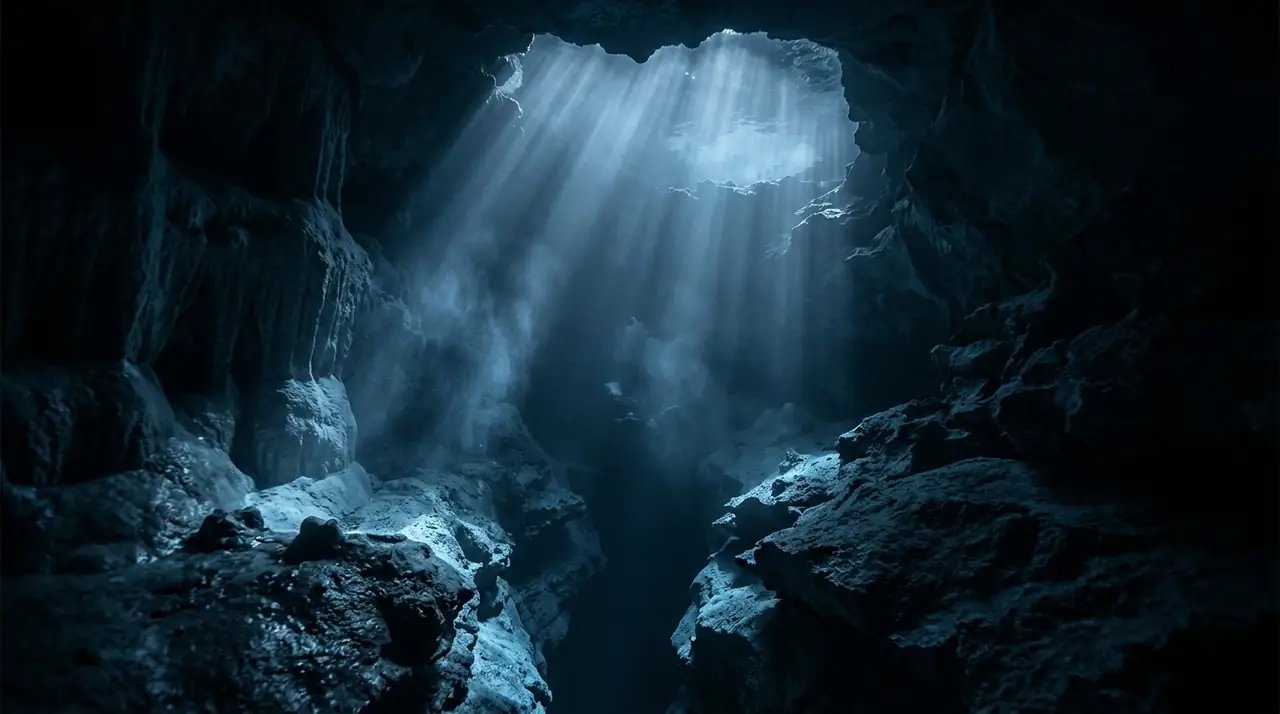
Christmas Island - Thundercliff Cave
Overview
Thundercliff Cave is one of the signature dive sites of Christmas Island, an isolated Australian territory rising from the depths of the Indian Ocean roughly 350 kilometres south of Java and 2,600 kilometres northwest of Perth. The island's volcanic origins and dramatic coastline have created a series of sea caves, and Thundercliff stands out for its cathedral-like proportions and the extraordinary blue light that floods its interior. The cave system consists of two interconnected chambers. The main cave is entered through a wide opening at approximately 6 metres depth, where the rippled sandy bottom leads into an expansive chamber. As divers swim inside, the natural light from the entrance creates an ethereal blue glow that illuminates the cavern walls, transforming the space into a natural cathedral. The sandy floor descends to around 22 metres at the back of the cave, where a passage leads to a second, smaller chamber with a more enclosed and intimate atmosphere. Stalactites formed during ice ages when sea levels were lower adorn the ceiling, evidence of the cave's ancient terrestrial past. Christmas Island's marine environment is extraordinary in its own right. The island rises steeply from the ocean floor, with the 4,000-metre-deep Java Trench lying nearby. This deep-water proximity brings oceanic species remarkably close to shore. Silvertip sharks patrol the outer reef wall, Napoleon wrasses of impressive size cruise the drop-offs, and spinner dolphins play in the shallows of Flying Fish Cove. From November to April, whale sharks visit the island's waters to feed on the incredible plankton bloom triggered by the annual red crab spawning, when billions of Christmas Island's famous red crabs release their larvae into the sea. The cave itself hosts a community of marine life adapted to the low-light environment. Painted crayfish cluster on the cave ceiling, lionfish hover near the entrance where prey is silhouetted against the light, and moray eels occupy crevices in the cave walls. The surrounding reef outside Thundercliff is in pristine condition, with visibility regularly reaching 30-40 metres in the clear oceanic water. Water temperatures remain warm year-round at 26-29 degrees Celsius. Christmas Island's isolation means that diving here is an uncrowded, off-the-beaten-track experience. The island's sole dive operator, based in Flying Fish Cove, offers personalised trips to over 20 dive sites around the coastline. The combination of Thundercliff Cave's atmospheric beauty, whale shark encounters, and pristine tropical reef diving makes Christmas Island one of Australia's most underrated dive destinations.
Early access
Plan a dive here
Open the DiveOne planner to sketch a recreational plan before you go. It is a planning assistant, not a dive computer.
Marine life
Dive profile
DEPTH PROFILE
DEPTH PROGRESSION & WAYPOINTS: Christmas Island - Thundercliff Cave
Location
Near Flying Fish Cove, in the Indian Ocean Territories region of Australia.
Frequently asked questions
What is Thundercliff Cave like to dive?
Thundercliff Cave is one of Christmas Island's signature dive sites, consisting of two interconnected sea caves. The main chamber is entered at around 6 metres depth through a wide entrance that floods the interior with stunning blue light. The sandy floor descends to about 22 metres, and the cave is large enough that ambient light from the entrance illuminates most of the interior. A second, smaller cave connects to the first and offers a more enclosed atmosphere. No cave diving certification is required as the caves have large openings and clear exit routes.
When can I see whale sharks at Christmas Island?
Whale sharks visit Christmas Island's waters from approximately November to April, with peak sightings from December to March coinciding with the annual red crab spawning. As billions of red crab larvae wash into the sea, they create a massive plankton event that attracts whale sharks, manta rays, and other filter feeders. Christmas Island offers a less commercialised whale shark experience than Western Australia's Ningaloo, with fewer boats and divers in the water.
How do I get to Christmas Island for diving?
Christmas Island is an Australian external territory in the Indian Ocean, approximately 2,600 kilometres northwest of Perth and 350 kilometres south of Jakarta. Flights operate from Perth several times weekly, with a flight time of approximately 3.5 hours. The island has one dive operator, Extra Divers, based in Flying Fish Cove. With only about 1,800 residents and very few tourists, diving at Christmas Island is an uncrowded and pristine experience.
Reviews
Reviews
No reviews yet
Data Provenance
This profile is compiled from 3 operator submissions and 142 community logs. Key facts (depth, entry) are verified against official hydrographic charts.