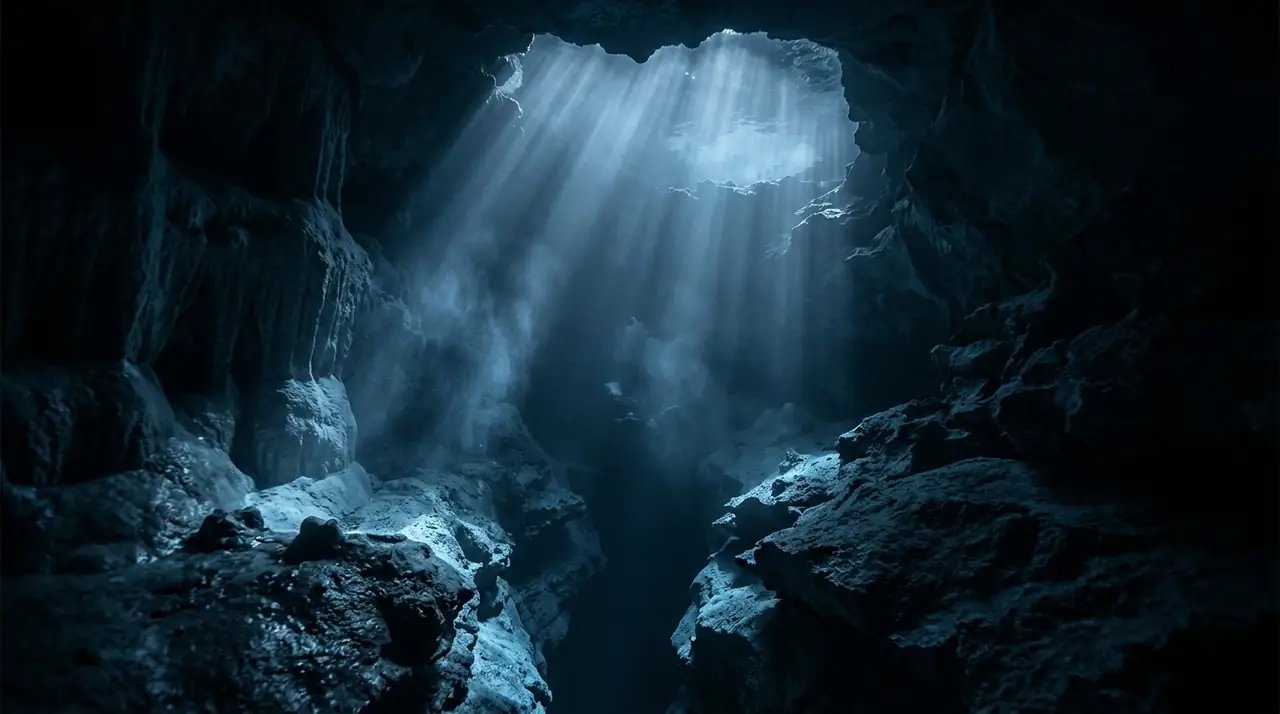
Ceuta Underwater Caves
Overview
The underwater caves of Ceuta occupy one of the most geographically extraordinary positions of any dive site -- beneath the rocky headland of Monte Hacho, where Africa reaches its closest point to Europe and the Atlantic meets the Mediterranean. These cave systems, carved into volcanic basalt by two colliding water masses, combine genuine overhead diving with the biological richness of the Strait of Gibraltar's unique oceanography. I descended along the cliff face on Ceuta's eastern shore, following my guide into the first cavern at around 12 meters. The volcanic rock was dark and textured, covered in orange and yellow sponges, with long-spined sea urchins clustered in every depression. As the cavern narrowed, torch beams revealed walls crusted with red coral and clusters of spiny lobsters backing into crevices. A massive dusky grouper -- easily 15 kilograms -- held station at the cavern's deepest point, unfazed by our lights. The system opens into connected chambers, some with high ceilings, others requiring single-file passage. Light shafts pierce through cracks in the rock above, creating ethereal blue-white columns in the dark water. Conger eels of impressive length drape themselves across rocky ledges, their pale bodies ghostly in the torchlight. What makes Ceuta's caves biologically exceptional is the mixing of Atlantic and Mediterranean fauna. Amberjack and barracuda patrol the entrances, drawn by the strait's currents. Inside, Mediterranean species like red coral and moray eels share space with Atlantic visitors including large conger eels and cold-water nudibranchs. The volcanic substrate supports encrusting life of extraordinary density. The experience is intensified by knowing where you are -- at one of the great oceanic crossroads, beneath a fortress fought over for thousands of years. Surfacing with the Spanish coast visible across the strait, the contrast between the silent underworld and the bustling surface is complete and striking.
Early access
Plan a dive here
Open the DiveOne planner to sketch a recreational plan before you go. It is a planning assistant, not a dive computer.
Marine life
Dive profile
DEPTH PROFILE
DEPTH PROGRESSION & WAYPOINTS: Ceuta Underwater Caves
Location
Frequently asked questions
What makes Ceuta's underwater caves unique?
Ceuta sits at the junction of the Atlantic Ocean and the Mediterranean Sea at the Strait of Gibraltar, one of the most oceanographically dynamic zones in the world. The cave systems are carved into volcanic rock from the Monte Hacho geological formation, creating dark chambers, narrow tunnels, and dramatic caverns with light effects. The mixing of Atlantic and Mediterranean waters brings species from both ecosystems together in the same dive site, producing an unusual biodiversity that includes both cold-water and warm-water species.
What qualifications do I need to dive the Ceuta caves?
The outer cavern areas with natural light penetration are accessible to advanced open water divers with cavern training or extensive experience. Deeper cave penetrations beyond the light zone require full cave diving certification, redundant equipment, and guideline protocols. Local dive operators offer guided cavern tours for qualified divers and can arrange cave-specific training. A minimum of 50 logged dives and comfort in overhead environments is recommended even for the cavern sections.
How do I get to Ceuta for diving?
Ceuta is a Spanish autonomous city on the northern tip of Morocco. It is reached by fast ferry from Algeciras in southern Spain, which takes approximately 30 minutes. There is no airport in Ceuta. Several dive centres operate in the city, offering both shore and boat diving. Accommodation is available in the city centre. EU citizens can enter freely as Ceuta is Spanish territory, while other nationalities should check Spanish visa requirements.
Reviews
Reviews
No reviews yet
Data Provenance
This profile is compiled from 3 operator submissions and 142 community logs. Key facts (depth, entry) are verified against official hydrographic charts.