Cenote Chac Mool
Overview
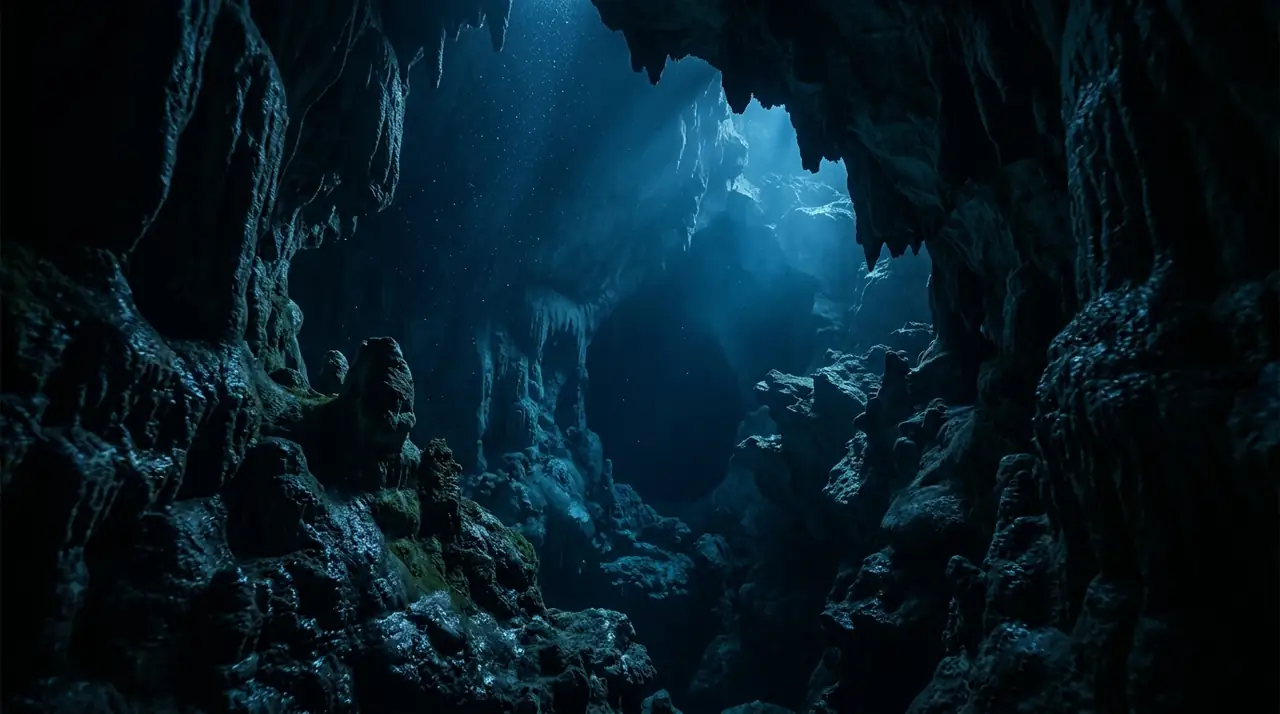
Cenote Chac Mool sits in the scrubby Yucatan jungle fifteen minutes south of Playa del Carmen, its entrance pool shaded by a partial limestone overhang draped in roots and ferns. The cenote takes its name from the Mayan rain god, and the subterranean world it opens into feels suitably sacred: vast cavern chambers flooded with impossibly clear water, dramatic light effects, and a silence broken only by the sound of your own breathing. The dive begins with a descent through the open cenote pool into the cavern system proper. The first thing that strikes you is the visibility. Cenote water, filtered through limestone for years before reaching these passages, offers clarity of 50 metres or more. You can see the entire cavern geometry from the moment you enter, stalactites hanging from the ceiling like stone chandeliers, the sandy floor receding into the distance, and the faint blue glow of the next opening ahead. The Kukulkan room is the centerpiece. Around midday, when the sun sits high over the Yucatan, shafts of light pierce openings in the cavern ceiling and descend through the water in luminous columns. The effect is genuinely cathedral-like, and I found myself hovering motionless watching the light beams shift and dance as clouds moved overhead. Particulate matter in the water column catches the light, creating visible rays that photographers chase with wide-angle lenses and slow shutter speeds. At around ten metres, you hit the halocline. This is where fresh rainwater meets Caribbean salt water that has percolated through the porous limestone, and the boundary is visible. Everything below the layer appears blurred and distorted, as if viewing through old glass. Swimming through it creates a brief moment of visual chaos as the two water densities mix around your body. Below the halocline, the water takes on a different character, slightly warmer and denser.
Early access
Plan a dive here
Open the DiveOne planner to sketch a recreational plan before you go. It is a planning assistant, not a dive computer.
Marine life
Dive profile
DEPTH PROFILE
DEPTH PROGRESSION & WAYPOINTS: Cenote Chac Mool
Location
Near Playa del Carmen, in the Quintana Roo region of Mexico.
Frequently asked questions
What is the halocline at Cenote Chac Mool and how does it affect diving?
The halocline at Chac Mool is a visible layer where fresh rainwater sits atop denser salt water that has percolated from the Caribbean through the limestone. This boundary layer, typically at around 10 metres depth, creates a dramatic visual effect: everything below the halocline appears blurred and wavy, as if looking through uneven glass. Swimming through the halocline temporarily reduces visibility as the two water types mix around your body. The effect is fascinating for photography and is one of Chac Mool's signature experiences.
Do I need cave diving certification to dive Cenote Chac Mool?
No, the standard Chac Mool cavern dive does not require cave diving certification. The cavern zones remain within natural light penetration and are accessible to Open Water divers with a certified cenote guide. However, you must be comfortable with overhead environments and have good buoyancy control to avoid silting the fine sediment on passage floors. The full cave system beyond the cavern zones does require full cave certification, specialised equipment, and training. Most visitors dive the cavern route, which includes the Kukulkan light room and halocline.
What is the best time of day to see the light beams at Chac Mool?
The famous light beams in the Kukulkan room are best between 10 AM and 1 PM when the sun is high enough to penetrate the cenote openings at a near-vertical angle. The most dramatic shafts of light occur on clear, sunny days during the dry season from November to April. During overcast conditions or early morning, the light effects are significantly diminished. Guides time the dive to reach the Kukulkan room when light conditions peak, usually planning the dive start to arrive at the light room around 11 AM.
Reviews
Reviews
No reviews yet
Data Provenance
This profile is compiled from 3 operator submissions and 142 community logs. Key facts (depth, entry) are verified against official hydrographic charts.