Cabo San Lucas Land's End
Overview
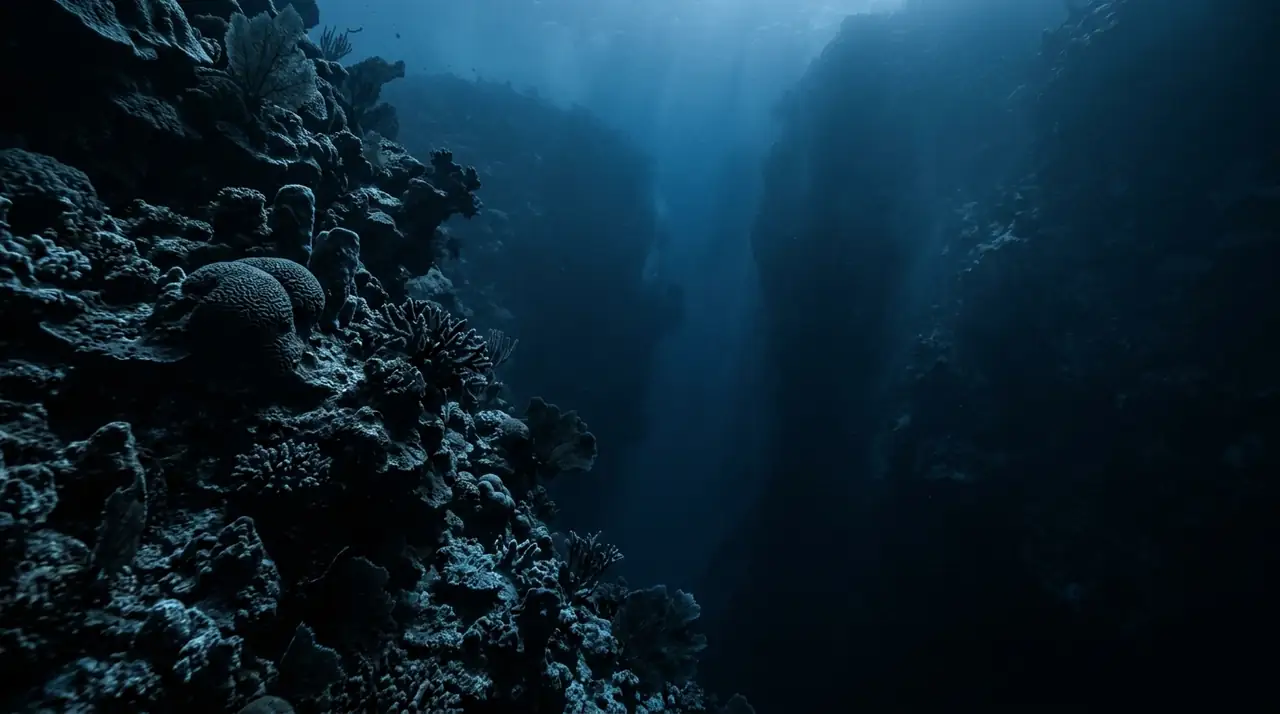
Land's End at Cabo San Lucas is where geography becomes drama. The granite spine of the Baja Peninsula terminates in a cluster of sea stacks, pinnacles, and the famous natural arch, beyond which the Pacific Ocean and the Sea of Cortez collide in a perpetual mixing of warm and cool water that generates one of Mexico's richest marine environments. The dive boat departed the marina and rounded the cape in ten minutes, the massive arch framing the horizon ahead. We dropped in on the Sea of Cortez side, descending along granite boulders draped in sea fans and black coral. The topography is spectacular even before you see any marine life, car-sized rocks stacked in chaotic formations with swim-throughs, crevices, and sandy channels between them. The sea lions arrived within minutes. A group of juveniles rocketed in from the blue, barrel-rolling around us, blowing bubbles at our masks, and pulling up short before contact. They are the most playful marine animals I have encountered anywhere, utterly uninhibited by diver presence and apparently delighted by it. One young sea lion hovered centimetres from my mask, looked directly into my eyes, then twisted away in a corkscrew spin. Deeper on the pinnacles at twenty-five metres, the mood shifted to serious pelagic territory. A school of mobula rays, perhaps thirty individuals, swept past in loose formation, their wings beating in slow synchrony. King angelfish patrolled the reef edge in their brilliant blue and orange livery. Green moray eels occupied multiple crevices, and the distinctive jewel moray, with its spotted golden pattern, peered from a hole in the granite. The current picked up during the second half of the dive, and with it came schools of jacks circling the pinnacle in a silver vortex. A bull shark passed at the edge of visibility, a reminder that these waters are serious ocean despite the tourist boats above. Land's End is Cabo's most accessible world-class dive, combining dramatic topography, reliable marine encounters, and the sheer geological spectacle of standing at the tip of a peninsula that extends over a thousand kilometres into the Pacific.
Early access
Plan a dive here
Open the DiveOne planner to sketch a recreational plan before you go. It is a planning assistant, not a dive computer.
Marine life
Dive profile
DEPTH PROFILE
DEPTH PROGRESSION & WAYPOINTS: Cabo San Lucas Land's End
Location
Near Cabo San Lucas, in the Baja California Sur region of Mexico.
Frequently asked questions
What is the famous Arch of Cabo San Lucas?
El Arco de Cabo San Lucas is a distinctive natural rock arch at the very tip of the Baja Peninsula, where the Pacific Ocean meets the Sea of Cortez. The arch is carved from granite by wave erosion and is one of Mexico's most photographed landmarks. Below the waterline, the granite formations continue as boulders, pinnacles, and small caves that create the dive site. The arch itself is in very shallow water and is more of a snorkelling and surface feature, while the serious diving occurs on the deeper granite formations extending seaward from the arch.
When is the best time to see mobula rays at Land's End?
Mobula rays are most common from June through November when water temperatures are warmest and plankton levels peak. Schools of hundreds and occasionally thousands of mobula rays aggregate in the waters around the cape during this period, often visible from the surface. The rays tend to feed in open water and are encountered by divers when schools pass over the reef or when individual rays visit cleaning stations on the pinnacles. Winter months are cooler with better visibility but fewer mobula encounters.
Is Land's End affected by strong currents?
As the convergence point of two ocean systems, Land's End can experience variable and sometimes strong currents. Current direction and strength change with tides, swells, and seasonal patterns. Dive operators monitor conditions carefully and adjust site selection based on current. Protected dive sites on the Sea of Cortez side are available when Pacific swells create challenging conditions at the arch. Advanced divers benefit from current as it brings pelagic life, while beginners are directed to sheltered alternatives on stronger current days.
Reviews
Reviews
No reviews yet
Data Provenance
This profile is compiled from 3 operator submissions and 142 community logs. Key facts (depth, entry) are verified against official hydrographic charts.