Big Dropoff
Overview
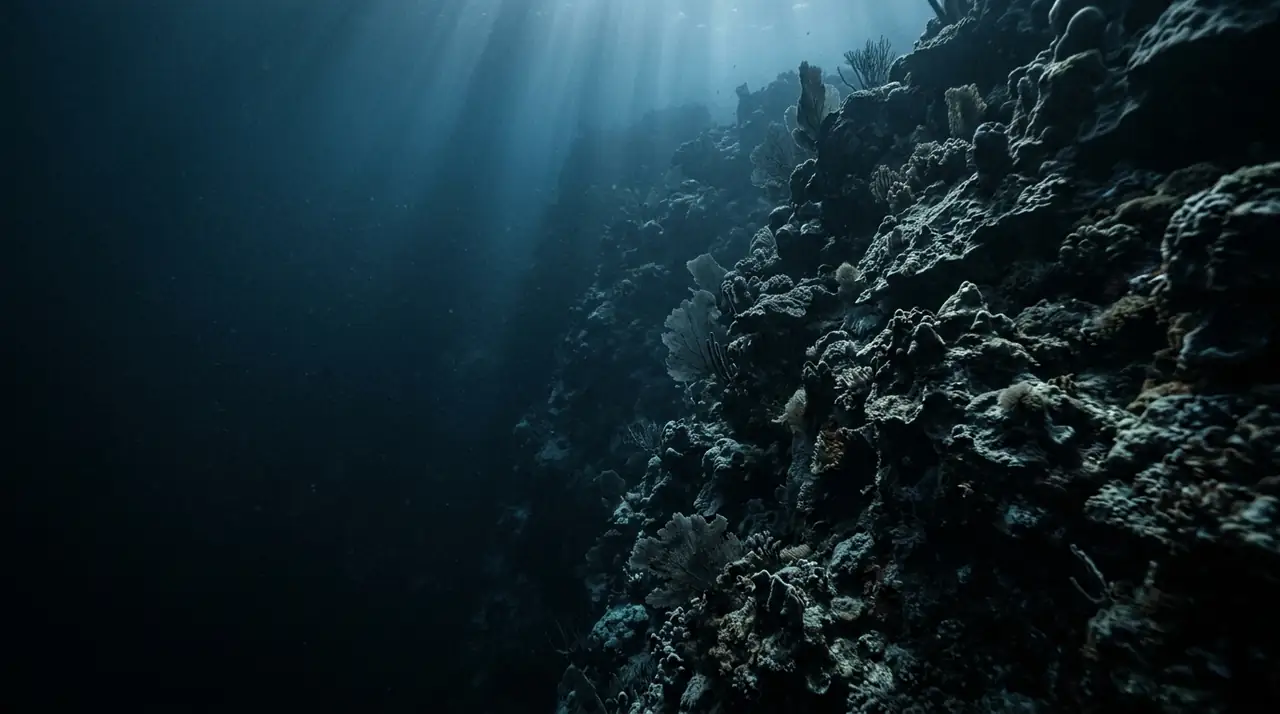
Big Dropoff at Ngemelis Island is one of the most revered wall dives on the planet, a sheer vertical cliff that drops from a shallow coral garden at one metre to abyssal depths exceeding 300 metres. Located in Palau's Rock Islands, roughly an hour by speedboat from Koror, this wall has been consistently ranked among the world's top ten dive sites for decades, and experiencing it firsthand immediately explains why. The combination of vertical drama, explosive colour, and constant marine life creates a dive that overwhelms the senses in the best possible way. I descended from the boat to the reef top, a narrow shelf of hard coral and anemones at barely two metres depth, where clownfish danced and damselfish darted in the shallows. Then the bottom simply vanished. One moment there was reef beneath me, and the next there was a vertical wall plunging into deep blue nothing, the transition so abrupt it triggered a momentary vertigo. Looking down, the wall disappeared into darkness, three hundred metres of vertical rock dissolving into the Pacific abyss. The wall face was a garden of extraordinary density and colour. Soft corals in vivid pink, purple, orange, and yellow grew in dense clusters from every available surface, their polyps fully extended in the current and creating a living tapestry that seemed to glow with internal light. Sea fans spread their lacework in overlapping layers, and crinoids in feathery spirals of red and gold perched on the fan branches. The effect was kaleidoscopic, a riot of colour and texture that made choosing where to look an impossible task. Grey reef sharks patrolled the wall edge in groups of two and three, their sleek forms cutting through the blue at the periphery of vision. A massive Napoleon wrasse, easily exceeding a metre in length, drifted along the wall face with the ponderous dignity of a ship of the line, its thick lips and prominent forehead giving it an appearance of knowing amusement. Spotted eagle rays passed below in ones and twos, their wings beating slowly as they traversed the wall.
Early access
Plan a dive here
Open the DiveOne planner to sketch a recreational plan before you go. It is a planning assistant, not a dive computer.
Marine life
Dive profile
DEPTH PROFILE
DEPTH PROGRESSION & WAYPOINTS: Big Dropoff
Location
Frequently asked questions
How does Big Dropoff compare to Blue Corner in Palau?
While Blue Corner is famous for its shark and pelagic action in strong currents requiring reef hooks, Big Dropoff offers a fundamentally different experience focused on wall architecture and soft coral beauty. Big Dropoff is generally considered Palau's most photogenic dive site, with its dense coverage of vivid soft corals providing a visual spectacle unmatched at Blue Corner. The current at Big Dropoff is typically milder, and the dive profile follows the wall vertically rather than holding position at a single point. Many divers rate Big Dropoff as their favourite Palau dive for the overall sensory experience.
What is the best depth range for enjoying Big Dropoff?
The most spectacular section of the wall is between 5 and 30 metres, where the soft coral coverage is densest and the light penetration creates the most vivid colours. Many experienced photographers spend their entire dive between 8 and 20 metres, where the combination of natural light and coral density produces the best images. The wall continues to great depth, but below 30 metres the colours fade in the reduced light. The very shallow reef top at 1 to 3 metres offers an excellent safety stop with hard coral gardens and abundant small fish.
What time of year has the best conditions at Big Dropoff?
Big Dropoff is diveable year-round, but the best conditions are typically from October to May during the dry season. Visibility during this period regularly exceeds 30 metres and can reach 45 metres on exceptional days. The wet season from June to September brings more rainfall and reduced visibility, though the site remains excellent by any standard. Current strength varies with the tides rather than the season, so checking the tide tables for your visit dates helps predict conditions. Incoming tides generally bring the best visibility and most marine life activity along the wall.
Reviews
Reviews
No reviews yet
Data Provenance
This profile is compiled from 3 operator submissions and 142 community logs. Key facts (depth, entry) are verified against official hydrographic charts.