Banda Api Volcano Dive
Overview
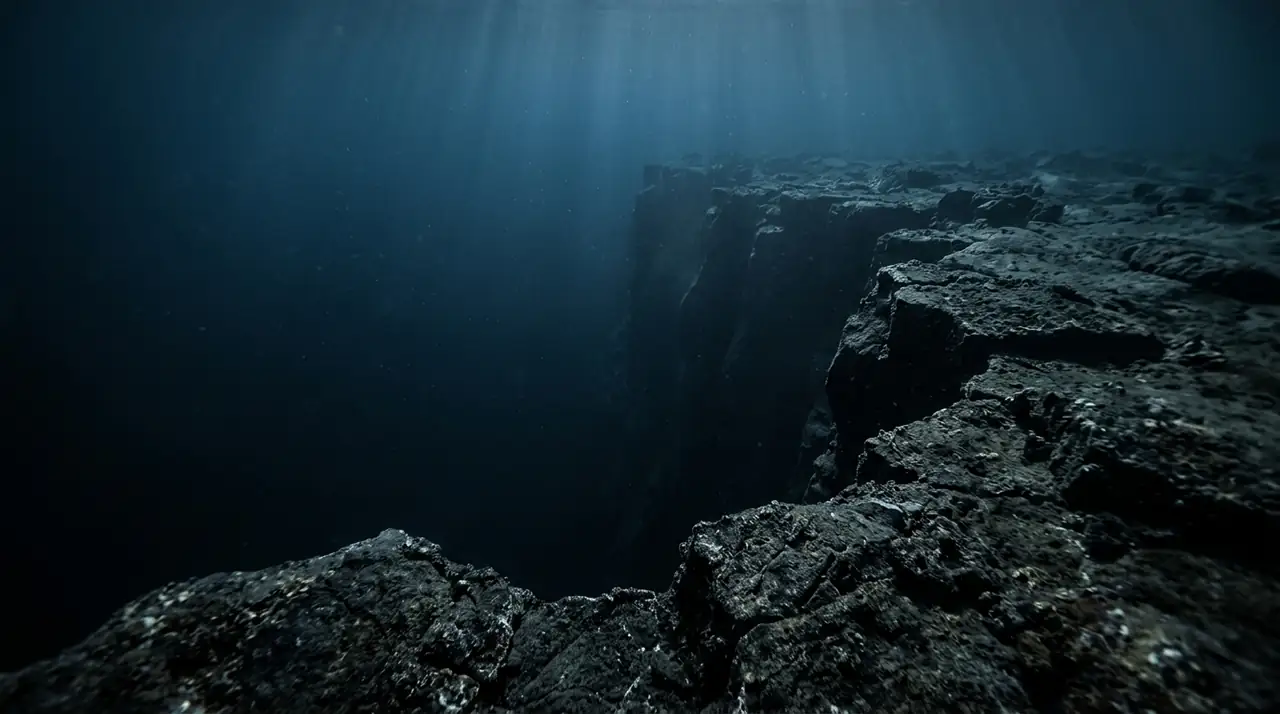
Banda Api is one of the most geologically dramatic dive sites in Indonesia, a plunge along the submerged flanks of an active volcanic cone in the heart of the Banda Islands, Maluku. The volcano last erupted in 1988, sending a lava flow into the sea on its northeastern slope and destroying the coral reef that had existed there for centuries. What has happened since is one of the great marine regeneration stories: the black basalt has been colonized by hard corals with astonishing speed, creating a surreal underwater landscape where vibrant coral gardens grow directly on solidified lava. The dive begins with a backward roll into deep blue water just offshore from the lava flow's entry point, still visible as a dark scar on the volcano's vegetated cone. Descending along the wall, the contrast is immediate and startling. Jet-black basalt, twisted into frozen ripples and tubes by the lava's original flow patterns, is encrusted with branching Acropora, massive Porites heads, and plate corals in every shade of brown, cream, and purple. The coral coverage on sections of this three-decade-old lava flow now rivals reefs that have been growing for millennia. The wall drops steeply to well beyond recreational limits, and it is along the deeper sections at 25 to 40 meters where the big encounters happen. Scalloped hammerhead sharks aggregate in the open water beyond the wall, particularly during early morning dives between September and November. Schools of fifty or more hammerheads have been documented, circling in the thermocline layer that often sits at around 30 meters. Giant trevally hunt along the wall's edge, Napoleon wrasse drift with regal indifference, and banded sea snakes undulate between coral heads searching for prey in crevices. The shallower sections of the lava flow between 5 and 15 meters are equally rewarding. Bumphead parrotfish graze in groups, their synchronized crunching audible through the water. Green sea turtles rest on ledges, and the rubble zones between coral heads harbor mandarin fish that emerge in pairs at dusk. The Banda Islands' extreme remoteness means these reefs see perhaps a few hundred divers per year, and the marine life behaves accordingly, with a tameness and abundance that remind you what unfished, unvisited reefs look like. Diving Banda Api is diving at the intersection of geology and biology, where the destructive force that created this landscape has been utterly transformed by the ocean's capacity for renewal.
Early access
Plan a dive here
Open the DiveOne planner to sketch a recreational plan before you go. It is a planning assistant, not a dive computer.
Marine life
Dive profile
DEPTH PROFILE
DEPTH PROGRESSION & WAYPOINTS: Banda Api Volcano Dive
Location
Frequently asked questions
How do I reach Banda Api for diving?
Fly from Ambon to Banda Naira on small turboprop aircraft operating several times per week. Alternatively, the monthly Pelni ferry connects Ambon to Banda Naira. From Banda Naira, the volcanic cone of Banda Api is directly across the harbor, a five-minute boat ride. Several guesthouses in Banda Naira offer dive packages, and a handful of liveaboards include the Banda Islands on extended itineraries through eastern Indonesia.
Is it safe to dive near an active volcano?
Banda Api last erupted in 1988, and seismic activity is monitored by Indonesian authorities. The dive sites along the lava flow are on the volcano's submerged flanks, not near any active vents. Local dive operators follow government alerts and will cancel dives if seismic activity increases. The volcanic substrate actually creates exceptional diving conditions, with nutrient-rich upwellings supporting extraordinary coral growth and marine life density.
What skill level is required for the Banda Api dive?
Advanced certification is recommended due to strong currents that can sweep along the volcanic wall, depths exceeding 30 meters to reach the best coral formations, and occasional thermoclines that drop water temperature significantly. The hammerhead aggregation point requires comfort with blue-water descents. Intermediate divers can enjoy the shallower sections of the lava flow where coral regeneration is spectacular.
Reviews
Reviews
No reviews yet
Data Provenance
This profile is compiled from 3 operator submissions and 142 community logs. Key facts (depth, entry) are verified against official hydrographic charts.