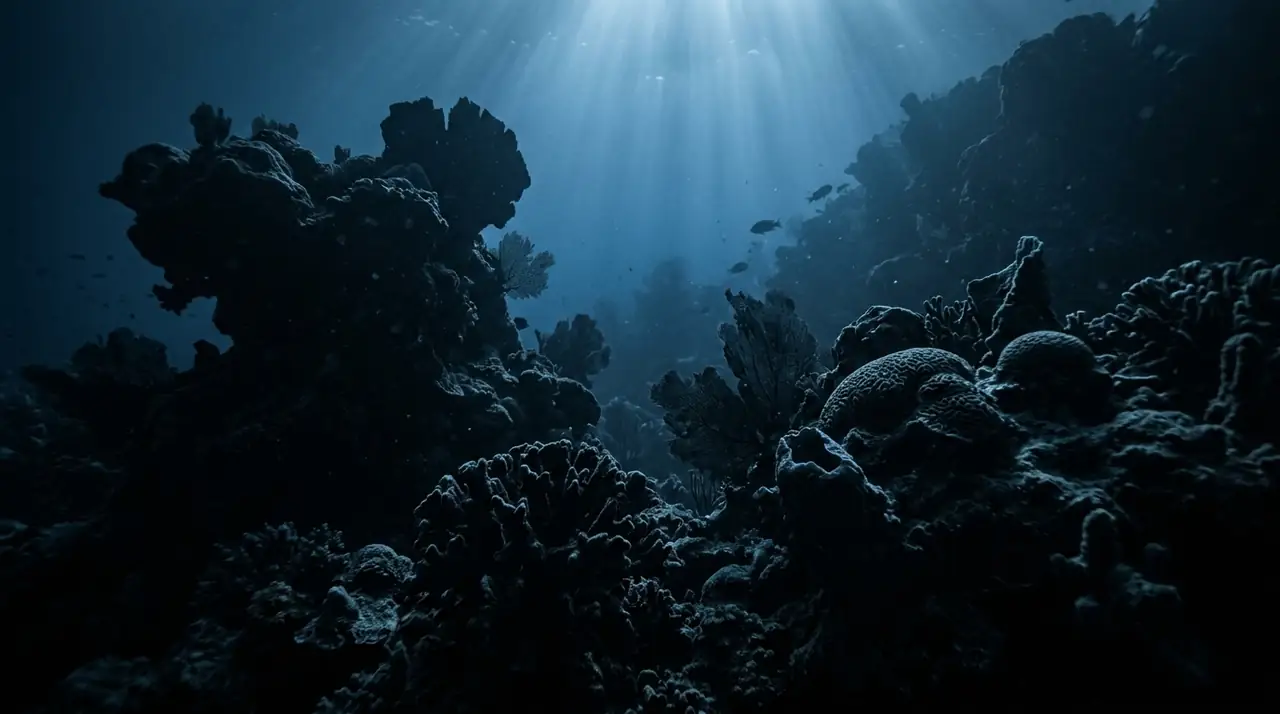
Arikamedu Reef
Overview
Arikamedu lies a few kilometres south of Pondicherry on the Coromandel coast, where the Bay of Bengal meets the flat Tamil coastline in a line of surf and laterite rock. Above water, the archaeological site is a quiet stretch of eroded riverbank where French and Indian excavations have uncovered pottery shards, Roman glass beads, and the foundations of warehouses that once stored goods traded between the Roman Empire and ancient India. Below water, the story continues. Coastal erosion and two millennia of sea level change have submerged portions of the ancient port, and a natural reef system has claimed these human structures as its own framework. I dived Arikamedu on a February afternoon when the post-monsoon calm had settled the Bay of Bengal into a gentle swell. The boat departed from Pondicherry's old French quarter harbour, passing the iconic colonial waterfront before heading south along the coast. The dive site was marked by a slight discolouration of the water where the submerged reef broke the wave pattern, a subtle indicator that was easy to miss without local knowledge. The descent was into eight metres of water with visibility around ten metres, adequate for the site's scale. The bottom was a mix of natural laterite rock and what appeared to be cut stone blocks, the latter distinguished by their regular shapes and flat surfaces that contrasted with the organic irregularity of the natural substrate. Whether these blocks were port infrastructure, breakwater elements, or building foundations from the ancient settlement was difficult to determine without archaeological training, but their anthropogenic origin was clear. The reef had colonised both natural and human-made substrate with equal enthusiasm. Hard corals, predominantly brain coral and massive Porites species, grew on the exposed surfaces of the stone blocks, their circular and serpentine growth patterns contrasting with the rectangular geometry beneath. Soft corals and sponges occupied the shaded crevices between blocks, their presence indicating stable substrate that had remained undisturbed for considerable periods. The ecological process visible here, where nature slowly absorbs human construction into its own architecture, was fascinating from both biological and philosophical perspectives.
Early access
Plan a dive here
Open the DiveOne planner to sketch a recreational plan before you go. It is a planning assistant, not a dive computer.
Marine life
Dive profile
DEPTH PROFILE
DEPTH PROGRESSION & WAYPOINTS: Arikamedu Reef
Location
Frequently asked questions
What is the archaeological significance of Arikamedu?
Arikamedu was an ancient trading port that served as a key link in the Roman trade network with India during the first and second centuries CE. The site on land has yielded Roman pottery, glass beads, and coins that prove direct trade connections between the Roman Empire and the Chola dynasty coast. Parts of the ancient port infrastructure extend into the sea due to coastal erosion and sea level changes over two millennia. While the underwater archaeology is not as well-documented as the terrestrial excavations, divers can observe submerged stonework and harbour structures alongside the natural reef growth that has colonised these ancient foundations. The site is of interest to both archaeological and recreational divers.
What are the diving conditions like at Arikamedu?
Diving at Arikamedu is best from January to April when the northeast monsoon has passed and the Bay of Bengal settles into its calmest phase. Visibility ranges from five to twelve metres, modest by tropical standards but adequate for the shallow reef and archaeological exploration. Water temperatures are warm year-round, between twenty-five and twenty-nine degrees. The current can be moderate during tidal changes, requiring intermediate-level experience. The maximum depth is around sixteen metres on the outer reef slope. The monsoon season from October to December makes diving impractical due to rough seas and reduced visibility. Some dive centres close entirely during the monsoon months.
How do I arrange diving at Arikamedu Reef?
Two dive centres in Pondicherry offer regular trips to Arikamedu Reef and surrounding dive sites along the Coromandel coast. Booking in advance is recommended as boats and guides are limited compared to more established Indian dive destinations. The boat ride from Pondicherry's old harbour takes approximately thirty minutes. Certified divers can join guided dives, while beginners are usually directed to shallower sites closer to shore. The archaeological significance of the site means that touching or removing any objects from the seabed is strictly prohibited. Dive centres brief participants on responsible diving practices around archaeological features. Photography is permitted and encouraged.
Reviews
Reviews
No reviews yet
Data Provenance
This profile is compiled from 3 operator submissions and 142 community logs. Key facts (depth, entry) are verified against official hydrographic charts.