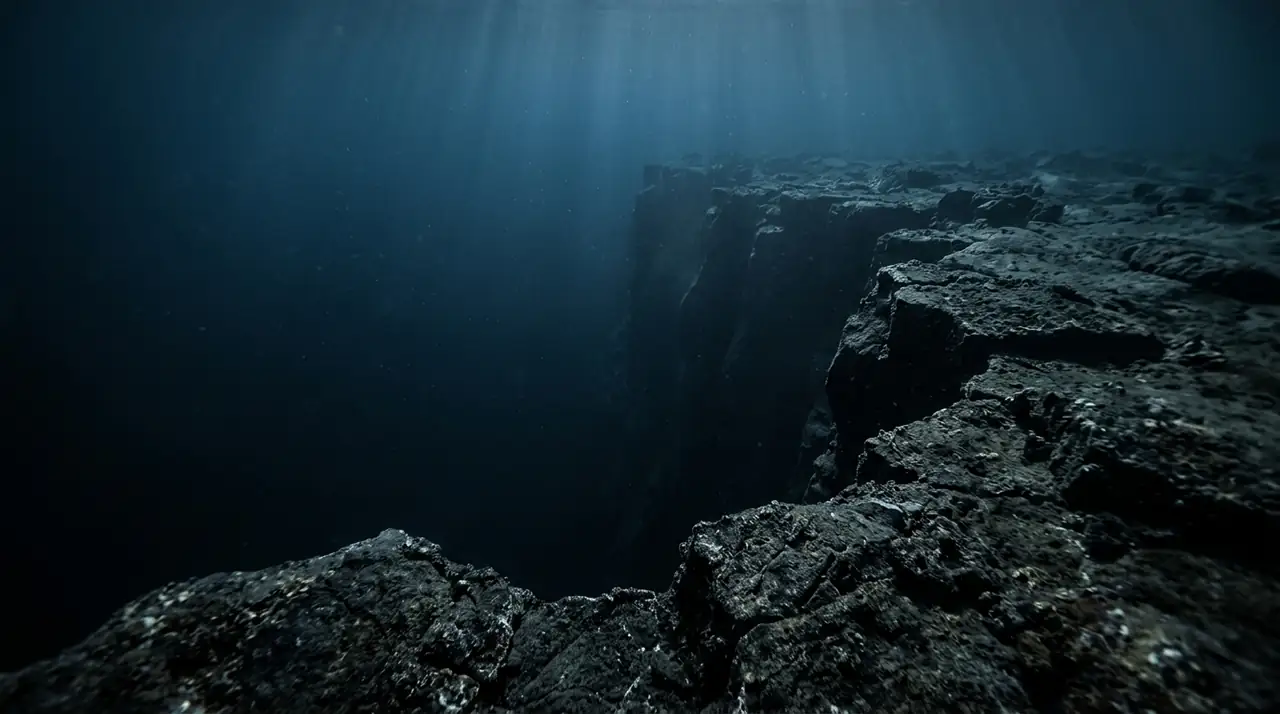
Apo Reef South Wall
Overview
Apo Reef is the Philippines' largest coral reef system and the second largest contiguous reef in the world, a vast atoll rising from the deep water of the Mindoro Strait. Most visiting divers explore the sheltered northern lagoon and the gentle slopes of the eastern reef, enjoying magnificent coral gardens in comfortable conditions. The South Wall is something else entirely: the reef's frontier edge, where the atoll meets the open strait and the seafloor drops away with a verticality that triggers primal vertigo. The wall begins where the reef flat ends, a clean edge that drops from five metres to beyond recreational limits without pause. The wall face is heavily colonised: black coral bushes grow at depth, enormous sea fans extend into the current, and hard coral coverage on the upper wall is dense and healthy. But the wall itself is secondary to what patrols the water column beyond it. I descended to thirty metres at the southwestern corner on a morning when the current was running hard from the south. Holding position in the lee of a large coral outcrop, I watched the blue water develop shapes: first a single hammerhead, then three more, then a school of perhaps fifteen scalloped hammerheads materialising from the blue, their distinctive silhouettes unmistakable as they cruised the wall edge in loose formation. They held at around thirty-five metres, moving with the languid confidence of apex predators in their element. Above and around the wall, the current drives a feeding ecosystem of extraordinary density. Bigeye jacks form tornado formations, thousands strong, their silver bodies catching light in hypnotic spirals. Giant trevally hunt the edges of these formations, striking with explosive acceleration. Barracuda schools hover in the current, Napoleon wrasses patrol the wall face, and eagle rays glide past with metronomic wing beats. The South Wall demands respect. Currents can shift direction and intensity rapidly, and the depth potential is unlimited. But for advanced divers with drift experience, this is Philippine diving at its most powerful, a wall dive that delivers genuine pelagic encounters in a setting of raw oceanic grandeur.
Early access
Plan a dive here
Open the DiveOne planner to sketch a recreational plan before you go. It is a planning assistant, not a dive computer.
Marine life
Dive profile
DEPTH PROFILE
DEPTH PROGRESSION & WAYPOINTS: Apo Reef South Wall
Location
Near Sablayan, in the Occidental Mindoro region of Philippines.
Frequently asked questions
How does Apo Reef South Wall differ from the main Apo Reef dive sites?
The main Apo Reef dive sites on the northern and eastern sides feature gently sloping reefs with excellent coral coverage and abundant reef fish, suitable for intermediate divers. The South Wall is a fundamentally different dive: a sheer vertical drop exposed to the full force of Mindoro Strait currents. This exposure brings pelagic species rarely seen on the sheltered sides, including hammerhead sharks and manta rays. The trade-off is that conditions are more demanding, with strong and sometimes unpredictable currents requiring advanced drift diving skills and deployment of surface marker buoys.
When are hammerhead sharks seen at the South Wall?
Hammerhead shark encounters at Apo Reef South Wall are most frequent from December through March, coinciding with cooler water temperatures and stronger currents from the northeast monsoon. Schools of scalloped hammerheads gather at the southwestern corner of the wall, typically at depths between 25 and 40 metres. Sightings are not guaranteed on every dive but are regular during peak season, with schools ranging from a handful to over thirty individuals. Early morning dives on incoming currents offer the highest probability of encounters.
What logistics are involved in diving the South Wall?
Diving Apo Reef requires basing from Sablayan on the western coast of Mindoro, approximately 30 kilometres from the reef. Most operators run day trips departing before dawn, with the boat journey taking one to two hours depending on conditions. Some operators offer overnight stays on Apo Island, the small ranger station island, which allows dawn dives at the South Wall. A marine park permit is required and collected by the park rangers. Due to the South Wall's exposure and current strength, not all operators will take clients there unless they demonstrate appropriate experience levels.
Reviews
Reviews
No reviews yet
Data Provenance
This profile is compiled from 3 operator submissions and 142 community logs. Key facts (depth, entry) are verified against official hydrographic charts.