Abu Dabab North
Overview
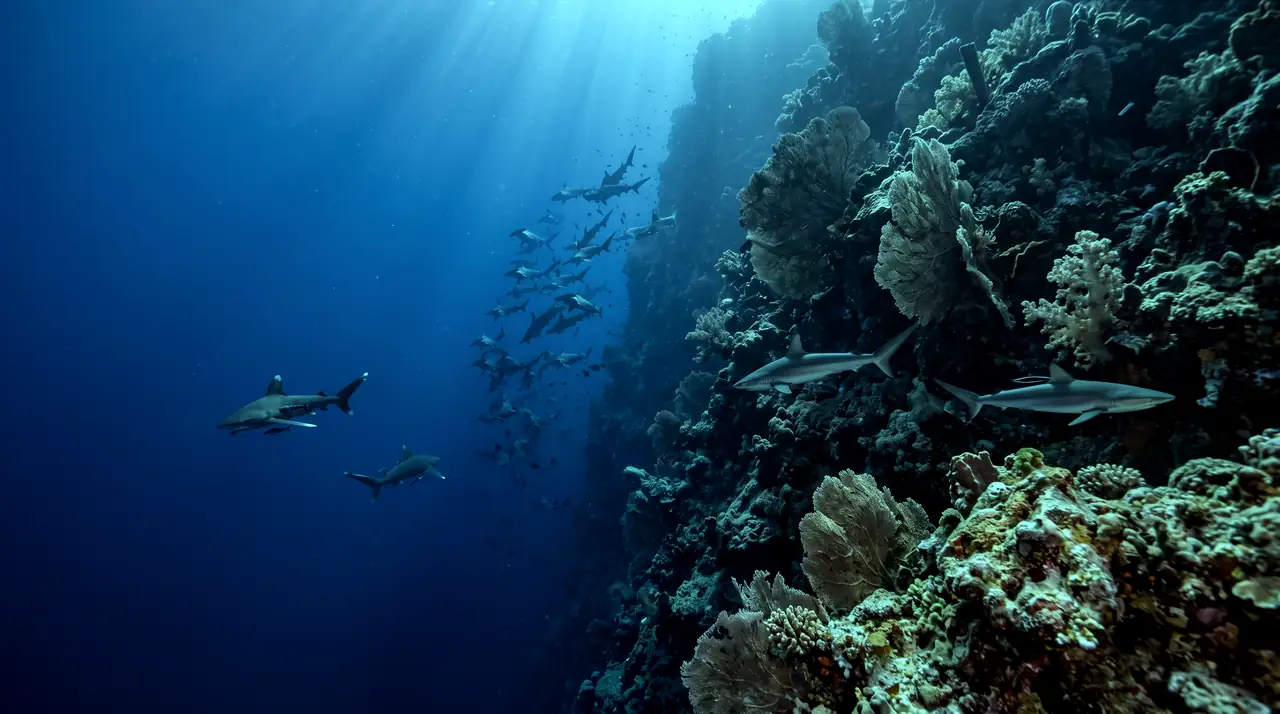
Abu Dabab North is the quieter approach to one of the Red Sea's most extraordinary wildlife encounters. The main Abu Dabab bay has earned global fame as one of the few reliable dugong encounter sites, but the main beach entry has become a victim of its own success with crowds concentrated around a single access point. The northern section offers the same seagrass ecosystem, the same resident wildlife, and substantially fewer people. Entering the water from the rocky shore north of the main beach, the reef begins with scattered coral heads on a sandy slope before giving way to the seagrass meadows that make this site ecologically remarkable. Seagrass beds are the marine equivalent of terrestrial grasslands, and these meadows at Abu Dabab are among the most extensive remaining in the northern Red Sea. They support a food chain that begins with the grass itself and extends upward through the herbivorous green turtles and dugongs that depend on it. Green turtles are virtually guaranteed on every dive. Large individuals, some with shells approaching a metre in length, graze unhurriedly on the seagrass, raising their heads occasionally to eye approaching divers before returning to their meal. Their tolerance of human presence is remarkable, and patient divers can observe feeding behaviour from barely two metres away. The dugong encounters are Abu Dabab's defining experience. These rotund, gentle sirenians move through the seagrass with surprising grace for animals that can weigh 400 kilograms. A feeding dugong roots through the grass with its broad, bristled snout, leaving clearly visible trails on the seabed. When one surfaces to breathe, the exhalation is audible and oddly moving, a sound that connects this ancient animal to the mythological origins of mermaid legends. Beyond the seagrass, the northern reef edge develops better hard coral structure than the main bay, with small walls and overhangs at 15 to 22 metres hosting guitar sharks and eagle rays. Abu Dabab North is not a separate site but a different way of experiencing one of the Red Sea's most important marine habitats, with the patience and respect its extraordinary residents deserve.
Early access
Plan a dive here
Open the DiveOne planner to sketch a recreational plan before you go. It is a planning assistant, not a dive computer.
Marine life
Dive profile
DEPTH PROFILE
DEPTH PROGRESSION & WAYPOINTS: Abu Dabab North
Location
Frequently asked questions
How does Abu Dabab North differ from the main Abu Dabab site?
The main Abu Dabab beach entry point sees heavy traffic from resort guests, day trippers, and organised dive groups, particularly during high season. Abu Dabab North refers to the reef section accessed by entering the water further north along the coastline, away from the main beach infrastructure. The reef here has denser seagrass coverage and receives significantly fewer visitors, which may contribute to more relaxed dugong and turtle behaviour. The northern section also has more developed hard coral formations on its outer edge compared to the sandier main bay.
What are the chances of seeing a dugong at Abu Dabab?
Abu Dabab is one of the most reliable dugong encounter locations in the Red Sea, with sighting rates reported at roughly 60 to 70 percent on dedicated dugong dives. The resident dugong population is small, likely 2 to 4 individuals, but their dependence on the seagrass meadows keeps them in the bay year-round. Dugongs are shy animals and sightings cannot be guaranteed. They feed on the seagrass in depths of 5 to 15 metres and can remain submerged for 6 to 8 minutes before surfacing to breathe. Early morning dives tend to produce the best encounters before boat traffic increases.
What rules apply when encountering dugongs?
Egyptian environmental regulations and responsible dive operator guidelines require maintaining a minimum distance of 3 metres from dugongs and prohibit chasing, cornering, or blocking their path. Approaching should be slow, low to the seabed, and from the side rather than head-on or from behind. Flash photography is discouraged as it may startle the animal. Groups should be small, ideally no more than 4 divers, to minimise disturbance. If the dugong shows signs of stress such as rapid departure or altered feeding behaviour, divers should immediately back away and allow the animal space.
Reviews
Reviews
No reviews yet
Data Provenance
This profile is compiled from 3 operator submissions and 142 community logs. Key facts (depth, entry) are verified against official hydrographic charts.